Shawn Lambert on Flexible Capacity in South Carolina
In this episode, host Mark Mann sits down with Shawn Lambert, Columbia and Spartanburg General Manager of B&W Trailer Rentals, a Warehouse on Wheels brand, to talk about the warehouse crunch in the South Carolina trailer market, treating storage as a flexible capacity problem, and cutting container detention fees. Shawn describes a large e-commerce supplier that needed about 65,000 square feet for six months and got 150 storage trailers within four weeks in place of a warehouse lease, an LTL customer that cleared its dock after an ice storm, and why long-term commitment is the myth he most wants to retire.
Key Takeaways
- South Carolina businesses now treat storage as a flexible capacity problem. Shawn says warehouses haven’t kept up with the state’s growth, which leads to month-to-month volume swings. Businesses have stopped thinking of storage as a fixed square footage problem, and WOW scales up or down with their needs, with as many or as few trailers as they need. Manufacturers with several warehouses on one property use the trailers more like a conveyor, moving product from one step of the process to the next.
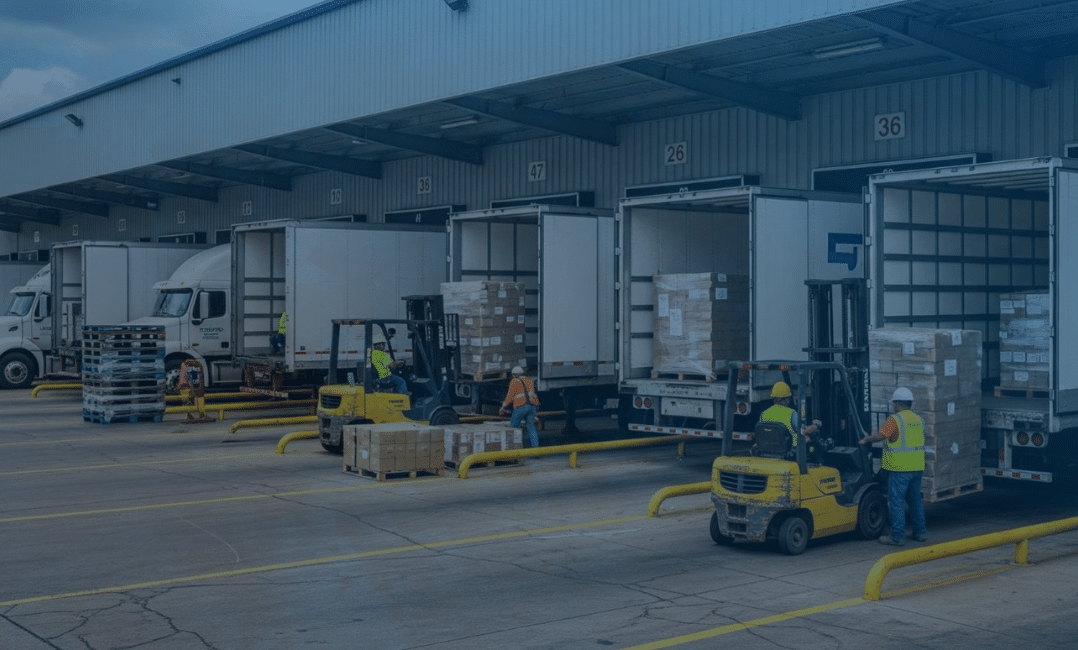
- After an ice storm, an LTL customer staged routes in WOW trailers. The customer decided not to make city deliveries, so its inbound freight and the previous shift’s outbound freight clogged the dock and it couldn’t operate at all. It picked up storage trailers from the branch down the road, loaded some of its routes into them and put them out in the yard, off the dock, so they weren’t creating a hazard. Its own trailers stayed free for deliveries.
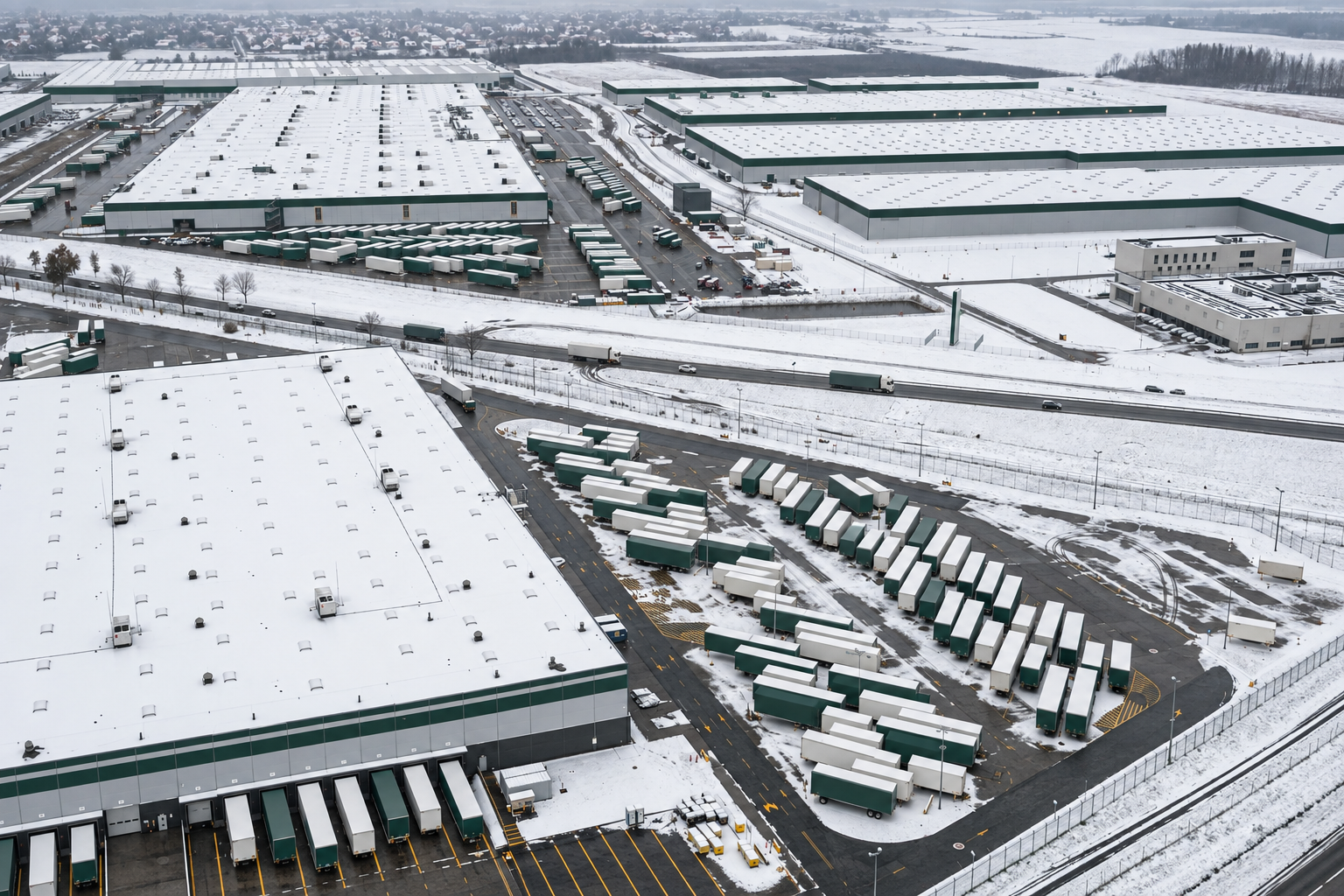
- A large e-commerce supplier solved a six-month need with 150 trailers. The supplier was looking for about 65,000 square feet of extra storage space for about 6 months, and was already talking to brokers about leasing a warehouse. After one meeting, WOW delivered 150 trailers within 4 weeks, the exact capacity it needed without the overhead, commitment or price tag of the warehouse. Shawn’s Columbia and Spartanburg locations also have space for drop lot storage on WOW’s own sites.
- Trailers arrive within 48 hours nine times out of 10. Shawn tells customers WOW can deliver within 24 to 48 hours of the first phone call, and the only thing that slows it down is setting up the customer’s account. When a large bicycle manufacturer’s inbound volume outgrew its dock and yard within a couple of days of starting a major project, it called in a panic needing storage and cartage trailers. WOW supplied both, the project stayed on track, and the company came back as a repeat customer this year.
- A port importer avoids detention fees by unloading into WOW trailers. The customer has 3 days to get its containers from the port to its warehouse and unloaded, and Shawn says the fees can go up to $300 a day. It now unloads containers straight into WOW trailers on its yard, returns the boxes to the port and stores the product on its own schedule, which Shawn says saves it thousands of dollars in detention fees each week. All of WOW’s trailers go on a month-to-month basis, so a customer can keep one for a month, 6 months or a year.
Episode Chapters
Click any timestamp to jump to that section on YouTube.
- 00:00 — Meet Shawn Lambert
- 01:58 — A Normal Week and South Carolina Growth
- 04:25 — Three Biggest Space Headaches
- 06:48 — Mobile Storage as a Strategy
- 09:58 — Out-of-Space Panics and Peak Season
- 14:14 — CFO Math on Detention and Leases
- 16:37 — Yard Habits, Pajamas and Cost Savings
- 20:36 — Signature Round
- 23:02 — Retiring a Storage Trailer Myth
Transcript
[00:00] Meet Shawn Lambert
Mark Mann: Welcome back to The Wow Factor. I’m your host, Dr. Mark Mann. On this episode of The Wow Factor, we focus on the logistics backbone of the Palmetto State. South Carolina had the fastest-growing population in the nation in 2025, which has pushed industrial vacancy rates in the Columbia metropolitan area down to a historic 4.5%.
Today’s guest leads Warehouse on Wheels operations across a massive corridor spanning Columbia and Spartanburg. With Class A warehouse rents in the Midlands surging nearly 15% year-over-year as of late 2025, the B&W team provides the essential pressure valve for companies caught in that inventory crunch. Shawn Lambert, the General Manager of B&W Trailer Rentals, welcome to the Factor.
Shawn Lambert: Hey Mark, how are you? I’m glad to be here.
Mark Mann: Shawn, now you manage a massive territory covering Columbia and Spartanburg. But before we dive into that, I want everyone to kind of get to know you and your location. How did your career journey lead you to become the space maker for the heart of South Carolina?
Shawn Lambert: So Mark, I started in the LTL industry at a young age. I worked for the third-largest carrier in the country. Over the years I worked my way through every position, from forklift operator all the way through operations. And the company I worked for closed the doors in 2023. I was the operations manager, so through my role there I was very familiar with trailer rental companies and what they did. So when I was looking for a job, WOW just happened to be hiring, and I took a chance on the industry, joined the Warehouse on Wheels team in August of ’23, and haven’t looked back since.
[01:58] A Normal Week and South Carolina Growth
Mark Mann: Fantastic. Now, between the I-26 and I-77 interchange in Columbia and the manufacturing hub of Spartanburg, what does a normal week look like for your team?
Shawn Lambert: Mark, I don’t know if any two weeks are the same. So, as you mentioned, I have two locations. I run two small branches. I have an employee at each branch. So my team consists of an operations manager in Columbia and an operations coordinator in Spartanburg. And these two, I mean, they’re the backbone of what we accomplish. Couldn’t be more proud of them.
But at single-operator locations such as these, they handle everything from taking the phone calls. You know, when you call one of our branches, you speak to the same person every time. We never get routed through a customer call center. So they handle your request each time, whether it’s, you know, you have an issue with the trailer you have, you need more trailers, just a quick question. When they’re not doing that, they’re getting trailers, you know, making sure trailers are rent-ready, so when they show up to your location, they’re ready to work. I mean, they really handle just everything top to bottom.
Mark Mann: So not only are they busy because they are the only two operators in their respective locations, but they are, like, actually picking up the phone. When a customer calls, they pick up the phone. They don’t go to a recording or anything like that, right?
Shawn Lambert: No, sir. No. So at any one point in time, if they’re out of the office and within working hours, somebody calls the line, it rings to their cell phone. And so no matter what we’re doing, that customer phone call is— we drop everything and handle that first.
Mark Mann: Fantastic. Now, South Carolina was the fastest-growing state in 2025. From your vantage point, how has that influx of people and corporations changed the way local businesses think about their storage footprint?
Shawn Lambert: Yes. I think South Carolina is about 7,000 people a month are moving here. That kind of growth doesn’t just add residents. It adds consumption, adds freight, adds last-mile demand and pressure on the supply chain. It’s all across. So warehouses really haven’t kept up with that same pace, so it’s kind of leading to a month-to-month volume swing.
So the mindset here is, instead of treating storage as a fixed square footage problem, businesses are treating it as a flexible capacity problem, and that’s where we come in. We can scale up or down with their needs, and we can, you know, help with as many or as little trailers as they need.
[04:25] Three Biggest Space Headaches
Mark Mann: Yeah, as you mentioned, Columbus is facing a current inventory crunch, with over half of the available Class A space absorbed just last year. So what are the three biggest space headaches that your customers are bringing to you guys right now?
Shawn Lambert: Right now we’re just seeing, you know, seasonal demand influxes, and, you know, customers that are trying to get rid of those detention charges for containers, and then just some that are simply just outgrowing their warehouses and just don’t have enough space to put everything that they’d have.
Mark Mann: Yeah. Tell me about a recent week in either Spartanburg or Columbia that really shows what happens to a distribution hub when the warehouse is full and the dock is backed up.
Shawn Lambert: So a couple weeks ago, we had an ice storm down here in the South, and as you know, a little bit of ice shuts everything down here. So we had an LTL customer. Even though the interstates were somewhat opened, they made the decision not to make any, like, city deliveries. So they had, you know, all their inbound freight arriving, they had some of their outbound freight from the previous shift. The dock was clogged up. They just couldn’t operate at all.
They were able to give us a call, right down the road from us. They picked up some storage trailers. They were able to load some of their routes into those trailers, kind of like to stage them, put them out in the yard, get them out of the way, off the dock, so it’s not creating a hazard. And then they could kind of, you know, still use their trailers for their deliveries. And, you know, they just had ours waiting for the next time they needed to get a route out.
Mark Mann: What is a rough estimate in terms of manufacturers that you serve versus retailers that you serve, if you had to, you know, just give me the percentages?
Shawn Lambert: Mark, I would honestly say right now it’s probably about 50/50. Yeah, it’s pretty balanced right now.
Mark Mann: Yeah. So we’re seeing manufacturers actually expanding in the Midlands. How does their need for high-velocity storage differ from your traditional retailers?
Shawn Lambert: Yeah. So I would say these companies are moving away from, like, traditional storage space, in regard to, like, set it and forget it, and they’re transitioning trailers into their operation. So these operations have multiple warehouses across, you know, their property. So they’re using our trailers as more like a conveyor, if you will, to move stuff through, you know, one step of the process to the next, instead of just, you know, sitting in a trailer and forgetting it in the back of the yard.
[06:48] Mobile Storage as a Strategy
Mark Mann: Yeah, let’s talk a little bit about that, because a lot of South Carolina leaders still see storage trailers as a temporary band-aid rather than a full-on strategy that they need to have. How do you coach an operations manager in Spartanburg, for example, to see mobile storage as a strategic part of their long-term facility planning?
Shawn Lambert: So for me, it starts with helping them see mobile storage as more than a short-term fix. So if I was coaching an operations manager, I try to get them to think of trailers as a flexible extension of their facility: warehouse space that they can scale up with or scale down with. It doesn’t have the cost or commitment associated with something like a new construction or a new warehouse lease.
When they understand that one 53-foot trailer can give them roughly 450 feet of usable space, the value becomes obvious, in my opinion. It’s smart. It’s a low-risk way to handle peak seasons, tariff uncertainty, supply chain swings or just unexpected events. My goal is to show them that mobile storage isn’t just solving today’s problem. It’s a strategic tool that supports their long-term plan and gives their new facility to grow.
Mark Mann: Yeah, and you’re right about that. Class A warehouse rents in Columbia have spiked nearly 15% recently. I mean, it’s a huge jump, and probably just because there’s so many companies moving into the area. How do you help a customer compare that fixed overhead to the flexibility that you talk about of a WOW drop lot strategy?
Shawn Lambert: Yeah. So in our company, you’ll hear three words thrown around a lot: smart, simple storage. And it’s just that. We’re able to easily scale with customers without having construction cost or building a new shiny warehouse. I’m happy to sit down with any prospect and compare their construction cost versus the monthly rental and any other associated fees, for any number of trailers, to solve that same problem.
Mark Mann: Yeah. So walk me through a time when a customer was ready to sign an expensive lease at one of those big new shiny warehouses in, you know, West Columbia or Cayce, and you showed them how a fleet of 53-foot trailers could save their budget.
Shawn Lambert: Yeah. So we actually had a large e-commerce supplier. They were looking for about 65,000 square foot in extra storage space. They were already talking to brokers, looking at possibly leasing a warehouse in the market. After one meeting with us, we were able to show them a different path. Instead of locking into a long-term lease for that warehouse that they only need for about 6 months, we were able to solve the same issue with 150 storage trailers.
We were able to get those 150 trailers delivered within 4 weeks, and that was the exact capacity they needed, without the overhead of the warehouse or the commitment or the price tag. So that was kind of their whiteboard moment, was realizing that flexible storage trailers could save their budget while keeping their operation moving.
Mark Mann: And you guys allow them to store on your sites as well, too, right?
Shawn Lambert: Yes, sir. We do, Mark. We have space available in Columbia and our Spartanburg locations for drop lot storage.
[09:58] Out-of-Space Panics and Peak Season
Mark Mann: That’s great. So tell me about a time when a customer called you in one of those hair-on-fire, “we are out of space” panics, right? Perhaps a supplier for the BMW plant there, or Amazon hub, that was just overwhelmed by inbound freight.
Shawn Lambert: Yes. So it wasn’t actually BMW or Amazon, but we did have a customer that we helped. They’re a large manufacturer of bicycles, and they hit one of those, you know, “we’re out of space” moments. They were starting a major project. They thought they were fully prepared for it. Within a couple of days of kicking it off, the inbound volume was way beyond what they expected it to be. It was more than their dock could handle, more than their yard could handle.
They called us in a panic, not just needing storage trailers, but also needing cartage trailers to actually deliver the bicycles. So we were able to step in as a one-stop solution, get them some quotes, and ultimately ended up winning the business to provide them some storage and cartage trailers. It gave them the capacity that they needed. By the end of that, when it was done, they had the space, everything they needed to keep their project on track, and they were actually a repeat customer this year as well.
Mark Mann: That’s great. And so something had to have changed in terms of their blood pressure in those first 48 hours after they knew you could help them, right?
Shawn Lambert: Yes, sir. Yeah. So typically, within the first 48 hours of a trailer hitting a customer’s lot, you can almost feel their blood pressure drop. When a warehouse is bursting at the seams, every hour without space adds stress. Freight stacks up, the dock slows down, the yard slows down. Once our trailers arrive, that pressure breaks a little bit. They suddenly have room to breathe, room to move, room to get freight flowing again.
So we often tell customers that we can deliver trailers within 24 to 48 hours of the first phone call. The only thing that kind of slows it down is just getting our customer accounts set up to do business with each other. But we deliver on that nine times out of 10. You can get trailers within 48 hours.
Mark Mann: It’s fantastic. I mean, you’re really standing in the gap there. In your experience, what separates the South Carolina companies that recover quickly from a logistics crisis from those who stay stuck in a cycle of yard congestion? Is it really strategy?
Shawn Lambert: So the companies that bounce back the fastest are the ones that stay flexible. They don’t wait for a crisis to clear itself. They pick up the phone, they create space, and they keep freight moving. The ones that are usually stuck are still trying to force freight through the same congested yard or across the same congested dock. So it’s really about how fast you can create room to operate.
Mark Mann: Yeah. Let’s talk a little bit about the people on the ground. Think about your favorite warehouse manager or, you know, logistics manager. How does having our trailers on site quietly make their job safer and more efficient during peak seasons?
Shawn Lambert: One of our Spartanburg customers comes to mind. They rent about 200 trailers from us. So having the fleet on their yard quietly just makes their peak season so much more safer and efficient. They don’t have to worry about space, repairs, downtime. We handle everything. If a yard truck bumps into a trailer, if they need a quick fix, or they suddenly just need more trailers, they have my cell phone number, they have personal cell phone numbers, they call us directly, and typically we have the problem solved in the same day.
Mark Mann: Yeah. So I’m sure you’re out there in the field a lot. You’re visiting your customers. You’re there to make sure everything’s going okay. Share a moment when maybe you got stopped by a forklift driver or yard supervisor who said, “Shawn, this completely changed how I managed my inbound flow.”
Shawn Lambert: Yeah, Mark. So we typically get this one from switcher drivers, when we catch them in the yard while we’re doing yard checks or whatever. So one thing they tell me often is how much they appreciate the consistency with our trailers: the branding, the numbering, the placement of the decals. Every trailer looks the same. The numbers are always in the same spot, the same font, same layout.
It’s a small detail for us, but it makes their job easier, from, you know, our trailers standing out in the yard and them not having to search all over the trailer for a trailer number. So it’s just rewarding to know that that little bit of extra work that we put into the trailers before they leave here makes somebody else’s job easier.
[14:14] CFO Math on Detention and Leases
Mark Mann: Excellent. So I’m going to ask you to take off your GM hat and put on your CFO hat. Let’s talk about the math just a little bit. Tell me about a South Carolina customer who saw a clear financial win on demurrage or detention fees by switching to a mobile storage model.
Shawn Lambert: Yeah. So we have a customer down towards the port, and they import a huge amount of e-commerce products. And when their containers hit the port, they’ve got 3 days to get them back to the warehouse and get them unloaded. Talking with them, these fees can go up to $300 a day.
So rather than letting that stuff, you know, pile up in the trailers and just sit in the yard, they unload the containers straight into our trailers, then they return the box to the port. And then they store the product on their own schedule in our trailers on their yard. It’s a simple shift, but it saves them thousands of dollars in detention fees each week, and keeps their operation moving without the pressure of “where are we going to put all this?”
Mark Mann: You know, I hear that the local industrial assets are now averaging around $65 a square foot in valuation. How do you whiteboard the cost savings of mobile storage for a supply chain manager or VP?
Shawn Lambert: Yeah. So when I’m talking to those guys, I just keep the math simple. Industrial space in South Carolina, as you mentioned, is valued at $65 a square foot. So if you need 50, 60,000 square feet, you’re instantly looking at millions of dollars tied up in an asset that you may only need for a few months. So on a whiteboard, it can be broken down. You can either commit to a long-term warehouse lease at those valuations, or you can create the same usable space with mobile storage for a fraction of the cost.
With trailers, you only pay for the months you actually need them. You scale up or down to meet your need. There’s no, you know, there’s no downtime with those. No CAM fees, no multi-year commitments. It’s just flexible capacity when you need it.
Mark Mann: And the key word there is just a few months, right? I mean, they could just rent them for a month. They don’t have to sign that 5-year lease that some warehouses require them to sign.
Shawn Lambert: Yes, sir. That’s correct. All of our trailers go on a month-to-month basis. So if you need them for a month, you just turn it back in the next month. If you need it for 6 months, great, you keep it for 6 months. Sometimes we have them, you know, don’t need them for six, they’ll keep them for a year. That works, too. Just as long as you need them, or as little as you need them.
[16:37] Yard Habits, Pajamas and Cost Savings
Mark Mann: Yeah, that’s a fantastic service. So let’s talk a little bit about that. Let’s give our listeners kind of that South Carolina playbook. If an operations manager is out of space and out of budget today, what’s the first step you would tell them to take before they even call you and your team there at B&W?
Shawn Lambert: Yeah. So I say the first step is just get a clear picture of what’s actually sitting, whether it’s sitting in the yard or sitting on a dock. Before you call us, I told them to do a quick audit. Just see what’s not moving today, what is moving, what’s clogging up the dock, what’s clogging up the yard. Nine times out of 10, it’s not a lack of space, it’s just a lack of organized space. So once they know what can be staged, stored, or just pushed off the dock, it’s one step closer to figuring out what capacity they need. And then once you have those numbers, we can sit down and figure out how we can help.
Mark Mann: Absolutely. What is one simple yard change that you’ve seen your best customers make that more people should copy?
Shawn Lambert: Yes. I would say it’s any kind of, like, electronic yard management system. We see this a lot now. It’s, you know, companies will have some sort of, like, barcode on the front of the trailer. They’ll scan the barcodes. They can scan them to a trailer slot in the yard. You know, they can even put that trailer up to the dock and put, like, what dock door that trailer’s at. So these guys always know exactly— if you rattle off a trailer number to them, they can, you know, look in their device and they can tell you exactly where that trailer’s at.
We have some customers that do paper yard checks, and that works for them, too. But it’s usually the ones that have some kind of electric yard management system that really just run a tighter ship.
Mark Mann: Yeah. You know, you’ve already mentioned that, you know, 50% of your customers are industrial manufacturers and 50% retailers, but as you know, those 450-square-foot boxes can be used for almost anything. What would you say is the most unusual use case for our trailers in your market?
Shawn Lambert: Yeah. So one of my favorites is a seasonal customer. They’re down in Savannah, and they make high-end pajamas. They’re the kind that go for, oh, they’re a little more than $100 a set. So every year they bring out a couple trailers just for their overflow during peak season. It’s always funny to think about it, ’cause when you think about a 53-foot trailer, you think of some kind of machinery, pallets or hardware, and you open these trailers up and they’re just stacked with luxury pajamas. It just shows how versatile trailers can be in your operation.
Mark Mann: You know, that is so funny, because when I talked to one of your colleagues, Rosie, down in Arizona, in Phoenix, she— they use trailers for adult-size footie pajamas. So it must be a South Carolina and Arizona thing, where pajamas are the—
Mark Mann: What are, you know, why they need the trailers. That’s awesome. I’ve heard stories also from your colleagues who’ve told me they’ve saved customers millions of dollars a year by offering just a couple hundred dry vans, instead of, like you said, that customer leasing a big shiny new warehouse. What’s the best problem-solving or cost-saving story from your market?
Shawn Lambert: Oh, yeah. So for me, it’s going to be the same company I was talking about, the e-commerce company, when I was speaking on detention charges. So they came to us needing about 65,000 square feet of space for a 6-month project. That much warehouse space would have been roughly $35 million for the term that they were looking for it. We were able to fill that need with, you know, just 150 trailers. Again, we delivered those within 4 weeks.
It gave them the same capacity, the same operational outcome, but I mean, it literally saved them tens of millions of dollars by, you know, using a flexible short-term solution for a short-term problem, rather than a long-term solution for a short-term problem.
[20:36] Signature Round
Mark Mann: Yeah. So I’m going to switch gears on you again. I’m going to get a little personal here, Shawn. It’s time for the signature round. What was the specific moment in your career when you thought, “Yeah, this is my world, man. Warehouses, trailers, South Carolina hustle”?
Shawn Lambert: Yeah. So for me, it was the first time I rented 100 trailers to any one customer. At the time, it was just me and Nikki at the branch. We delivered a little over 100 trailers in about four weeks. So it was, like, six to seven days a week, 10-hour-plus days, just whatever it took to get it finished. And just at the end of that, we just knew we, you know, we saved that customer a ton of money by providing the same space that they needed. I say it’s just the two of us getting it done and having fun doing it.
Mark Mann: Yeah. Sometimes it’s just about offering that solution, right? Just seeing a smile on their face.
Mark Mann: So when you leave the yard in Columbia or Spartanburg and you head home, what pulls you away from freight and space and all of that, so you can show up at 100% for your team the next week? What are your hobbies?
Shawn Lambert: So Mark, when I leave the yard, I don’t know if I have too many hobbies, but I have three girls and a boy at the house. So they’re waiting to see that truck pull in the driveway every day. And that mindset is really what kind of gives me that reset and, you know, get ready for the next day. You know, my kids, they enjoy being outdoors, doing anything outside. We got a side-by-side, so we go to a couple off-road parks, and my kids are starting to get to the age where they want to take a ride with Dad on the Harley. So I’m starting to let them get into that a little bit. So we do some of that just to relax and reset.
Mark Mann: That’s great. So I want you to think about the best boss or mentor you’ve ever had. What is the one thing they said to you that you now find yourself repeating to your team there in South Carolina?
Shawn Lambert: Yeah. So this is a good one. So I had a really good mentor at a young age, just being a young supervisor. And one thing he always said was, “Don’t lose sleep over the things you can’t control, and don’t sleep on the things you can control.” So for me, what that means is, you know, if it’s something that’s, you know, just out of your ability to change, just kind of roll up your sleeves and deal with it. But if it’s something you can control, you need to act quickly and get it done when it needs to be done. And kind of use that “if not me, then who” attitude while you’re doing it.
[23:02] Retiring a Storage Trailer Myth
Mark Mann: Yeah, it’s a great outlook. Really is. It’s been a pleasure to talk to you today and to get to know the South Carolina market. Couple of questions, last couple of questions here. We’ve got a lot of listeners in your market, and we need to answer these. What is one myth about storage trailers you hope we can retire after this episode?
Shawn Lambert: Oh, it’d be long-term commitment, all day, Mark. I hear more often than not, whenever we’re talking with a, you know, a new prospect, they think, “Oh, hey, yeah, I need some storage trailers, but I don’t want to sign a three-year commitment on them.” So if I could put that one to bed, that would be a win for me. We’re here for you whenever you need us. Month-to-month, easily scale with warehouse levels and supply chains. Just month-to-month rentals, they do exist.
Mark Mann: All right. All right. So for anyone listening who is feeling the squeeze in the South Carolina market, what’s the one thing they should do this week?
Shawn Lambert: Oh, give me a call. I say give me a call before that perfect storm hits your warehouse, puts your warehouse at capacity. You’re pulling your hair out trying to figure out where you’re going to put everything. Just give us a call and see how we can help.
Mark Mann: And guys, if you’re listening in the South Carolina market, you can find Shawn and his team at www.warehouseonwheels.com. warehouseonwheels.com. Just look for South Carolina and you’ll find him. Shawn Lambert, General Manager of B&W Trailer Rentals. Thank you for showing us the wow factor in Columbia.
Shawn Lambert: Yes, sir. Happy to be here, Mark. Thank you.
Mark Mann: I’m Mark Mann, and we will see you on the next episode of The Wow Factor.