
Mike Adams on Mobile Storage Strategy in Indianapolis
In this episode, host Mark Mann sits down with Mike Adams, Indianapolis General Manager of Meisler Trailer Rentals, a Warehouse on Wheels brand, who also runs WOW’s Kansas City location, to talk about freight velocity in the Indianapolis trailer market, the warning signs of an overfull warehouse, and keeping costs flexible with storage trailers. Mike puts the first warning signs at 85 to 90% capacity, says the space in a 53-foot dry storage trailer is two to four times less expensive than warehouse space, and estimates that his largest Indianapolis customer has saved over a million dollars in the last 3 years compared with a warehouse.
Key Takeaways
- Bringing acquired fleets up to WOW’s standard comes first. Asked about the biggest challenge in taking over fleets in two Midwest cities, Mike names fleet maintenance. Storage trailers are often looked at as old trailers that nobody takes good care of, and he wants WOW to have the best storage trailers in the industry, which takes a lot of upfront maintenance before they go to work for customers. The myth he most wants to retire is that storage trailers are the worst of the worst equipment, and new customers still tell him there can’t be any holes in the roof.
- In Indianapolis, customers need trailers the moment they call. With the FedEx hub at Indianapolis International Airport, Mike says things do not sit for very long, and WOW has raised its customers’ expectations to the point where the turnaround has to be quick. Indy is within one day of Chicago, Louisville, Cincinnati, Columbus and St. Louis, so companies are choosing to house big distribution centers there, and Mike estimates 100 to 150 WOW trailers are in the Whiteland area alone. A large pool of transportation and trailer repair vendors means that when one tightens up, five others are waiting.
- The warning signs start at 85 to 90% capacity. By the time a warehouse hits 95%, Mike says it is already in operational breakdown, because what matters is the flow of goods in and out. Dock doors staying occupied longer than normal push up demurrage fees, and by Mike’s comparison a daily demurrage fee is about the same cost as a WOW storage trailer for a month. Clogged aisles bring a hidden productivity cost, and blocked exits can bring the fire marshal in to shut a site down, which WOW has seen several times.
- One monthly trailer cost replaces rent, triple net and racking. Mike says the space in a 53-foot dry storage trailer is two to four times less expensive, before the costs that come with a warehouse: triple net agreements that he says usually add another $2 to $4 on top of the listing, plus staffing, utilities, insurance and racking. WOW works month-to-month, and when a customer no longer needs the space, it picks the trailers up same or next day. Mike says he wouldn’t sign any lease or agreement for more than a year right now.
- Start with a space audit, then give every trailer a job. Before an operations manager calls WOW, Mike tells them to audit what their space is used for: dead or slow-moving inventory, inbound freight and containers sitting in the yard, and outbound freight staged too early. He says that usually frees up about 5 to 10% of the space right away. His most efficient customers then assign each trailer to a specific job, label it for the yard jockey, and some link the palletized materials to the trailer’s barcode in their warehouse management system.
Episode Chapters
Click any timestamp to jump to that section on YouTube.
- 00:00 — Meet Mike Adams
- 04:35 — Fleet Standards, Fuel and Indy Velocity
- 10:10 — Storage as Strategy and the Warning Signs
- 14:15 — Asset-Light Leases and the Real Math
- 17:43 — Indy Infrastructure, Vendors and Fellow GMs
- 21:48 — Best Customers, Security and Clutter
- 25:15 — Space Audits, Yard Habits and the Indy 500
- 30:14 — Signature Round
- 34:20 — Retiring a Storage Trailer Myth
Transcript
[00:00] Meet Mike Adams
Mark Mann: Welcome back to The Wow Factor. I’m your host, Dr. Mark Mann. On this episode of The Factor, we turn our focus to the crossroads of America: Indianapolis, Indiana. Indy is a top five logistics hub in the US because it sits at the intersection of four major interstates, I-65, I-69, I-70 and I-74. And it’s the home to the second-largest FedEx hub in the world, with major occupiers such as Eli Lilly, Amazon, FedEx, and major 3PLs like DHL and GXO. Indianapolis acts almost like a pressure valve for all the markets north, south, east and west of it. In 2026, Indy is seeing a flight to quality as warehouse rents climb toward 9 and $10 a square foot and vacancy rates are tightening to around 8.5%.
Today’s guest leads Warehouse on Wheels operations in Indianapolis and Kansas City, and is a battle-tested leader with a background in Extreme Ownership. He also serves on the board of the Indianapolis Transportation Club, giving him a bird’s-eye view of the region’s movements of goods. Mike Adams, General Manager for Meisler Trailer Rentals in Indianapolis, welcome to the Factor.
Mike Adams: Thanks, Mark. It’s great to be here. I look forward to a good conversation and talking all things trailers and the Indianapolis market.
Mark Mann: Absolutely. But before we get started, I have to mention that you and I share a couple of really important things in common. First, we are both connoisseurs of fine Kentucky bourbon. And second, we are both dedicated Ohio State Buckeyes fans, right?
Mike Adams: Two of the greatest things in the world, in my opinion. Absolutely.
Mark Mann: I agree wholeheartedly. So Mike, you’re known as a student of the Extreme Ownership philosophy. How do you apply the concept of leading from the front when you’re managing a sprawling fleet of thousands of trailers across Indy and also Kansas City?
Mike Adams: Yeah, that’s a really good question, Mark. Extreme Ownership is something I’ve definitely come to appreciate here at Warehouse on Wheels. It’s a philosophy that I’ve come to apply in both my professional and personal relationships. And as a student of Extreme Ownership, I actually try to lead more from the middle, I would say. With Extreme Ownership, they teach if you’re too far forward in the line, then you can’t see what’s happening in the rear. If you’re too far in the rear, you can’t see what’s happening in the front. So, I try to take more of a middle approach.
And how I do that is I really look to empower my teams to do what they do best on the day-to-day, so that I can focus more on the bigger picture. But I’m also there in the thick of things, to where if I need to help guide or pick up one of the day-to-day operation tasks, I’m there to help when needed. But I really look to just empower the team. They’re the ones that really help run this place, and they do it well.
Mark Mann: Excellent. Yes, they do. How did your career journey lead you to become the space maker for literally the heart of the country?
Mike Adams: Fresh out of college, I graduated from Ohio University and tried my luck out on the West Coast. Found that I’m definitely more of a Midwest guy. So I came back to Columbus, Ohio, where I found my start in the transportation industry. Worked a few years through COVID, which gave me some good perspective, and it was a lot of ups and downs. Found an opportunity here at Warehouse on Wheels, moved down to Evansville, Indiana, to our staple location, before being entrusted in opening up our new Indianapolis location a couple years ago. And then I was awarded the opportunity to run our Kansas City location. So, it’s been a good ride so far.
[04:35] Fleet Standards, Fuel and Indy Velocity
Mark Mann: Excellent. So, what would you say is the biggest challenge when taking over a local fleet in two major Midwest cities, and then bringing them up to the Warehouse on Wheels standards of fast and secure, and clean, dark, dry and safe?
Mike Adams: Yeah. So, there’s not been a lot of challenges. I would say if I had to pick the biggest one, we’re really looking at fleet maintenance, and making sure that our trailers are up to par and to the standards of Warehouse on Wheels, so they’re ready to go to work for our customers. A lot of our fleets were handed through M&A. A lot of the times, storage trailers are looked at as just the old trailers that a lot of people don’t take good care of, and they just send them out just to store stuff on. Well, that’s our bread and butter and what we really excel at. So, we want to have the best storage trailers in the industry. And with that comes a lot of upfront maintenance to get those trailers to where we need them to be.
Mark Mann: Excellent. So, you are a board member of the Indianapolis Transportation Club. What is the number one concern that you’re hearing from Indy logistics leaders as we move through 2026?
Mike Adams: Yeah. So, I think if you were to ask anybody in the transportation world right now, it’s going to be fuel. Toward the back half of 2025, we actually saw some stabilization with fuel pricing. The economy was kind of humming along and prices were coming down. And then for whatever reason, we decided to pull out our Risk boards and do what we’re doing in the Middle East. So, you know, that’s a challenge I don’t think anyone could foresee. But here we are, and just a lot of adapting. It makes forecasting a little bit difficult when freight markets tighten. But yeah, right now it’s definitely fuel.
Mark Mann: Yeah, I used to love the game Risk, man. Many late Friday nights playing Risk. Indianapolis International Airport, it’s a global powerhouse for FedEx. We all know that. How does having one of the largest air cargo hubs in your backyard change the velocity expectations for your customers?
Mike Adams: Yeah, I mean, things move really fast here in Indianapolis, with where we’re located. And with that hub, things are constantly in motion. Things do not sit for very long. So we have to definitely be on our P’s and Q’s when a customer calls. We have to have trailers ready to go to work for them. We’ve kind of boxed ourselves in a little bit with raising expectations. So we have certainly raised the expectations of our customers, which in turn makes it a quicker turnaround that we have to provide. So things move fast. You know, when they call, they need it immediately. So we need to make sure we’re on top of our game at all times.
Mark Mann: Yeah. You know, as I mentioned when I was teeing this whole thing up, Indy is the only city where four major interstates converge. It’s crucial. How does that unique geography make Indianapolis kind of a different beast for trailer staging compared to other Midwest hubs?
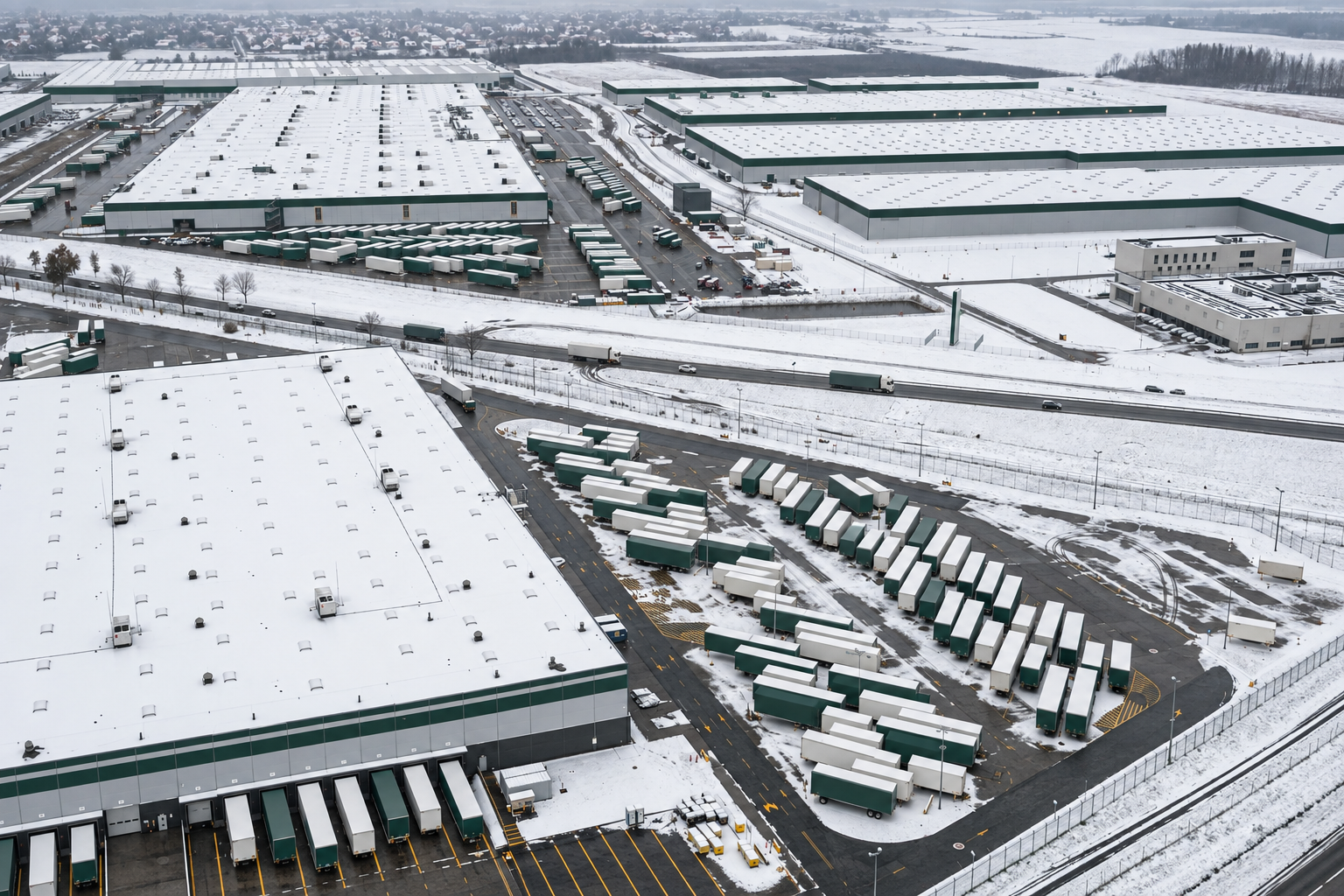
Mike Adams: Yeah, we’re the crossroads of the country for sure, especially here in the Midwest. We’re a day trip from several major other markets. Things are moving quick. People choose to house a lot of their inventories here in Indianapolis, so we have a ton of major distribution centers that we’re currently assisting. You’ll find that the city is expanding pretty wildly right now. It seems like every time I drive in one direction, there’s always new warehouses going up. So, because we’re so centralized and easy to get to, and can disperse from a centralized area, a lot of people are choosing to house a lot of their big distribution centers here.
Mark Mann: Yeah. My son goes to Huntington University, which is northern Indiana. So, we drive through. I never really get to see the west side or the north side, but as I’m driving up to Indy and then around the loop toward Noblesville and then up 69, I noticed just south of Indy, in that whole— is it Greenfield and Franklin area? It is just wall-to-wall warehouses. It’s crazy.
Mike Adams: Yeah, we’re currently delivering trailers down there to the Whiteland area. They’re definitely expanding there. It’s actually kind of crazy. There was a tornado that went through there right as we were starting, and they’ve rebuilt it very quickly. The warehouses are becoming full, and they’re finding pretty quickly that space is tight, and we’re assisting a lot down there. So you’ll probably find 100, 150 of our trailers down there right now.
Mark Mann: Yeah, I’ve seen them. I’ve seen those nice big Meisler red, all lining up right there at those warehouses.
[10:10] Storage as Strategy and the Warning Signs
Mark Mann: So, let’s kind of shift to the difference between strategically thinking about storage and the band-aid, right? That we always hear about: the hair on fire, and storage is just a band-aid. A lot of Indianapolis and Kansas City-based leaders kind of still see storage trailers as that temporary fix. How do you coach an operations manager in Greenfield, or even up in Noblesville, to see mobile storage as a strategic part of their long-term facility plan?
Mike Adams: Yeah, this is an interesting question. It’s a little bit paradoxical, right? A heavy focus of our marketing is going to be centered around us being flexible or elastic, being able to change the amount of trailers that we can provide, and it’s on a month-to-month basis, right? So, it ebbs and it flows based on current demand. So, when you think about that and you’re constantly changing your fleet count, you think about short-term, but then we want to preach it’s a long-term solution. So, it’s a little bit paradoxical, as I said, but sometimes that flexibility can be a long-term solution, right?
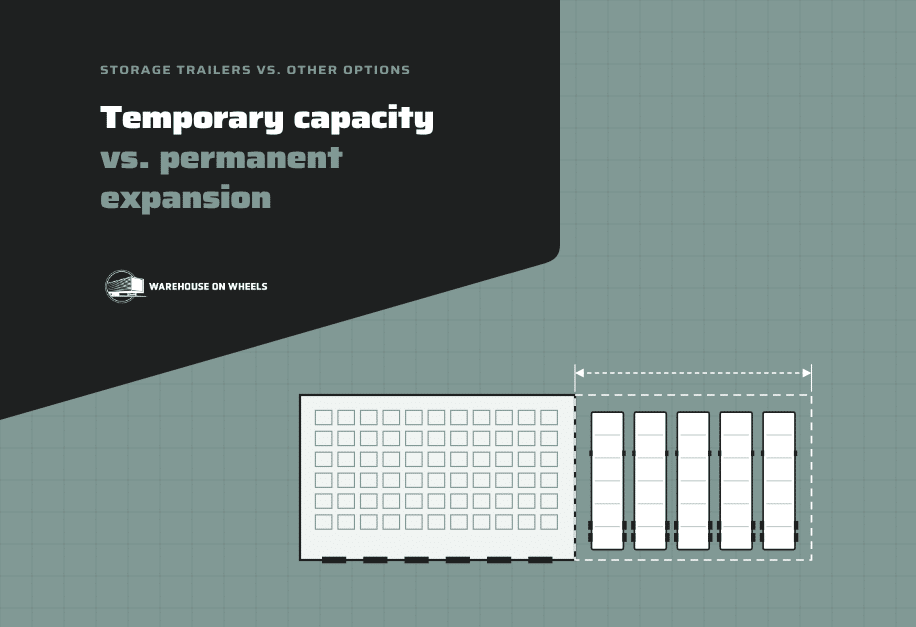
So, one of the Brooksisms our CEO John Brooks likes to say: you don’t build your church for Easter Sunday’s attendance, right? So, when you think about that, you don’t want to build your warehouse for peak capacity. Well, that’s where we come in, and we’re able to provide that extra storage right on site for those times when capacity does overgrow the warehouse.
Mark Mann: Yeah, let’s talk a little bit about that, because there’s got to be a warning sign. So, when a major manufacturer in Plainfield or Whitestown or somewhere around there sees their warehouse hitting 95% capacity, at what point should they call you? Is there a warning sign that they’re missing?
Mike Adams: Yeah, I think so. I think so. There are warning signs probably at about the 85 to 90% capacity levels. Once you hit 95, it’s more of an operational breakdown. You’re probably already past the point of needing to call us. In a warehouse, it’s not just about how full you can make it. It’s really about the flow that is happening within that warehouse, right? Things are coming in, they’re going out. If you bulk up too much on capacity, you’re really starting to lose productivity.
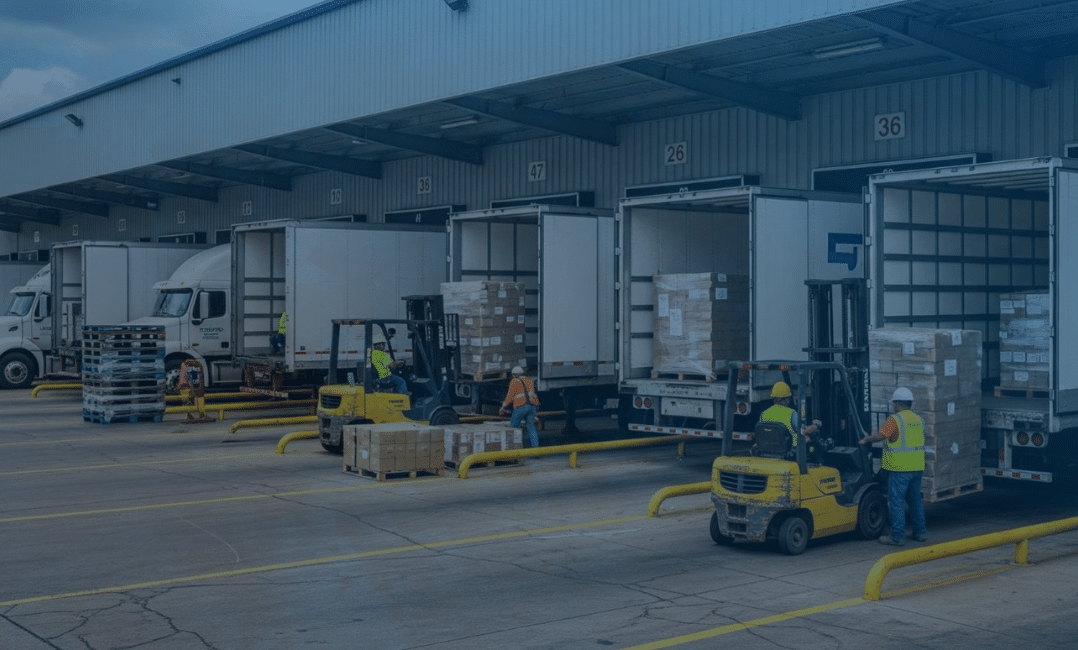
There are certainly warning signs. Some of those, you know, you’re looking at dock doors staying occupied a little bit longer than normal. This can lead to an increase in demurrage fees, which, you know, one of the really important stats of what we can do is a daily demurrage fee is about the same cost as what you’ll pay for a storage trailer from us monthly. So just think about, in the grand scheme of things, what that can really be.
It can also lead to a productivity dip, which is a little bit of a hidden cost. You end up moving materials multiple times throughout your warehouse, trying to find that space. Aisleways start to get clogged up, so you got people having to maneuver in and out of those obstacles, and exits can start to get blocked, and then you have the fire marshal come in and shut you down. So we have seen that several times. So yeah, there are definitely warning signs, and you don’t want to call us after it gets to the point where you’re at like 95% capacity. Definitely before then.
Mark Mann: Yeah. You know, I’ve heard from your colleagues it’s a little bit too late when the fire marshal shows up, right?
Mike Adams: Yes.
Mark Mann: That’s no good.
[14:15] Asset-Light Leases and the Real Math
Mark Mann: So, we’re seeing a shift where companies are really hesitant right now to sign three, five, 10-year leases. How are you helping your Kansas City and Indianapolis businesses stay kind of asset-light in an uncertain 2026 economy?
Mike Adams: Yeah, I wouldn’t want to be signing any leases or agreements for more than a year right now. At any moment, a tweet could change the whole economic outlook. Things are really hard to predict right now. We provide a solution that is month-to-month. You know, that keeps budgets flexible. If things get very tight and you don’t need the space, we’re a phone call away. We come and pick it up same or next day, and we get it off your budget.
Mark Mann: So, let’s talk about budgets a little bit. With Indy, like you said, with Indy warehouse rents kind of hitting record highs, break down the math for us. How much can a company actually save by using a 53-foot dry van as, you know, that external space, versus leasing that extra square footage in a big shiny warehouse?
Mike Adams: Yeah, the math is really simple, Mark. The cost for a square foot on a 53-foot dry storage trailer is, you know, two to four times less expensive. And that is talking about specifically the space. That is not factoring in the cost associated with warehousing. We’re talking about triple net agreements that usually add another $2 to $4 on top of what you see on the listing. Staffing, utilities, insurance. I mean, there’s just a ton of extra expenses. Racking, right? You got to customize the warehouse to how you need it. So, there’s one monthly cost for a storage trailer, and that’s it. We can provide pickup and delivery. But it’s a very straightforward cost, and it’s significantly less than warehousing.
Mark Mann: Yeah, there’s a lot of, you know, other hidden fees that people just don’t think about. So, in a traditional warehouse, you’re paying for the space whether it’s full or not.
How does the Meisler model allow an Indianapolis or Kansas City business to kind of scale their cost exactly to their inventory levels?
Mike Adams: Well, yeah, I mean, it’s keeping it month-to-month. It’s keeping it flexible. A lot of the times, warehouses are half empty, and then, you know, a unique challenge comes for them too: business models change. And I’ve taken several calls from folks in warehousing, and now they’re playing Realtor. Right now they’re trying to sublease half of their warehouse, and I’m pretty sure that’s not in their job description. So, signing up, working with us allows us to handle the extra space that they need, and remove it when they don’t need it. The most expensive space in a warehouse is that space that you’re not paying for— or I’m sorry, that you’re not using. And, you know, with us, that doesn’t happen.
[17:43] Indy Infrastructure, Vendors and Fellow GMs
Mark Mann: So, Mike, you’ve seen operations in other regions, right? I mean, you were in Evansville for a while. And so what is the one thing that some of these other areas, like Detroit or Chicago logistics managers, what do they envy about the Indianapolis infrastructure?
Mike Adams: Yeah, that’s a really good question. I’ve been fortunate to be on tons of roads all over the country. While the physical roads in Indy might not be the greatest, the way that they are laid out and the traffic patterns are far superior to some of those older cities like Chicago and Detroit. Traffic is fairly predictable here. We don’t have that much slowdown, meaning it’s easier to forecast driver times. The I-465 loop, it really helps reach any part of the city fairly quickly.
We’re also in proximity of, as I mentioned earlier, a lot of other major markets: Chicago, Louisville, Cincinnati, Columbus, St. Louis. We’re within one day of all those cities. So, it allows companies to reach those other markets, house a lot of their inventory here, and be able to disperse fairly quickly.
Mark Mann: Yeah. Let’s talk about that transportation. I know that, I think, you guys— you don’t have drivers of your own. You use vendors. So Indy has a massive logistics workforce. How does the local talent pool, in terms of drivers right there in the Circle City, help you maintain faster response times to get trailers out there, to deliver them, and to maintain them?
Mike Adams: Yeah, it’s really important for us here in Indy to have great relationships with our vendors, just as important as it is with our customers. We have a wonderful network of both trailer repair vendors and transportation vendors. That allows us to have a very large pool. So when one vendor, for instance, does tighten up on availability, we’ve got five others in waiting. And with that, it also helps us negotiate pricing, which we pass those cost savings on to our customer, so everybody’s happy. It’s quick service, it’s inexpensive, and it keeps the customers happy.
Mark Mann: Yeah. So when you look out west, you’re in Kansas City, you’re in St. Louis, you’re coming across to maybe Cincinnati, all the way up to Detroit. You got a location in Louisville just south of you. How do you coordinate with the other locations when a customer has a footprint that spans, you know, the entire I-65 or I-75 corridor? And also, the follow-up question would be, do you share trailers? You know, if you have a customer that needs something closer to Louisville, do you coordinate with the GM there and kind of work it out?
Mike Adams: Yeah, we’re seeing this more and more on a daily basis here as we grow our national brand. I’ve been coordinating a lot more with GMs, not just here in the Midwest, but across the country. You know what, our main objective is to take care of our customers. So, it’s really easy to know and to trust our other locations, that when I have a customer from Indy that’s got another facility in any other market, they’re going to get taken care of the same way they do here. We all have, you know, great respect for each other. We don’t let ego get in the way. If I don’t have the trailers and Louisville does, I’m going to call up Chris Martin and let him get that business. So, it’s all about the customers at the end of the day.
[21:48] Best Customers, Security and Clutter
Mark Mann: Absolutely. And that’s a great outlook to have for any company. Let’s talk a little bit about customers, while we’re on the subject. When you look at your most profitable and efficient customers in either Indy or KC, what’s the one strategy they all have in common?
Mike Adams: I would say the best customers allow us to do what we do best, so that they can focus on doing what they do best. They let us handle the trailers, and when we deliver a trailer on site, they already have that trailer assigned to a specific job, right? It’s when customers order, you know, 10 trailers because they have a bunch of different things they need to do, but then they all get there and they don’t really have a great idea of a plan in place. The best customers are the ones that know exactly what’s going on those trailers and how they’re going to be utilized. So, you’re not moving it around multiple times when it doesn’t necessarily need to be.
And I always encourage our customers to work with us on that, because we see it, you know, more than them. We deal with so many different kinds of industries and customers that we take the best from all of them and can come up with a really good game plan.
Mark Mann: So Mike, with Indy being kind of a life sciences hub, you know, with Eli Lilly there and all of that, how is the storage of high-value components for pharma changing the way you secure and monitor your trailers? Because I know down here in Louisville, you know, we have UPS Healthcare just south of us, and they use trailers. So, what’s it like up there in Indy?
Mike Adams: Yeah, we haven’t dabbled too much in that, Mark. Not yet, anyway. So, Eli Lilly is building a very large district up north of the city. We actually do have some trailers on site there now, for the construction. It’s not something that we’ve dealt too much with. But trailer security is a major factor, right? No one wants their inventory stolen. So, every trailer, you know, has the capability of being locked up. One little pro tip I always give people is back the trailers up back to back, so that the only way you’re getting in is cutting in.
Mark Mann: Absolutely. That’s a great tip. So, what does it mean for a local warehouse worker’s daily life, other than reducing their blood pressure, when their facility isn’t just cluttered with overflow because they have, you know, trailers all over the yard?
Mike Adams: Yeah, I can only imagine their working life would be much more efficient and less frustrating if they had trailers on site to help with the capacity in their warehouse. I kind of equate it to what I’m currently going through right now on a personal front. So we moved into a new home and I’m painting the garage. Well, the garage was a catch-all for storage, right? Well, now I’m trying to paint it, and I had to move everything to the center, and I’m just running into stuff. I’m having to move paint stuff over and over and over again around all these obstacles. I tell you what, it’d be a lot more efficient if I could just put that stuff in a trailer in my driveway.
Mark Mann: Yeah, that’s so true. We all need a couple, right?
[25:15] Space Audits, Yard Habits and the Indy 500
Mark Mann: So, let’s give our Indianapolis and Kansas City listeners a playbook. Hopefully, we got a lot of listeners out there in your market. If there’s an operations manager listening right now who’s out of space and out of budget, what’s the first step you would tell them to take before they even call you there at Meisler?
Mike Adams: Yeah. So, the first step that I would recommend is to perform a space audit, as I like to call it. Figure out what your space is actually being used for. Do you have inventory that’s dead or slow-moving? Do you have inbound freight that’s just sitting and clogging up space? Do you have trailers sitting in your— inbound freight that’s sitting in your yard on shipping containers, not being moved and causing you a daily demurrage fee? Do you have outbound freight staged too early in the docking areas? Performing this kind of audit can free up usually about 5 to 10% of your space just right off the rip. And that’ll help with the flow. And then we can really start to look at your inventory and your space and find out how we are able to help you.
Mark Mann: That’s great. What is one simple yard change that you’ve seen your best customers make that more people probably should copy?
Mike Adams: Yeah, I’ll go back to the question before about our efficient customers. I would definitely say, instead of looking at your trailers as one big pool, focusing on each individual trailer, what that job is and where that trailer needs to go, on a daily basis. A lot of our most efficient customers will also label each trailer for easier spotting with the yard jockey, so that they know, you know, what is on that trailer. We have a lot of customers that actually implement our trailers into their warehouse management system. So the materials on it are palletized, that are linked to the barcode that’s on the trailer, and it just leads to a more efficient operation.
Mark Mann: Yeah. It makes it so much easier when you’re trying to find things and, you know, source the stuff that you have.
So a lot of your customers are manufacturing or industrial suppliers, and even retail. But as you know, these 450-square-foot boxes can be used for almost anything. I was talking to one of your colleagues down in North Carolina, who says during tobacco season they store tobacco in them. What’s the most unusual use case for our trailers in your market?
Mike Adams: Yeah, so I’ve been thinking about this one. I don’t have any, like, oddball stuff. Certainly not tobacco. I think one of the coolest and relevant ones is, here in Indianapolis, we have a customer that does audiovisual, and they do a lot of work with the Indianapolis 500. So our trailers are brought into the Speedway and actually house some of the background displays for major broadcasting. So, when you turn on your television for the Indianapolis 500 and you see the guys, you know, behind the desk talking about it, that broadcast booth was at one point on our trailers.
Mark Mann: That is really cool. I think that is one of the best ones I’ve heard. That’s really, really cool. So, I’ve also heard from your colleagues, who’ve told me that they have saved customers millions of dollars a year by offering, you know, a couple hundred dry vans for storage instead of, you know, as we talked about, the customer leasing a big expensive warehouse. What’s the best problem-solving or cost-saving story from your market?
Mike Adams: Yeah. So, if you were to take our largest customer here in Indianapolis, and you were to, let’s say, remove the trailers since we have started doing business with them, and you were to switch that out for a warehouse, over the last 3 years you’re talking over a million dollars in savings. And this customer does use us in their warehouse management system. It’s very efficient for them. And I don’t know about you, but I would prefer to have another million in my bank.
Mark Mann: Absolutely. And that’s what we want, you know, all of the folks out there who are listening to understand: that you’re getting space for pennies on the dollar compared to what you would pay at a warehouse. It really, really is. It’s very meaningful.
Mike Adams: Yeah.
[30:14] Signature Round
Mark Mann: So, let’s get personal real quick here, Mike. All right. This is the signature round. What was the specific moment in your career personally when you thought, “Yeah, man. This is my world. Warehouses, trailers, that Indy-KC hustle. This is my gig”?
Mike Adams: Yeah. So, I never imagined that I would be in this industry. You know, to be honest, I would probably say when I moved back to Columbus, Ohio, and I went on the first interview for the job that got me into the industry, I took a golf cart ride around the yard with who would end up becoming my operations manager. And he was just going over, showing me the trailers, showing me the day-to-day processes and all that. And coming back from the West Coast and going on the yard in January in the freezing cold, I just thought to myself, you know what, this feels more like what I want to do. And, you know, it’s more of a blue-collar feel. I love that. Definitely not a suit-and-tie kind of guy. So I would say from the moment I first learned about it.
Mark Mann: Yeah, me too, actually. You know, working so many years, you know, with a tie around my neck for 25 years, you know, being able to throw on a pair of jeans and a baseball hat and get out there in the yard, it is life-changing. Really is.
Mike Adams: Yep. Yep.
Mark Mann: So when you leave the yard in the evening and head home, what pulls you away from freight and space and all of that, so you can show up at 100% for your team the next week? What are your hobbies?
Mike Adams: Yeah, so those have changed drastically over the last couple years. So, in the last two years I have gotten married. I have purchased a new home, my first home. And we have found out that we are expecting our first child. So—
Mark Mann: Oh, congratulations, man.
Mike Adams: Thank you. Thank you. So, a lot of house projects. The nursery is going to be the next one after the garage. So, yeah, it’s just— it’s a simple life. I love it. Hanging out with the wife and family and dog. And, as you mentioned, maybe a little bit of bourbon.
Mark Mann: Yes, absolutely. Got to have a little bit of bourbon.
So, I want you to think about the best boss or mentor you ever had. What’s the one thing that they said to you that you now find yourself repeating to your team there in Indy or KC?
Mike Adams: Yeah. So, this is something I try to live by every day. No one’s perfect, but it is something I strive for. And the saying goes, you know: if you do 100% of the things correct 100% of the time, you never have to look over your shoulder. And by that, I don’t mean you have to do them perfect or be the best at what you’re doing, but you have to do them the right way. So, if you’re, you know, doing a process and you’re not cutting corners, you ain’t got to worry about someone coming back and asking you, “Why’d you do it this way?” You know, or you just— you’re confident of what you’re doing. And things typically work out for you if you’re doing them the way they’re supposed to be done. And a simple thing that I always look to is: put your shopping cart back after you’re done.
Mark Mann: Yes, absolutely. And, you know, it drives my wife nuts, but don’t just take it to the little corral. Walk it all the way up there into the store, right? That’s another Brooksism. John Brooks says, “Wherever you are, whatever you’re doing—”
Mike Adams: “—leave things better than the way you found them,” right?
Mark Mann: And so, even in our personal lives.
[34:20] Retiring a Storage Trailer Myth
Mark Mann: Well, Mike, this has been a pleasure. Couple more questions. What is the one myth about storage trailers that you hope we can put to bed and retire after this episode?
Mike Adams: Yeah. It would certainly be that storage trailers are looked at as just worn down, the worst of the worst equipment, right? It frustrates me when I am talking to a new customer and, you know, I’m telling them we have storage trailers, and then it gets to the point that they say, “Well, we can’t have it leak. Like, there can’t be any holes in the roof.” And it just always boggles my mind, like, who have you been working with, that that was the norm or the standard? You know, storage trailers are meant to go to work for you and keep your products safe and secure. And I hope that we’re doing that, as Warehouse on Wheels is changing the perspective, you know, of our customers, that storage trailers are actual, you know, good pieces of equipment.
Mark Mann: Yeah. It’s almost like our competition has left a bad taste in everyone’s mouth, right? Or tarnished the reputation of storage trailers in general, right? And it’s not like that. When I walk out in these yards, I mean, they are clean, dark, dry—
Painted brightly, great tires. I mean, they look great.
Mike Adams: Yep.
Mark Mann: Last question. Hopefully we have a lot of listeners in Indy and Kansas City right now. And for those of them who are listening, who possibly are feeling the squeeze in your markets, what’s the one thing they should do this week?
Mike Adams: Well, I think it’s pretty simple. They should give us a call to see if there’s any way that we can help them out. And it doesn’t have to be on, you know, specifically storage trailers, right? We have a lot of knowledge. We have a lot of contacts in both of those markets, and we can probably help them out with a lot of different issues. Are we the solution for all of their problems? No. But we can find you the solution. You know, yes, our main bread and butter is storage trailers, but we want to help out anyone that we can, on any front. So, we’re here to be a trusted adviser for all of our customers.
Mark Mann: Fantastic. And Mike, they can find you on LinkedIn. They can also find you at www.warehouseonwheels.com. Is that correct?
Mike Adams: Yes, that is correct.
Mark Mann: Absolutely. All right, Mike Adams, General Manager at Meisler Trailer Rentals, thank you for showing us the Wow Factor here in the Midwest.
Mike Adams: Absolutely. Thanks, Mark. It’s been fun.
Mark Mann: I’m Mark Mann, and we will see you on the next episode of The Wow Factor.