
Noel Troxell on Yard Congestion and Flexible Capacity in Memphis
In this episode, host Mark Mann sits down with Noel Troxell, Memphis General Manager of Meisler Trailer Rentals, a Warehouse on Wheels brand, to talk about how the FedEx World Hub shapes the Memphis trailer market, what yard congestion does to productivity, and why planning for peak changes how customers use storage trailers. Noel describes the functional, timing and location mismatches behind his customers’ space problems, a tool company that rented 250 trailers for about a year before building its next warehouse, and a customer that kept operating from WOW trailers after its main warehouse burned to the ground overnight.
Key Takeaways
- The FedEx hub makes Memphis a market built on flow. Noel says Memphis is one of the cities where you can take any product and put it anywhere in the world within 24 hours, and FedEx has sped up the speed of doing business there. Distribution centers focus on flowing product through quickly, and the market’s DC-centric churn means his team puts out and takes in 1,300 trailers in a given year. Where Detroit and Atlanta look for production support, Memphis customers concentrate on getting the right flow.
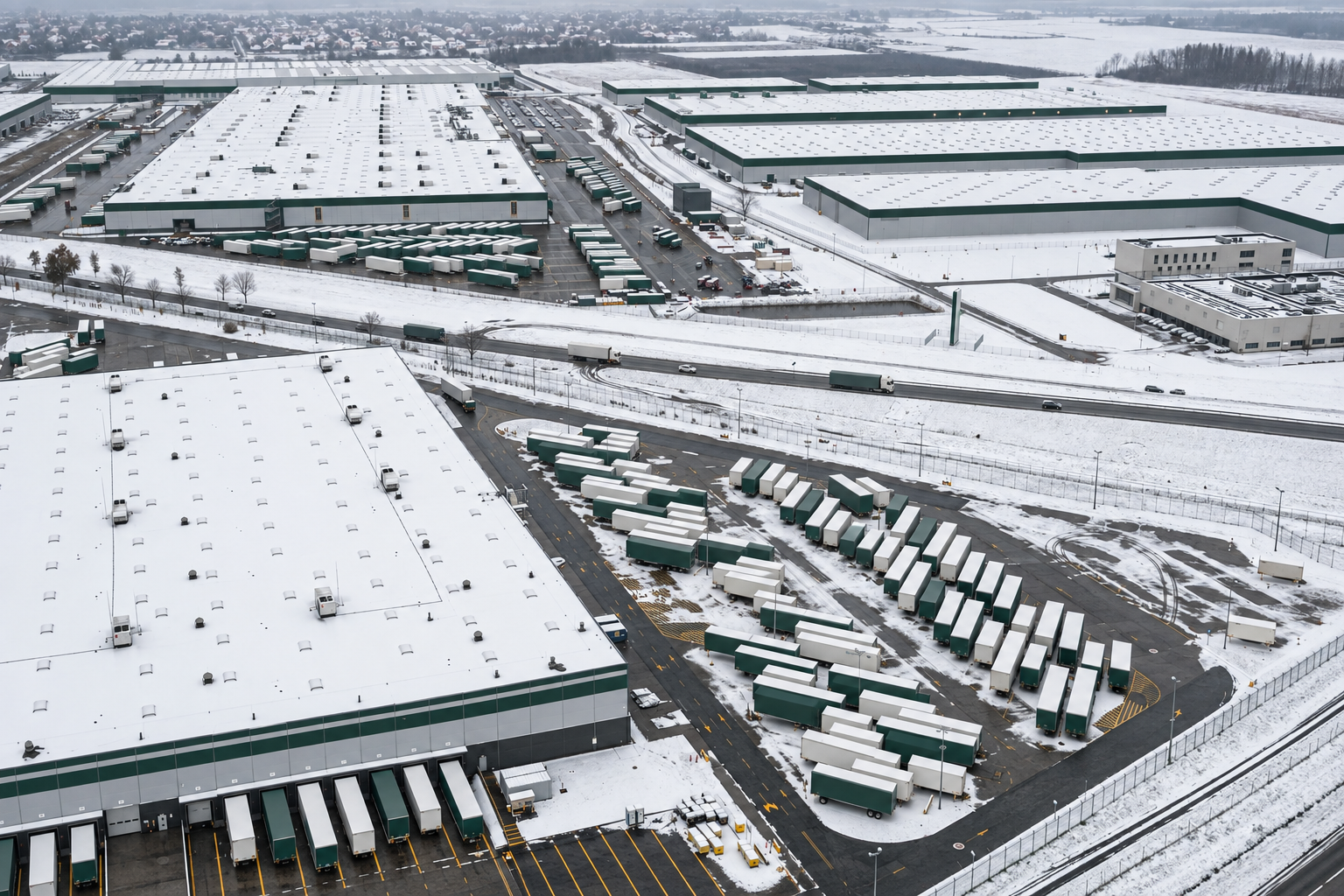
- Noel traces customers’ space problems to three kinds of mismatch. A functional mismatch is enough warehouse but not enough parking, or the reverse. A timing mismatch is needing space now when it isn’t available now, and a location mismatch is being too far from the airport or the rail lines. On a congested yard, hostlers damage equipment quite a bit more, and having to move four or five trailers to reach an order slows productivity. When customers run out of yard space as well, WOW parks their trailers on its own trailer yard, which had 240 to 250 customer trailers on it at the time of recording.
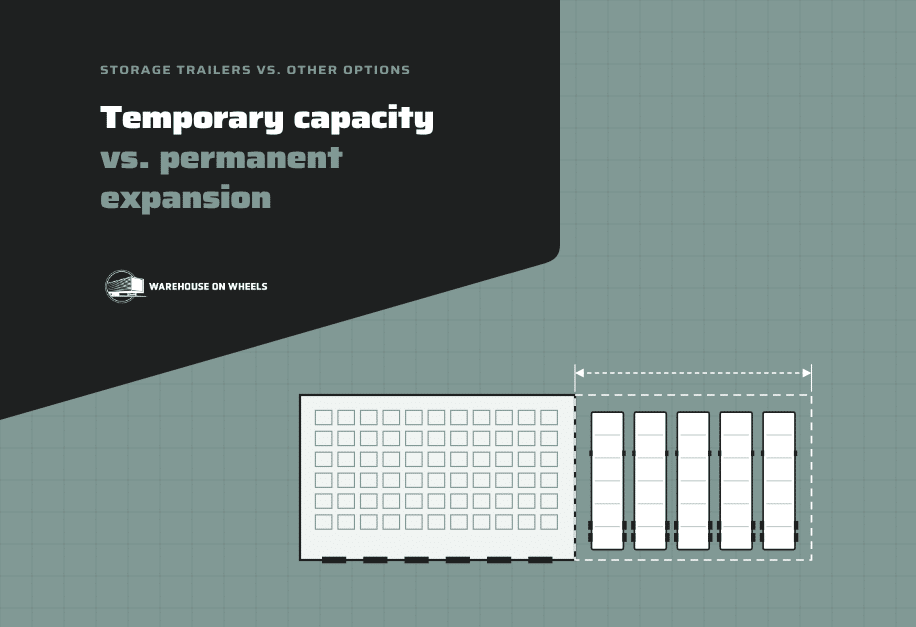
- Trailers flex from a single day to 12 years. A warehouse lease comes with a minimum term on how long you keep it, and you pay the full amount even when you’re only using part of the building. With trailers, Noel says, you can pick one up that day and turn it in the next day, or keep it a year or 12 years, and if you need 10, that’s all you get. Every trailer goes through the shop before it leaves the site to make sure it’s wind- and watertight.
- A tool company tested demand with 250 trailers before building. The company started with one warehouse of half a million square feet and grew so fast that it considered building, without knowing how long the demand would last. It rented 250 trailers and kept them for about a year, then built another warehouse once it decided demand would stay. It filled that one pretty quickly, restarted the process with WOW, and is now on its sixth warehouse, with the option to right-size its trailer fleet back down if demand doesn’t stay.
- A customer facing 100 inbound containers got 100 trailers. The intermodal containers were coming from overseas, where the timing and size of each shipment are hard to predict, and the customer had nowhere to put them. Noel’s team ramped up its operations, ready to hire outside drivers if it had to, so the customer had no product sitting out on the yard or paying demurrage. Noel calls it a typical story in Memphis.
Episode Chapters
Click any timestamp to jump to that section on YouTube.
- 00:00 — Meet Noel Troxell
- 02:31 — A Normal Week and the FedEx Effect
- 05:52 — Three Biggest Space Headaches
- 09:06 — Going Vertical and Flexible Capacity
- 12:28 — 250 Trailers and a 100-Container Surge
- 15:19 — Planning for Peak and Quality Equipment
- 19:19 — CFO Math and a Warehouse Fire
- 23:28 — Yard Habits and Unusual Loads
- 26:18 — Bridging a Construction Delay
- 27:58 — Signature Round
- 30:32 — Retiring a Storage Trailer Myth
Transcript
[00:00] Meet Noel Troxell
Mark Mann: Welcome back to The Wow Factor. I’m your host, Dr. Mark Mann. On this episode of The Wow Factor, we visit the distribution capital of America. Memphis, Tennessee is the primary logistics artery for the United States. It’s home to the FedEx World Hub, the largest sorting facility on the planet, as well as the Memphis International Airport, which consistently ranks as the busiest cargo airport in the world.
Today’s guest leads our operations in a market currently undergoing a massive high-tech transformation. Memphis is host to Elon Musk’s xAI supercomputer campus and also Ford’s BlueOval City EV plant. Memphis is evolving from a traditional transit point into a global epicenter for advanced manufacturing and AI infrastructure. Noel Troxell, General Manager for Meisler Trailer Rentals in Memphis, welcome to the Factor.
Noel Troxell: Thank you, Mark. Glad to be here, buddy.
Mark Mann: Now, Noel, you lead Meisler’s operations in one of the most freight-dense cities in the world, but before we dive into that, I want everyone to kind of get to know you and your location. So, how did your career journey lead you into the heart of the Memphis logistics triangle?
Noel Troxell: I went to University of Memphis, and I had my resume on a job board, and I got recruited by a company called TIP, which was— you know, all I saw was the GE logo, and I thought, man, I was in high cotton. So I responded to it, went to a dinner with them, and we sat and talked about how much potential there was in this city, which is— I think probably over 110,000 jobs in the city are transportation-related. It’s like 30% of people employed here that way. And this was just, you know, a couple of— my first year out of college, and I’ve been doing this type of a role in trailers ever since. I got told one time that, you know, once you get diesel on your shoes, it’s hard to get it off.
Mark Mann: That’s exactly right. And, you know, as I was doing my research, it did say that Memphis is so freight-dense, but I had no idea it was 30% of the careers there are transportation.
[02:31] A Normal Week and the FedEx Effect
Mark Mann: That’s amazing. So between the constant activity at the FedEx hub and the heavy industrial traffic on I-40 and I-55, what does a normal week look like for you and your team in this market?
Noel Troxell: Well, you know, FedEx being here kind of drove the market to be a DC-centric type of a city, and so we have a lot of churn, and that’s an inside term for checking in and out trailers. In any given year, we’ll probably put out and take in 1,300 trailers, and a lot of short-term needs for surge and— We handle that; that’s just one aspect. We’ve got a full-service shop out back with eight very qualified techs. These guys are all in, you know, 20, 30 years of experience each on repairing, completely rebuilding trailers. So we offer that, and we’ve got drivers that move trailers around for our customers. And then we have service trucks.
So managing those three aspects is a phone call pretty frequent. You know, phones are always ringing, drivers are always up front. It’s never dull.
Mark Mann: Yeah. People talk about the FedEx effect in Memphis, but from your perspective, how does having the world’s largest sorting facility in your backyard change the way all the other local businesses think about their storage needs?
Noel Troxell: And it does, because we’re one of the cities that you can take any product and put it anywhere in the world within 24 hours. And a lot of the distribution centers— well, a lot of things have changed. Businesses changed, just-in-time inventory, and then they focus on, you know, flow instead of having stuff in hand. So they’ve got to be able to flow product through quickly, and we have a lot of seasonal items. So we’re in peak season. You know, everybody plans for peak season if they’re going to be successful, you know, not just for average.
But we’ve seen a growth in, you know, just a lot of DCs, e-commerce businesses. Anybody— you know, you get on Amazon, we’ve got quite a bit of presence from them in town as well. But that’s also coupled with the FedEx effect, because, you know, a lot of people, they like having their product quicker. Everybody wants it now, and FedEx has allowed that to the city, and it’s really sped up the speed of doing business in the city.
Mark Mann: That just-in-time effect that you have going on there, is that primarily due to automotive? Got a lot of automotive places in the city there?
Noel Troxell: We do have— we do have Ford, you know, we have automotive, and then I guess you’re going to say Class 8 stuff would be automotive as well, with the Daimler Chrysler has stuff here, and then just about anybody that needs to get product into their storefronts quickly.
[05:52] Three Biggest Space Headaches
Mark Mann: Yeah. So, from what I understand, Memphis’s industrial vacancy recently dropped to around 8.5%, but a lot of sectors are still struggling to find functional space. What are the three biggest space headaches your customers are facing right now?
Noel Troxell: Well, it’s either a functional mismatch, where they have enough warehouse but they don’t have enough parking, or they have too much parking and not enough warehouse. And then you can have a timing mismatch, where you need it now but it’s not available now. And then kind of a third one there is a location mismatch. You’re not close enough to where you need to, either to the airport to ship it, or to one of the rail lines, or even— you know, we’ve got four Rs here with rail, runway, river and road. And that’s what makes us so distribution-heavy.
Mark Mann: So, tell me about a recent week in Memphis that really demonstrates what happens to a local warehouse or production line when the yard gets too congested.
Noel Troxell: Well, this is a common thing here, ’cause we get a lot of damage on the yard when the yard’s congested. You know, yard hostlers will damage equipment quite a bit more, and that causes— you have to offload product to fix the trailer or risk getting it damaged from weather. And then it just slows productivity up. If you’ve got to move four or five trailers to get your product that’s been ordered off, then it kind of just disrupts the business.
Mark Mann: Does your location have a mobile tech, a mobile mechanic, that goes out and services trailers that are parked somewhere else?
Noel Troxell: Absolutely. It’s a big part of what we do, is supporting our trailers once they leave the site. You know, we run every trailer through the shop before it leaves the site to make sure that it’s wind- and watertight and that, you know, minimize any kind of opportunities for slowdowns. But at the same time, we offer to the customers— either they can call in and say, “We need repairs,” or we set them up on a routine schedule where we’ll go by and do a check for them, so we can help them find those problems before they occur.
Mark Mann: Very good. And do you also allow customers to store product on your yard as well?
Noel Troxell: We’ve ran into that a lot in the last couple of years, where it’s like you’re saying: the warehouse is too small, then they ran out of yard space. And so we’ve got 240 to 250 customer trailers parked on the yard now, just to help out the space.
Mark Mann: That’s a great service.
Noel Troxell: With our in-house drivers, we’re able to— you know, we get an email daily, or every morning, and we’ll say, “Hey, you know, we need these trailers back over here,” or, “Can you come pick these up?” And we’ll put that on the schedule and just become a part of their business.
[09:06] Going Vertical and Flexible Capacity
Mark Mann: Yeah, that’s outstanding. So with the massive tech projects like BlueOval City and xAI moving in, how are you seeing existing local companies shift their storage strategies to compete for the limited industrial acreage?
Noel Troxell: Well, one, everybody’s focused on speed. We get it in, get it out fast, so it’s not sitting on the shelf, and then, you know, you’re getting the right product in there. And then secondly is people are going vertical. These warehouses are now 36 and 40 foot tall, so you can have racking in there. Instead of— you know, older-type warehousing, you may have had a 20-foot ceiling, you can get two rows in there, but now, you know, these tilt walls that they’re putting up, you can sometimes have 40 foot of clearance.
Mark Mann: It’s crazy. We’re seeing them everywhere. But a lot of leaders in the Mid-South still see storage trailers as kind of that temporary fix. It’s a band-aid. How do you coach a Memphis operations manager to see mobile storage as a long-term strategic tool for the supply chain rather than just a band-aid?
Noel Troxell: Yeah. What we like to do is to let them know the flexibility, so they don’t have to have a long-term commitment on a warehouse. And it’s a right-size thing. So if you need 10, that’s all you get. You know, you don’t have to buy a half-million-square-foot warehouse just for, you know, a partial load. And then, other than the flexibility, is dependability. You know, it does take us, you know, having to get our foot in the door to show them how dependable we are. But like I was saying earlier, you know, we’re an extension of their business, and they just use us and our manpower and our abilities, which is, you know, the drivers and availability of equipment, to allow them to grow and shrink as they need.
Mark Mann: And if they only need it for a month, they keep it for a month. If they need it for 15 years, they can keep it for 15 years, right?
Noel Troxell: Or a day. Yeah. Or a day. If you just need it one day, come get it. Well, you know, we’ll bring it to you, do your cross-docking, whatever you’ve got to do, and we’ll come back and get it, just to give them another arrow in their quiver, you know, instead of just going, “How am I going to handle this?”
Mark Mann: Yeah. And that really helps them build their strategy. So how does the strategy for an intermodal-heavy market like Memphis differ from the operations we see in more manufacturing-focused markets like Detroit or Atlanta?
Noel Troxell: Well, I think Detroit and Atlanta, you know, those type of places have a lot of manufacturing, like you’re saying, and so they’re looking for production support in their warehousing. Here, we’re looking for flow. It’s got to be able to flow through the warehouse fast. It’s not— you know, in other cities, if the product’s not on the shelf, you have to wait for it to get there, and you have to store quite a bit in order to get that. With FedEx and with other carriers and so much freight coming in and out of the city, they’re not having to store a lot of product in the warehousing, so they concentrate on getting the right flow and getting it through.
[12:28] 250 Trailers and a 100-Container Surge
Mark Mann: Walk me through a time when a customer was ready to sign one of those big, expensive new warehouse leases, 40-foot ceilings in DeSoto County or Southwest Memphis, and you helped them realize that they could flex their existing site using mobile storage instead.
Noel Troxell: There’s a very successful tool company that’s— quite a few DCs here in town. And they didn’t always start with quite a few DCs. They started with one warehouse of half a million square foot, but their business and product was so successful that they grew, and they were entertaining warehousing and building, but they weren’t sure how long the demand would last. So they rented 250 trailers and kept them for about a year, and then, you know, they said, “Well, this demand’s going to stay. We’ll build a warehouse, another one.” Okay. So they filled that up pretty quick, and we restarted the process, and now they’re on their sixth warehouse.
And they just used that as a “Well, let’s see if demand is going to stay. If it stays, we’ll put a brick and mortar up. If it’s not, then we can just change our fleet size and right-size back down to the right equipment.”
Mark Mann: Fantastic. Tell me about a time when a customer called you in a real “No, we’re out of space” kind of panic, maybe during, like you said, the peak shipping surge or supply chain bottleneck, something like that.
Noel Troxell: We’ve had— that’s a typical story here in Memphis, whether you have 100 intermodal containers coming in and nowhere to put them. We’ve had a customer that had that, and they were just ready to look like me and you and pull their hair out. And, you know, he said, “Really, you can get us 100 trailers in a week?” And we’re like, “Yes, sir. We’ll have them there on time.” And, you know, we’ve got to ramp up our operations. If we’ve got to hire outside drivers, we’ll get them over there. That way you don’t have products sitting out on the yard or paying demurrage.
And it really took a load off that customer, ’cause AutoZone’s another place that’s based here. So they’ll have huge shipments coming in, and because they’re coming from overseas a lot of times, you don’t know the timing of what’s going to get here, or when it’ll get here, or how much is going to show up on what day. And this customer had one where he said, “No, I’ve got a hundred coming in. It’s going to be here in 3 weeks. What can we do?” And fortunately we were able to ramp up and get him 100 trailers and help his day out a little bit.
[15:19] Planning for Peak and Quality Equipment
Mark Mann: In your experience, what separates the Memphis companies that recover and grow from the ones that stay stuck in a cycle of yard congestion, just month after month?
Noel Troxell: The separation there is that people that use their yards as part of their system. You know, it’s an operating philosophy. So they treat the yard as part of their core system instead of— it goes back to that planning for peak season instead of planning for average. So when they plan for the peak season, when it’s— you know, they know that either at Christmas rush, back to school, or whatever that rush is, their volume— they’ve seen their tops, and they planned for their tops. And so now they’re looking at their yard as an extension of their business, as opposed to a problem that you have to deal with.
Mark Mann: Allows them to be a little bit more proactive than reactive.
Noel Troxell: Absolutely.
Mark Mann: You know, knowing what I know about you and your team there in Memphis, you are very in tune with the customer. I mean, you’ve got your finger on the pulse of what they need and what they’re going to be asking before they even ask it. So think about your favorite warehouse manager or favorite customer. How does having 50 or 100 Meisler trailers there quietly make that person’s day easier when the docks are full?
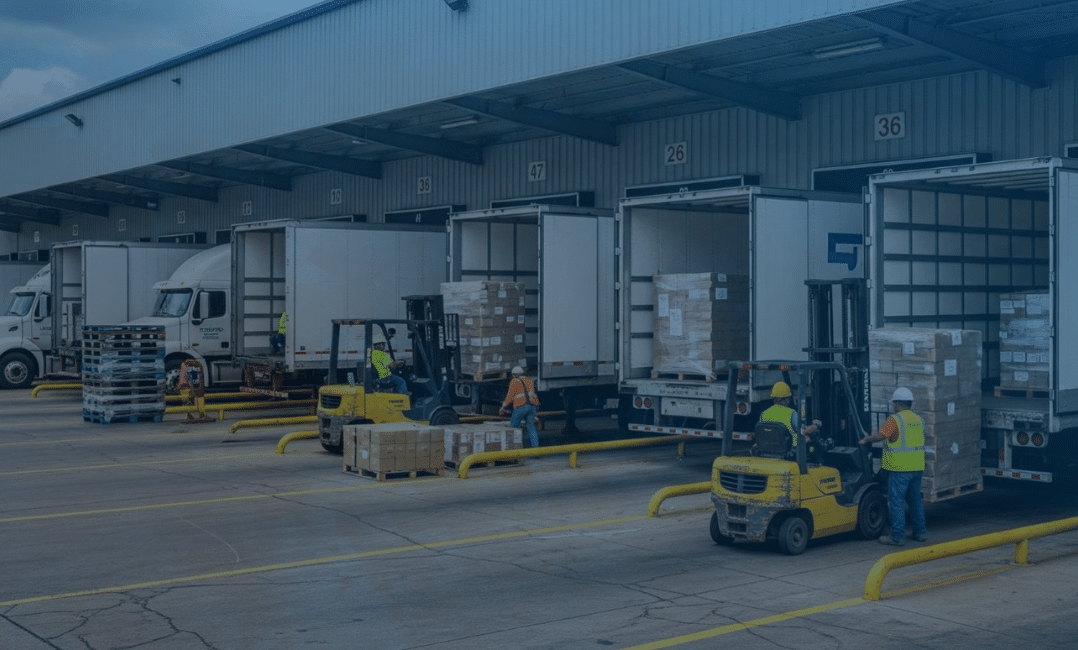
Noel Troxell: Is one of our core things here. It helps there as well, is safety. You’ve got aisles full and product in aisles. You can’t get around. You have to move things; it kills your productivity. You have to, you know, get a forklift and move pallets out of the way in order just to keep going, or move four things to get to one. And so, you know, we can increase that flow. You get the product off the floors and into a trailer where it’s safe and dry.
Then, you know, the forklift drivers can move more freely around the warehouse. They can access product. They can inventory, you know, where it needs to be. So they don’t have to go looking for product. A lot of times when they’re jammed up, you know, it’s not that you can put it where you want it, but you have to put it where you can put it. And this allows them to, you know, spread their footprint a little bit and put product separated out.
Mark Mann: You know, I know that you’re not a computer jockey. You are out in the field quite a bit. Have you ever had a time where a forklift driver— you’re out there in a yard or in a warehouse, and a forklift driver has actually said, “No, this completely changed how I managed my inbound flow”?
Noel Troxell: Thinking about that one, Mark, what I’ve heard most from the guys on the yards is— and that comes from the delivery and the quality of the equipment. So if they get a piece of equipment that’s ready to go and it’s been completely looked through, they know it’s not going to be, you know, leaking, or the tires are down, or brakes are bad, or something like that. But see, the quality of the equipment helps their life, in those pre-checks like we were talking earlier.
So a lot of times those guys, they’ll get instructions, and then they’ll go out to fulfill those instructions, and they get the piece of equipment and it needs repairs, or it needs a flat repaired, or it’s got a hole in the roof and it’s got product damage. So that disrupts their day. And the higher quality a piece of equipment you can get in there, then the smoother their day gets, and so they can just focus on, you know, just getting done what their task is, instead of having to add three or four more steps to it, getting equipment fixed.
[19:19] CFO Math and a Warehouse Fire
Mark Mann: Very good. And so let’s kind of switch gears here and talk a little bit about budget. I want you to put your CFO hat on, and let’s really talk about the financial impact that mobile storage has. So without naming names, tell me about a Memphis customer who saw a clear financial win on demurrage, like you talked about earlier, or overtime costs, by switching to a mobile storage model.
Noel Troxell: Well, first one that comes to mind is— and I won’t name names, but— they were forced into it because they had their warehouse catch on fire. So their complete business was immediately disrupted, and it burnt to the ground overnight. And so all of their support— and it wasn’t just— they had four or five warehouses in a vicinity, and their main one, that housed all the products, burnt. So now that they woke up the next day: what do I do?
And we met with them, and they asked for a certain amount of performance from us to get equipment over there. And we just steadily poured equipment in and staged it for them, so that certain types of product would go in these trailers and these trailers. So they really had to reroute how they did all their business. But they’re rebuilding, but in the process of rebuilding, they don’t have to shut down. And so they’re using our 250 to 300 trailers to store what would be normally in a warehouse. And instead of, you know, just having to shut down while repairs are made, it allowed them to keep operating.
Mark Mann: Yeah, that’s expensive. I mean, millions of dollars an hour, having to stop altogether. It would cost them millions just—
Noel Troxell: And just— and products not flowing. You know, they’ve still got people making it, but they didn’t have anywhere to store it. They didn’t have a way to access, you know, what they were getting made to ship out. So it just allowed a company to continue to do business even though they were without the warehouse.
Mark Mann: Just looking at the market, and knowing that Memphis, you know, has warehouse rates of, like, I don’t know, $9 a square foot, how do you whiteboard the cost savings of mobile storage for a supply chain manager or VP or something like that?
Noel Troxell: A lot of times that nine, or $8 to $9 a square foot, comes also with a contract, a minimum term on how long you’ve got to keep it. And it’s not flexible. You can’t just rent half the building, a quarter of the building, or if you’re not using it, you know, you still have to pay the full amount. With trailers, you’re going to get about 450 feet of floor space. And if you go by cubic feet, it’s 4 to 5,000 square— you know, cubic feet. And if you just do the floor space alone, that’s 50 cents a foot versus $9 a foot. And that’s as flexible as we said earlier. You pick it up that day, you can turn it in the next day; you need it a year, you need it 12 years. And so you kind of customize your need with your supply.
Mark Mann: That’s just a no-brainer: 50 cents a square foot versus $9 a square foot. I mean, you just can’t beat it.
So if an operations manager is out of space and out of budget today, and they’re listening in your market, what’s the first step you would tell them to take before they even call you?
Noel Troxell: I would say, you know, I would ask them just to run the math, and look at the pricing of a warehouse versus the pricing of a trailer. And, you know, the cost of unproductive operations. If, you know, when you run out of space, you’ve got people that are not, you know, performing their optimal.
[23:28] Yard Habits and Unusual Loads
Mark Mann: You know, we get into habits. I know, you know, we have them here, and I know these warehouse managers and yard supervisors, they get into these habits where they just do the same old stuff they’ve been doing again and again. What’s a simple yard change that you’ve seen your best customers make that more people should try to copy?
Noel Troxell: What I’ve seen is the ones that do it successfully are the ones that use the yard as part of the product cycle. Instead of— you know, they’ll put, like, inventory on the, like, trailer. So each individual trailer be an individual warehouse with X parts on it. So they know where everything is. They can easily access it. And it’s, you know, not treated as a burden. It’s more treated as a tool to use. “Okay, we’ve got, you know, finished goods over here. We’ve got raw materials over here.” And then, you know, in the plant we’re, you know, making the widgets.
So the ones I’ve seen successful are the ones that just really treat it as part of the cycle. It’s like, “All right, we’ve got this product going, you know, raw materials going into these trailers, run it through the manufacturer, and then they’ve got finished goods on the inside here, and then it’s out the door.” So it’s just the ones that, you know, use it as a tool.
Mark Mann: And in talking to your colleagues, I’m learning that those 450-foot boxes can be used for almost anything. Down in North Carolina, they use them for tobacco and Christmas trees. And over in Phoenix, they’re using them for footie pajamas. And I talked to Terrence in Montgomery, who told me that he has a customer that stores condoms in their trailers. What’s the most unusual use case for our trailers in your market, Noel?
Noel Troxell: There’s a couple that come to mind. I’ve been doing this thing for a long time, so I’ve seen quite a few. Along that last theme, one of the customers in town hauls a medication that’s popular among men, and it’s around a $7 million load to have a trailer load of that. So you have to have a little special insurance. One of the ones that made me nervous is we had a customer that hauled cyanide from here to Houston on a regular basis, out of DuPont. And, you know, you’re checking that trailer, and you immediately go, “See, hopefully you guys went through all your protocols in getting this thing cleaned out.”
[26:18] Bridging a Construction Delay
Mark Mann: Yeah, that’s definitely a strange one. So I’ve also heard stories from your colleagues who’ve told me that they have saved customers millions of dollars per year by offering just a couple hundred dry vans instead of them leasing the warehouse space, like we’ve talked about. What’s the best problem-solving or cost-saving story from the Memphis market?
Noel Troxell: We had a healthcare company that was going to move warehouses from A to B. So they let their lease go up on the old warehouse, and then they had a construction delay on the new warehouse. So they were about to be out of a house with nowhere to put their furniture. And we were paired together through a real estate agent who reached out and said, “Hey, is there any way you—” Actually, I met him at a function in town; World Trade Club function was what it was. And he said, “I’ve got one of my guys. He’s looking for some warehouse space. Do you know of any?” And I said, “No,” I said, “but we can be his warehouse space, if that’s what’s needed.”
So when he shut down one business, where the lease was up on the old warehouse, we loaded all the product onto the trailers, brought it here to the yard, and stored it until the new warehouse was finally ready, you know, till the construction delays had gotten behind— I mean, gotten caught up.
Mark Mann: Excellent.
Noel Troxell: And that— you know, I didn’t hear a figure on it, but the guy still contacts me in appreciation, you know, just for helping them out through that.
[27:58] Signature Round
Mark Mann: Yeah, there’s a lot of cost savings out there. All right, Noel, it’s time for the signature round. Going to get a little personal here. So what was that specific moment when you thought, “Yeah, this is my world, man: warehouses, trailers, Memphis hustle”?
Noel Troxell: Yeah. Yeah. That came early on for me, when I realized that this job, or, you know, this business, allows me to see how a lot of people make the donuts. Walking into five or 10 different types of operations, and people do things so different, whether you’re making shoes or you’re reshipping product, or, you know, whatever the deal is. I thoroughly loved— I was just an old country boy from Covington, Tennessee, in a small town, and I hadn’t seen a whole lot. And to get out and to walk into these places— I walked into a toy manufacturing place one time; I mean, it’s just a sea of toys everywhere. And I looked up, I said, “Wow.”
It’s a really neat opportunity to get to see how everybody does it, and how, you know, each one of those customers have, you know, something dynamic about them that makes them do it really well, and to look at that and see so many different things. That was kind of my— Yeah. And I don’t do the same thing every day. And I like that.
Mark Mann: Yeah. To be the one that solves their problems. They’ve got a big problem and you’re there to solve it for them. That’s got to feel good.
Noel Troxell: Yeah. Yeah. And you’ve got to learn their business. You know, you’re partnering with these people, so you’ve got to learn how they make the— like, they make the widgets, in order to help them out. And that’s the best part about this job.
Mark Mann: So when you leave the office and shop and head home, what pulls you away from freight and space and storage so you can show up 100% for your team the next week? What are your hobbies?
Noel Troxell: I like to spend time with family. When I can get the motivation, I’ll get myself to a gym, and that’s always good. And I’ve taken a little break because of an injury, but I love jiu-jitsu. It just helps you— you cannot focus on anything else when somebody’s trying to choke you out. So, yeah, those are the things that I like to do to just separate myself from— to kind of restart and get ready for the next day. Been— family is the biggest one.
[30:32] Retiring a Storage Trailer Myth
Mark Mann: Noel, it’s been a pleasure. I just have a couple more questions. What is one myth about the storage trailer industry that you hope we can retire after this episode?
Noel Troxell: The biggest myth around the storage industry is the condition and the reliability. A lot of times, people will think storage, they think of older trailers that are not— you know, they may be problematic. And we just— because I’ve spent my life in this business, and it’s, you know, our company and I align a lot on this, is that, you know, we want the right product at the right place, and we’re not offering less-quality equipment. We’re offering, you know, aged equipment that’s been taken well care of. It’s been shopped, and it’s going to do the same as a newer trailer.
It’s a box on wheels. So if something’s been taken care of and in good shape, it’s of equal value. So a lot of times people, you know, put a negative light on a storage trailer. Some companies probably earn that, but we’re just not one of them.
Mark Mann: Yeah. I’ve heard your colleagues say clean, dark, dry and safe. Right?
Noel Troxell: That’s what it’s all about.
Mark Mann: Yes, sir.
Noel Troxell: Yeah.
Mark Mann: All right. So for anyone listening out there in the Memphis area who’s feeling the squeeze in the market, what’s the one thing they should do this week?
Noel Troxell: You can think about what our arsenal of options— or, you know, what all we can do, how we can help their business, whether it’s the drivers, the service trucks, the full maintenance shop, or the readily available trailers that— you know, we’ll get you the trailers when you need them. And just to have that as a backup set of plan for anything, or even your primary plan. It’s like, “All right, I need equipment,” or, “I need these trailers moved,” or, “I need a repair done.” You know, just reach out. We’re really good at it. It’s what we do. And, you know, we want to take trailers off of the customer’s mind as a problem, but more of a— and introduce it as a solution.
Mark Mann: And if you’re out there right now and you’re feeling the squeeze in the Memphis area, you can contact Noel and his team by going to www.warehouseonwheels.com and look up the Memphis location. Noel Troxell, General Manager at Meisler Trailer Rentals, thank you for showing us the Wow Factor in Memphis today.
Noel Troxell: Mark, it’s been my pleasure. Thank you very much.
Mark Mann: I’m Dr. Mark Mann, and we will see you on the next episode of The Wow Factor.