
Mark Henderson on Solving Space Problems in Dallas
In this episode, host Mark Mann sits down with Mark Henderson, General Manager of Advantage Trailer Rentals, Warehouse on Wheels’ brand in Dallas and Forney, Texas, to talk about what sets the Dallas-Fort Worth trailer market apart, the space headaches facing big shippers, and how local businesses use storage trailers as a strategic tool. Mark explains how a same-day trailer delivery gets a warehouse back in line with the fire marshal, compares a 450-square-foot trailer with a warehouse lease, and recalls lining up 24 tractors at 4:30 on a Saturday morning for FEMA contractors after Hurricane Katrina.
Key Takeaways
- Dallas stays open when northern markets close for weather. Mark places Texas on a line drawn down the center of the country, with a highway system built to serve both the east and west. Move 50 to 100 miles north and bad weather closes highways 5, 10, 15 days out of every year, he says, while Dallas is generally open 363 days. Host Mark Mann adds that reach into the rest of the US, Mexico and Central America within 48 hours makes DFW a hub.
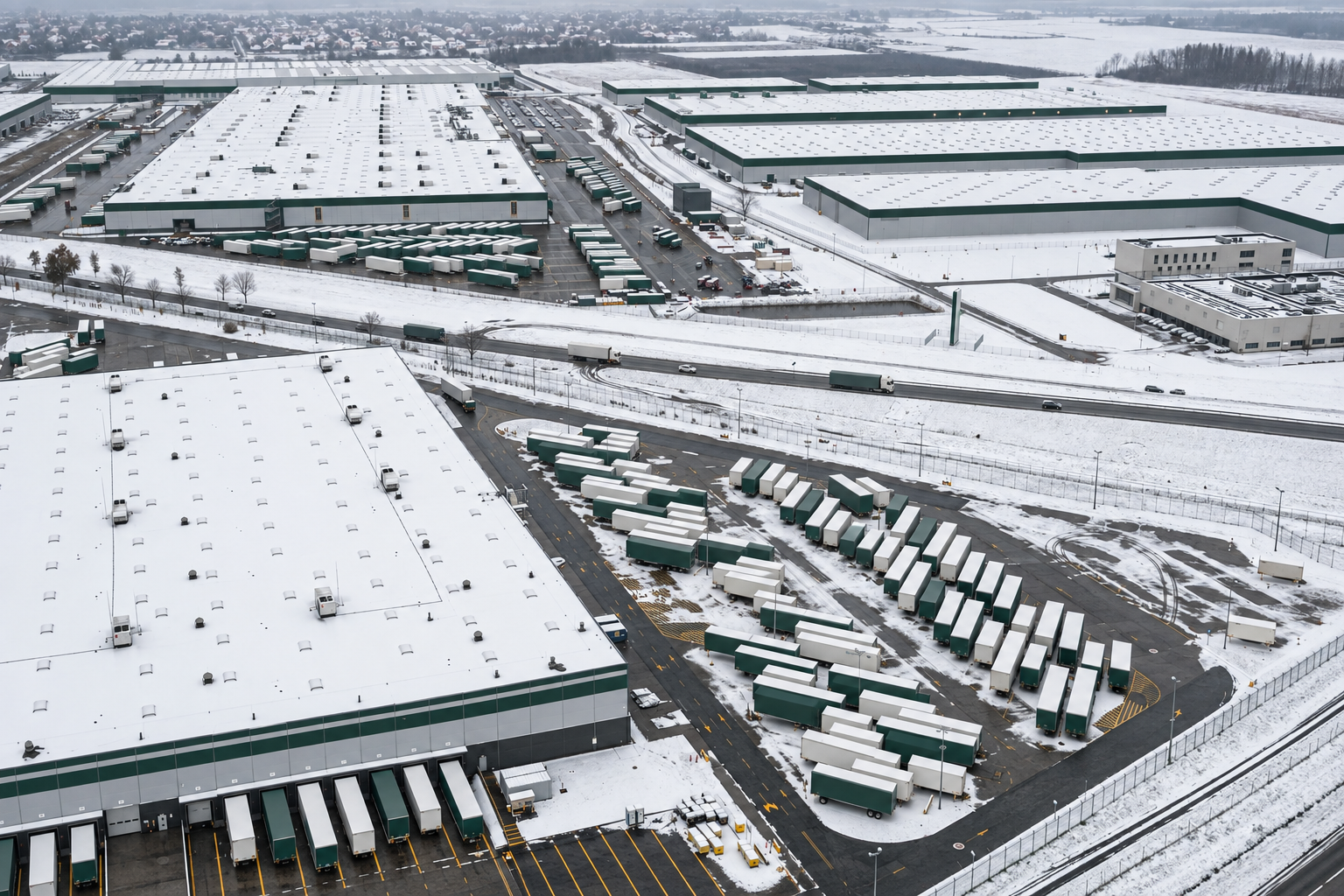
- Short-term spikes are the real warehouse space problem in Dallas. Dallas has 250,000-foot facilities readily available, but Mark says nobody leases one for a three-month need. The other headaches follow on: five dock doors when 15 trucks arrive on a Monday morning, not enough parking for rigs that run 80 to 100 feet, and product so heavy that, left in one corner long enough, it can crack a warehouse foundation.
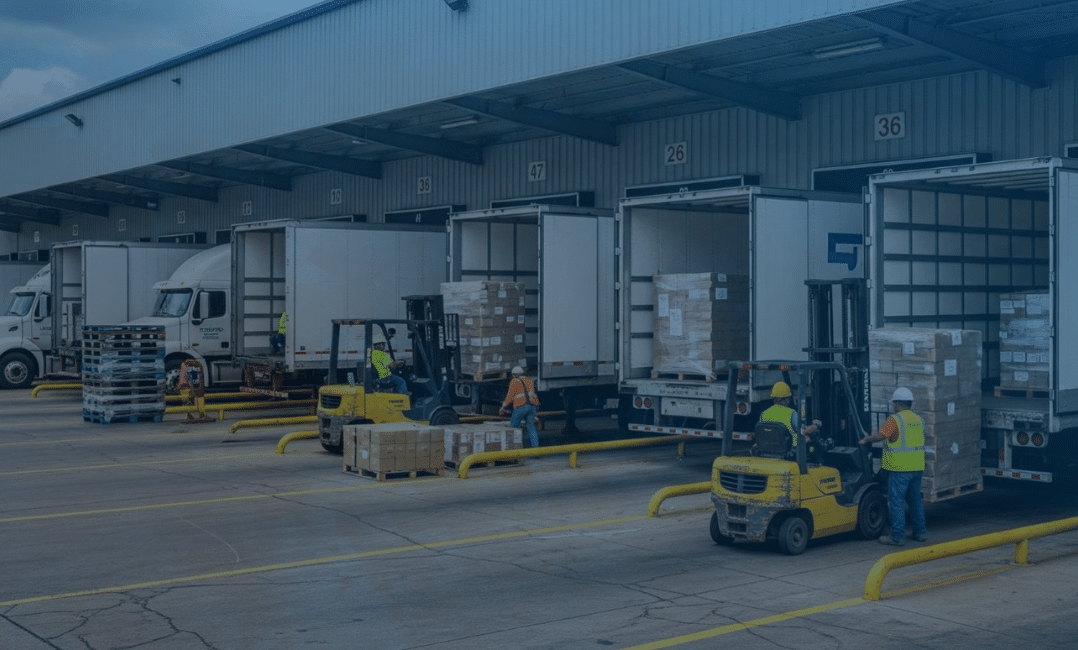
- A same-day trailer delivery gets a warehouse back in line with the fire marshal. Mark describes a company that thinks it has everything under control until the fire marshal finds stock stacked too high to fight a fire, and moving it onto the floor would block the fire exits. WOW can have trailers there the same day, the customer offloads the warehouse, and the fire marshal can be invited back the next day. He sees the same overflow in winter, when a hurricane or an ice storm cancels outbound pickups while inbound product keeps arriving.
- A trailer adds 450 square feet with no long-term commitment. Against DFW warehouse lease rates Mark puts at $12 to $18 a square foot, he describes offering a box with 450 square feet for, in his words, “a dollar a square foot”, delivered within a day and returnable the next day if the customer chooses. Customers can rent by the day, the week, the month or for years, on what he calls an evergreen lease they can turn in when they’re done.
- A tire company’s forecast miss called for a turnkey trailer program. Tire makers work on a six-month manufacturing process, so when sales stopped, product already built kept arriving at distribution centers with nowhere to go. The customer asked for trailers, a secure place to park them with 24/7 security, and delivery, movement and pickup of the loaded units. He turned down Mark’s first quote, called back about two weeks later, and the program ran with no issues from there.
Episode Chapters
Click any timestamp to jump to that section on YouTube.
- 00:00 — Introducing Mark Henderson
- 01:31 — What Makes The Dallas Trailer Market Different?
- 02:40 — Becoming A Local Market CEO
- 05:27 — What’s A Normal Day Look Like?
- 07:14 — Three Biggest Space Headaches
- 10:28 — The Fire Marshall Story
- 13:11 — Trailers As Strategic Tools
- 15:12 — The ROI Of Using Trailers
- 17:28 — Panic Calls
- 21:37 — Having The Right Mindset To Avoid Chaos
- 22:50 — Culture Of Friendliness
- 24:57 — What To Do Before Calling Us
- 26:24 — Unusual Use Cases
- 29:35 — Best Cost Savings Story
- 33:06 — A Trailer Guy Through And Through
- 36:47 — Resetting
- 37:45 — No Blame Games, Just Solutions
- 40:21 — The Biggest Myth About Storage Trailers
- 41:10 — What To Do When Feeling The Heat
Transcript
[00:00] Introducing Mark Henderson
Mark Mann: Welcome back to The Wow Factor. I’m your host, Dr. Mark Mann, and today we are continuing our tour of the industry leaders who keep the North American supply chain moving. In this episode, we visit one of the most intense logistical battlegrounds in the world, the Dallas-Fort Worth Metroplex. This is one of the most interesting and important X’s on the North American storage and cartage map. DFW isn’t just a city, it’s a global inland port where 98% of the US can be reached within 48 hours. That’s amazing. So to help us navigate this massive market, I am joined by a man who is a 20-plus-year veteran in the industry. He not only serves as a general manager for Advantage Trailer Rentals, which is a Warehouse on Wheels brand in Dallas and Forney, Texas, but he also oversees the Tulsa and Oklahoma City markets as well. He has a unique perspective, having grown from a role where financials were often, what do you want to say, Mark? Outside the comfort zone, right? Mark Henderson: Well, no, you call it foreign, Doc. You just— Mark Mann: Yeah, they’re foreign, right? But as a local market CEO managing a massive fleet in a region that functions as a global inland port, he has really embraced that role. Mark Henderson, welcome to the Factor. Mark Henderson: Appreciate it, bud.
[01:31] What Makes The Dallas Trailer Market Different?
Mark Mann: Mark, you’ve been with this group for over two decades. In one sentence, what makes the Dallas trailer market different from anywhere else in the country? Mark Henderson: Well, you may want to nail it down to geography. If you put east and west coast and you drew a line right down the center of it, that’s where you’re going to find Texas. Dallas happens to be positioned as far north as you can get in our hemisphere where the weather is going to keep us open almost the entire year. You move just 50 miles, 100 miles north, you start to lose access to the highways due to bad weather, snow, etc., like 5, 10, 15 days out of every year. But Texas, we’re generally open 363 days out of it. And our highway system is just perfect to service the east and western zones of the United States. Mark Mann: Yeah. I mean, thinking about the spiderweb from anywhere in the US, and really even Mexico and Central America, in 48 hours, that’s a hub. It really is a hub.
[02:40] Becoming A Local Market CEO
Mark Mann: So, you’ve mentioned that in the early days things like gross margin and EBITDA were kind of outside your comfort zone, but now you talk about them with complete confidence. How did you make that transition from being the trailer guy to being a local market CEO? Mark Henderson: Tell you what, I would like to say it was smooth. It wasn’t. The organization purchased us from some gentlemen that I’d worked for for years in March of ’20, March 1st, as a matter of fact. So John, Brent, and Lucas walked in the front door, introduced themselves, talked to us, and then bid goodbye and said, “We’ll get everything rolling.” Well, on the 15th of that same month, COVID hit and the government shut down everything. So moving from a sales guy, and I did the purchasing for the organization, to running it was not the easiest. But what was cool about it was, I’ll use Brooks and Brent, they both were very clear: “You’ve run the business for a long time. Do what you’ve been doing. We will figure this out.” Oh, that sounded like a nightmare. That sounded like if I made an error or something, they were going to be like, “Oh, no. We didn’t say do that.” No, he never, ever treated it that way. They asked me just to figure it out because we were in a new world. No one had ever seen us before. And they gave me all the support and in turn gave me the confidence to act on the organization’s behalf. If I did make an error, which I did, there was never a “Well, you blew it. That was a mistake.” It was like, “Oh, wow.” I said, “But I fixed it.” And I started to learn real quickly that was the key to dealing with Brooks, Brent, and Lucas. They expect an error. They know what’s going to happen. As long as you have already told them, “Hey, we’ve already made the corrective action,” usually that’s the end of the discussion, and they’re great about it. But with them taking the time to teach me how to run through the financials — Lucas, shockingly enough, is actually a really good teacher. And he’s got some staff members that have been great about guiding someone, because, man, I finished college back in ’90. It’d been forever since I’ve been through, I won’t even say a spreadsheet. Mark, you remember those times? Lotus was play. Mark Mann: Yeah. Mark Henderson: But yeah, they were great about giving me the time to get my footing, learning the situation, and I’ve had some great support in the form of Lindsay. She’s my number two, and between him and her and I, we figured it out, and it’s been just a great transition. A lot of fun. Mark Mann: Yeah, I hear you’ve got a great team there around you. Mark Henderson: Really deep. Really deep.
[05:27] What’s A Normal Day Look Like?
Mark Mann: Yeah. So, you oversee locations in Dallas and Forney, Texas, with enormous logistics hubs and massive transportation terminals everywhere there, really close to you. What does a normal Tuesday look like for you in such a high-speed market? Mark Henderson: Shockingly enough, oh, God, I hate using these words: calm and organized. Our office is literally geared for 30 turns in a day. If 15 trucks showed up returning stuff and we had 15 truck trailers going out, that’s normal. It’s just the way this particular market operates, with the structure we’ve got here and the folks that I work with. I mean, Lindsay is the juggler of all. Makes sure everything moves in the right direction. Also plugs gaps. If something falls apart, she jumps in the middle and corrects it and supports it and gets it moving in the right direction. Sella, bilingual, fantastic, talks to anybody. And her general routine, if you ask her anything, she goes, “What can I do for you?” And she actually means it. She’s going to do it. Atticus is our heavy lifter in the back. He keeps the yard organized. Keeps the containers running, loaded up and ready to go. Keeps the parts inventory in place so all of our mechanics have what they need to do the work. And everyone can do each other’s job for the most part. So if ever one of us is out or anything else, it doesn’t matter. We can still function and generally do it with a smile. Mark Mann: Fantastic. I get it. The team there is just first class. I mean, they’re on the spot with anything that the toolbox needs, and always willing to lend a hand, which is — you can’t ask for any more than that.
[07:14] Three Biggest Space Headaches
Mark Mann: Let’s talk a little bit about the market. I read an article the day after New Year’s Day, and it said that Dallas is ranked as the number one commercial real estate market to watch in 2026. And I immediately thought about you, but that growth brings some major headaches. When you look at the golden triangle of Dallas logistics today, what are the three biggest space headaches you see for big companies like Amazon, FedEx, even some of the local manufacturers? Mark Henderson: I’m going to add a component to that. Let’s talk about the first one. Okay. So the issues are almost inevitably — the first one’s going to be warehouse space. People say, “Well, you’ve got an oversupply of warehouse space. What’s the problem?” Well, the only problem is the demand for the warehouse space is intermittent and it’s short-term in a lot of cases. People have massive spikes. Well, they’re not about to go rent a 250,000-foot facility, which are readily available around here. They’re not going to do that for a three-month need. It costs too much money and it just doesn’t work out. So the first issue is going to be warehouse space. Not enough dock doors. That is another issue that pops up. Everybody says, “What’s the big deal? You’ve got a lot of warehouse space on the inside.” Yeah. Only problem is those trucks show up in number. And if you’ve got five docks and you’re on Monday morning, drivers have been on the road all weekend, they’re waiting at your front doorstep and there’s 15 of them. Well, that 10 has to sit someplace, and it’s not convenient. So not enough dock doors is another big issue. Then we slip into the one right behind it, which you kind of saw coming: there’s not enough parking. When you put a trailer on the back of a tractor, generally you’re looking at 80 feet, but if it’s on the big tandem screws with the condos, it goes out to 100. Those things don’t turn on a dime and they don’t park in a comfortable spot. They take up a lot of room. So parking is a big issue. Now, the other one I’m going to throw in there, I’m going to give you a situation that popped up, was of all things weight. Dock facilities, or excuse me, warehouse facilities are designed for massive loads. Oh my gosh. You would think there would never be a problem with this. I’ve seen this two times over the years, where huge product is brought in that’s very bulky, very condensed, and very heavy. Usually it’s put in a corner, which makes perfect sense. It needs to be out of the way because it’s so big. Well, they’ll do that. Well, if it sits there in those corners for long enough, in these massive warehouses, sometimes as much as a million square feet, believe it or not, the weight will push the foundation down and crack it, and it causes the most amazing effect on the corner of a building. And of course the fire marshal and everybody else has a ball with that one, because that’s not a safe environment. So, in answer to your question, the issues with space are warehouse space, not enough dock doors, not enough parking, but don’t forget too, some product is so heavy it cannot be left in certain areas without being moved around, which creates another set of problems. Mark Mann: Yeah, that’s a great point. I mean, you probably have it a lot more there in the DFW area than in a lot of places in the country.
[10:28] The Fire Marshall Story
Mark Mann: Now, DFW has a huge development pipeline, but again, like you mentioned, vacancy is still tight, especially for smaller users. Tell me about a recent time where you saw a company just absolutely hit the wall because they could not find a single square foot of dock space. Mark Henderson: This one’s even worse, Mark. This is where the company’s got the space, everything’s taken care of, everything’s done. They are walking in Monday morning happy and just blissfully ignorant of what’s getting ready to happen. So everything’s taken care of. Here comes the fire marshal. The fire marshal walks in and says, “Well, one, your stuff’s stacked too high, and the irrigation systems are not going to be able to put out a fire in the event of a fire. That’s bad. Can’t do that. You’ve got to bring your loads down.” Well, that means more floor space. Or, oh, if you use the floor space, you’re going to cover up that fire exit. Can’t do that. Well, you did uncover the fire exit, but you don’t have enough room for all your people to exit. So this is a situation where somebody thinks they have it under control, but when the local authorities come in and find out it’s an unsafe environment, then they’re in a spot where they literally just have no choice but to find an alternative. And that’s where our product serves a great purpose. It’s easy. It’s quick. We can have stuff there the same day. Load, offload your warehouse. Invite that fire marshal in the next day. Says, “Come on, man. I’ve got it taken care of.” “There’s no way you did that.” “Yes, there is. I’ve got it done.” And they’ve already got it cleared. The fire marshal has confidence that they’ve got it under control, and they’re no longer in that hot seat that they were in before. Now, the other piece of that is just the way product shows up and product leaves. Winter is a funky example. People say, “Well, we’ve got the inventories under control. The warehouse is full, but it’s not overloaded.” Well, then what happens is you’ve got product coming in. You’ve got it scheduled. You’re good with that. You’re accepting the product. But then there’s a disaster of some sort. Maybe a hurricane hits the East Coast. Maybe there’s been an ice storm that struck somewhere way up in the Northeast and Midwest. Well, now all of a sudden your expectation of the pickup of that product has disappeared. It’s not coming. They’re not going to be there Monday morning to grab it. Well, you’ve still got product coming in. Your dock is going to overload once more. What are you going to do? And that’s where our product serves a really justified purpose for them. Mark Mann: Yeah. And it really comes down to those customers having a long-term strategy.
[13:11] Trailers As Strategic Tools
Mark Mann: So, let’s talk about that for a second. You’ve said that while competitors focus on the big guys, your passion is the smaller local customers who rent fewer than 50 trailers. How do you convince a local Dallas business owner that a storage trailer isn’t just an emergency box, but it’s really a strategic tool that lets them compete with those other giants, right? Those elephants. Mark Henderson: That’s a matter of just, oh, it’s that skill that we all hear about all the time, but we don’t like: you’ve got two of these and one of this. Use them in proportion. Traditionally speaking, if I can get in front of someone and they’re telling me about a problem they’ve got, I need them to elaborate on it, carry through with it, and let me hear what’s taking place. And it may be something I’ve seen a few times before, might be something new. You never know. But by listening to them, you might take what’s called the tugboat approach. I’m not going to tell you how to fix your problem. You’re a big boat. You’re moving in a direction. What I want to do is nudge you in a spot where I think I can be of help. And in that case, that’s where we introduce the idea of, if you go to the trouble to get set up with us as your vendor, then in the event you need something, call us on Monday morning. Give me the chance to introduce you to Lindsay, Sella, Pete out of our Forney office, Joel up in Oklahoma City, and let them talk to your people and take care of your problem. And then it’s no longer your issue. Your folks underneath you, you’ve empowered them to handle this for you. You and I are just talking heads that are the “look what we did, we fixed a great problem.” No, we didn’t do anything. We let these really good folks that know what they’re doing handle these situations on their own. Makes us all far more efficient. Mark Mann: Yeah. Fantastic.
[15:12] The ROI Of Using Trailers
Mark Mann: So, let’s talk about a specific example. Walk me through a time when a customer was looking at 12 to $15 per square foot warehouse rates in Lewisville or Carrollton and you turned their head. You helped them see the ROI of using Advantage trailers instead. Mark Henderson: Now, that one, it’s unique to have someone that is that ready to have that conversation about square footage. But in the event it does — oh, yeah. Welcome that. And it’s a great one to have. Like you said, give or take, 12 to $18 a square foot in DFW. That’s pretty common. And if they’re going to buy the warehouse now, they’re looking at 250 to 350 a square foot. So, traditionally speaking, they’re already going to lease because it’s less expensive. So you can remind them of the fact: hey, if you bought, here’s how much it’s going to cost you a square foot. If you’re going to lease, you’re going to be around 12, $13 a square foot. What if I told you that I can provide you with a box that’ll give you 450 square foot, and I’m going to ask you to give me a dollar a square foot, and I can have it sitting on your doorstep in one day’s time on the higher side? And to boot, that 450 square foot can be taken back the next day if you choose. You can rent it by the day, the week, month, two, three, four years. Any of these are options, and there’s no commitment. This is an evergreen lease. You can just turn it in when you’re done. No big deal. Do you want to pay a dollar a square foot, $12 a square foot, or $450 a square foot? When that’s put in perspective, that might give me the opportunity to speak to some of the folks in the warehouse, get my folks introduced to them, let Lindsay and Sella weave their magic, and again, let them handle it and have the ability to handle it on their own, keep us out of it. Mark Mann: And it makes you sound like a CFO, taking them from — hey, how’s a dollar sound to you? Mark Henderson: That difference, that delta between 12 and one. Oh, come on, man. It’s a beautiful setup. And again, there’s no commitment in — and you’re right. I seem like a hero, and I did nothing except for just mention an idea. Mark Mann: Yes.
[17:28] Panic Calls
Mark Mann: Yeah. So, Dallas is the hub of all hubs in the South. Tell me about a Texas-sized panic. A phone call or an email you received, maybe during a peak retail rush, right there in August leading up to September, October, into the Christmas season. Or maybe even a supply chain freeze. What was that call you received? What’s that example? Mark Henderson: Here’s a really good one. There’s a tire company. Tire companies are kind of unique. I got some insight into this from one of their heads out in California a few months ago, or about a year ago. Tire groups, they’ve got a six-month manufacturing process. So from the date they order the tires to be made, it takes about six months to get them to the DCs. That’s the way they generally do it. So in turn, they manage their manufacturing output by a forecast that was done a half a year in advance. So this particular group, their sales forecast said they needed X number of units to spit out at a certain time in the year. Now, over that six-month period, sales went completely in the toilet. They stopped. Nobody was buying. But the thing is, product was already built. Product was done. Product was coming to the distribution centers, and there was nowhere to put it. And so this was that “oh no” moment. And just by virtue of the size of our state, a true Texas-size problem for them. In this particular case, we got a call from a very — what’s the word I’m looking for? This was a hard gentleman to contend with. He was smart. He’d done this a bunch of times over his life, and he was very good at what he did. He called and says, “Mark, here’s what I need. I need trailers to put my product on as soon as they come in. I need a place to park them. It’s got to be completely secure. 24/7 security, the whole bit. I need you to provide delivery of the product, movement of the loaded product, pickup of the loaded product, and then pickup of your empty trailer when it’s done.” He needed the whole thing. And I said, “Okay.” So I put together a quote for him. “Do you have access to all those?” “I can do it.” He did not care for the number at all. And he says, “I think this price tag is overstated.” And I did say, I said, “Well, if I can defend myself, look, I’ll help with any piece of this that you like. I can help you with just the parking, just trailers, just the movement. Any piece, I would appreciate the business on. But I can do the whole thing for you if need be.” I said, “And I would also ask you to remember, with payment comes expectation. If you pay me this, we’ll take care of it.” And he did not like it. About two weeks later, I got a phone call, and he says, “Mark, there’s something I don’t want to hear from you.” And I said, “Is that ‘I told you so’?” And he says, “Yes. Fine, let’s pull the trigger.” But the thing was, we have the capacity and capability here, with the relationships we’ve built over time with all our different vendors and everybody in town, where if somebody needs that type of turnkey setup, we can do it. And in this case, we did. And in follow-up, there were no issues. The next week, the next two weeks, the next three weeks, next four weeks, everything moved seamlessly. Again, the less I’m involved, the better off it is. Lindsay, Pete, Sella, Atticus all handled that and had it done beautifully, and he was very happy with the end result. And we’ll get that piece of business back if that situation ever were to occur again. Mark Mann: Yeah, absolutely. So, I mean, you changed that customer’s life in 48 hours. You and your team applied that elbow grease and changed that guy’s life.
[21:37] Having The Right Mindset To Avoid Chaos
Mark Mann: So, what separates the Dallas managers who handle these surges with a smile from the ones who get swallowed by the chaos? Is it mindset? Mark Henderson: Over time, it becomes a matter of confidence. Like I said, if somebody asks certain things to be done, I’m aware of our limitations, and it’s not to be arrogant, there’s not many. We can do quite a bit. But the way I would think is, some of the folks that have a hard time with it will panic, and it’ll be a rough thing for them. In our case, we should be able to look at a problem, correct it, and it might be the quote: “Hey, customer, all is good with the world. Are you happy? If you are, we are.” Mark Mann: Yeah. And that’s the whole idea behind strategy in the first place. We know that people call with their hair on fire. The opportunity to help them put a strategy in place so that they make the call to you rather than having their hair on fire. “We knew this was happening. I’ve already put in the call to Mark and his team. We’ve got it handled,” right? The emergency — it’s not a band-aid. It is a strategy. It’s there for them. It’s great.
[22:50] Culture Of Friendliness
Mark Mann: So, your office is known as being the friendliest office in all of Warehouse on Wheels, right? I’ve been told you have the most popular candy jar in the Metroplex, that somebody that stops by your office is immediately offered a soft drink and a friendly “How’s your day going?” How does that culture of friendliness translate to the managers, logistics folks, the warehouse supervisors who are stressed out and just need a trailer delivered yesterday? Mark Henderson: We’ve got great partners. And when I use the word partners, let’s encompass this. Our clients are our partners, and we’re partners to them. We build a relationship. We get to know each other. Lindsay, Pete, Sella, Atticus, Joel, some of the kindest people you’ll ever meet in your life, and very capable. They were all hired for a specific purpose, and they’re very, very good at it. So now you couple that with our third-party vendors. We’ve got a fantastic delivery group, two different companies we utilize for that. These are guys we’ve worked with for 15 years. They know our customers as well as we do, and they’re extensions of us, and they take that seriously. Our mechanics, the companies there, there’s four or five different ones we use regularly. These are all fantastic groups that, I will say, in the event of an error — and they do happen — these are the type of people that don’t run for cover. They’re like, “Where’s the situation at? We’ll be there and take care of it.” And in turn, our customers see that. They know that if anything happens with us, it will be corrected if something goes wrong. But we try desperately never to allow that to happen. And the biggest thing in all of this that I’m saying is, if we can do it right with the customer, we become an extension of their staff. We’re that third hand that they can call when they need it, and then when they don’t need it, we’re off to the side, just waiting for the opportunity to be of help later on. Mark Mann: That’s a great way to put it. I mean, you really are in their toolbox, right?
[24:57] What To Do Before Calling Us
Mark Mann: So, let’s leave listeners with kind of one move they can make next week. If we’ve got somebody out there listening to the podcast and they’re like, “I might need what this guy is offering,” let’s kind of give them a playbook. So if I’m a warehouse manager, or there’s a warehouse manager out there, and they’re out of space and they’re staring at the traffic on I-35 West, what’s the first step they should take before they even call Mark Henderson? Mark Henderson: The hope is that they realize that a trailer is a good option for them to get out of that trouble. And I-35 being clogged up, boy, that’s death and taxes, and that nightmare. It exists all the time. What I want them to think about is calling our group for help is not something they’d rather not do. A lot of our competitors, they don’t want to call them, because it’s like, “I’d rather slam my hand in a car door than call and get that.” I want them to think about, if they call our office, they’re going to get Sella, Lindsay, Pete, Joel, and they’re going to get somebody saying, “Hey, what’s going on, man? What can I do for you?” And get that confidence that, you know what? Somebody is here to try to help. Even if this situation’s a really rough one, I’ve got some good people with good intentions that are ready to give their best effort to see if they can make my day a little bit better.
[26:24] Unusual Use Cases
Mark Mann: You know, when I talked to Chris Martin, he’s the general manager here in the Louisville metro area, he talked about all the bourbon industry, how they use the trailers, and he’s even got a popcorn company that uses the trailers. So I have to ask you, in the Dallas market, what is the most unusual case that you’ve seen the trailers in your market used for? Mark Henderson: It was funny. We threw this one around trying to figure out what’s the best answer on this one, and we didn’t have a great one. What we came up with was some of the ones that are most memorable. So, a lot of times, potatoes, onions, stuff like that are hauled out of the valley. A more interesting one was a batch of potatoes was drug in. The trailer was not vented, because the carrier did not know better. Now, if that happens, the interior of a trailer in Texas will hit 130, 140 degrees in the summer. If it’s not vented, then those potatoes start to rot very quickly. And potatoes rotting have a gooey fluid that drops down. We’ve had a trailer pull on the yard dripping with that particular fluid, and the scent was just absolutely unbelievable. But that was a mistake that a very nice man made, and he didn’t do it to be mean. He just didn’t know better. And it created quite the ordeal to get that cleaned up, which we did. Then another odd one that one was used for was, of all things, cow hides. Mark Mann: Yes, it’s Texas. Mark Henderson: That’s just part of it down here. Well, we had one that came in that had hauled cow hides stacked from the floor to the top before they’d been tanned. So, needless to say, that was one of the more fascinating situations we had run into, and both involved an incredible odor that, coupled with our heat — oh, it wasn’t the best situation in the world. Mark Mann: I’ll be talking to Rosie out in Phoenix in a week or so, and I know that they had a container full — I mean, I’m talking floor to ceiling, front to back — of adult-size fleece footie pajamas. So, yeah. So I’m going to have to ask her about that one. Mark Henderson: Hang on. Hang on, Mark. I will say this. And then another one I did have. This is where a particular company went out of business, and I had to go get the product, and I was told that it wasn’t heavy and it didn’t look to be a big problem. Gentlemen, I had a 45-foot storage trailer stacked full of these. Yeah, no one wants these guys. It was the most amazing thing in the world. But I did keep one just for posterity, just to have it. So— Mark Mann: Just to lend credence to the story. Mark Henderson: So, there you go.
[29:35] Best Cost Savings Story
Mark Mann: Getting back to problem solving, what’s the best problem-solving, or actually, I guess we could say cost-saving story in your market? Mark Henderson: Here was one that had the longest-lasting effect. This was back in ’04. There was a gentleman I knew, and I can use his name, he has passed on since, but an organization he’s got has been purchased. His name was Bill Profa, with a group called General Aluminum. They did aluminum windows back then. Bill was one of the smartest men I’d met in the industry, because at the time, nobody had logistics degrees and all that other stuff. It hadn’t happened yet. So you had truck drivers that moved up the ranks, and some of them had a good head on their shoulders and they knew how to work through numbers. He was one of those guys. Fantastic personality, and a lifelong friend up to his passing. But he and I were talking, and he saw the new hours-of-service regulations that were going to change. They changed, I believe, from ’03 to ’04. And the numbers I’m getting ready to give you don’t sound like much, but when I start talking about the compounding effect, you’ll be able to see it. In ’03, you had 11 hours you could travel in a day, and then you had to have 10 off duty. That’s the way it was worked. In ’04, they changed that from 11 hours and 14 hours off duty. So, bad math, and it wasn’t the case, but if you took away 4 hours of availability daily on a five-day work week, that’s 20 hours. 20 hours over the course of a month, that’s two employees. So that was two drivers, in essence, that he lost time on, a significant amount of a month, every month. And when you’re running 40 or 50 of them, it creates an issue. Now, when we talk about cost savings, the way Bill looked at it, and he called it before anybody else did, he goes, “Brother Mark, you’re going to make a lot of money.” That’s what he told me. He called me Brother Mark. And what he meant was, in the next three, four, five, six, 10 months, you saw organizations going from a two and three to one trailer-to-truck ratio to pushing four and five to one, because the trailers were relatively inexpensive, or very inexpensive, compared to a truck and a driver. So what they did was, groups like his started coordinating drop trailers, loaded and unloaded. So when a driver pulled in, they didn’t go to a dock. They went straight to a loaded unit. The lumper had already taken care of everything. So the driver took off loaded. The guys on site rearranged everything and had another loaded trailer sitting ready to go. It increased that ratio, and by using trailers, he saved a significant amount of money for his organization over time. Mark Mann: Wow. Yeah. And like you said, compounded by 40 or 50, it’s a lot of money. Real money. Mark Henderson: Real money. And also, the drivers were happier too, because drivers don’t want to sit and wait. The drivers want the road, because they also, especially then, were paid by the mile. So this affected everything. This made happier drivers. The yard guys didn’t have to deal with a mad driver sitting out in front, drinking his coffee and smoking a cigarette. None of that was the case. Everybody worked better due to having a larger inventory of a relatively inexpensive option, which was the trailer. Mark Mann: Yep. Everybody’s happy.
[33:06] A Trailer Guy Through And Through
Mark Mann: Let the audience meet Mark Henderson, the man. All right. So you’ve been in this world, let’s say, for a long time. All right, we won’t say how many years, but it’s been a long time. So what was the specific moment that you realized, this is my world, I’m a trailer guy through and through? Mark Henderson: It was accidental. In ’05, a lot of people remember Katrina, the hurricane that hit New Orleans. It was really funny on that one, because a lot of times we forget, it wasn’t immediate. The storm hit, and everybody’s like, “Oh, it was bad.” And nobody really gave it that much thought at the moment, but a period of time after the storm had left, that’s when the levees broke, and that’s when the city actually flooded. We did business with FEMA contractors at the time, and the main FEMA facility was in Fort Worth then. It hadn’t moved to Atlanta yet. So I got a call from one of the contractors. We’d done business with him before, and he says, “Mark, I need 24 trailers.” And I was like, “Yeah, they’re yours, man. Anything we can do to help,” because everybody was trying to be there to be of any help they could. I said, “What’s going on?” And he goes, “Well, we’re going to be picking up water out of there and hauling it over to New Orleans, and we’ve got everything set up for it to be offloaded.” I said, “When do you need me?” And he goes, “I’m trying to figure that out.” So what it boiled down to was, he said, “What can we do?” And I said, “I don’t know. Tell me when you want me there.” He said, “Can you be there tomorrow morning?” I said, “Of course.” It was a Saturday. I said, “No big deal.” So he said, “What time do you want me?” I said, “What time do you want me to be there?” He goes, “How about 4:30?” And I was like, “I can do that. It’s not a problem.” I got up that morning, cap and everything else, hooked on down there to the yard. As I circled the lot, or the block — and you’ve been to our facility. Mark Mann: Yeah. Mark Henderson: As I circled and looked over, I saw a line of white lights and yellow lights lined up all the way around the corner, with truck drivers sitting there waiting. And all of them — I’m talking 24 tractors sitting there waiting to be loaded. I was like, wow. And then, to your point, this is when I realized this is my world. Looked at it, didn’t know what to do at first, and I thought, hang on, got to coordinate this. Went to the very end of the line, talked to the drivers at the end, and I said, “Hey, look, as you come in, I want you to pull up to the front gate, and I want you to wait for me to wave you in, and I’m going to have one truck, one driver, one truck, one driver, over and over and over again until we get this cleared up.” And I worked all the way to the front of the line, then opened the gate. The first driver pulled in, gave him the unit. We did a walkaround, he pulled out, next driver came in. It worked like we had all worked together for 10 years. Nobody got angry, nobody was frustrated. The yard didn’t get clogged up. And it took about 10 minutes a turn. So that morning I went back home, about four hours later, five hours later, had a cup of coffee, and I thought, I’ll be damned. I was happy with myself. I’d actually done something to help. I couldn’t believe — I was so stupid, I figured out something and did something right for once. Told my wife about that. She didn’t believe it. But anyways, that was the time I really was — this was a cool industry, and we can actually help people out and be part of a big team whenever something goes wrong. Mark Mann: Yeah, that’s a great story. And yeah, that does draw you in. You get home and you’re like, man, I love doing this every day. It’s a fantastic job.
[36:47] Resetting
Mark Mann: So, when you do get home, that Texas sun is going down, what pulls you away from the yard? What do you do to reset? Mark Henderson: I’ve done martial arts for years and — none. Everybody’s like, “Oh, well, he—” No, no, no. It’s tournament stuff. Work with kids. Me and two buddies do have a small school. We generally service single-parent households, grandparents who are raising their kids, folks who couldn’t afford the experience otherwise. And we just have the greatest time working with folks that are just happy to be there, training them for specific tasks, which are tournaments in this case. Watching them compete, watching them fail, watching them succeed. But it just revitalizes the soul daily. So I’m just thrilled and feel blessed to have that option in my life. Mark Mann: Fantastic hobby.
[37:45] No Blame Games, Just Solutions
Mark Mann: So, you mentioned that at Advantage there are no blame games, just solutions. Who taught you that principle? Mark Henderson: Oh, God, as much as I hate to say it, I’m going to have to give some credence to Brooks. When I was hired with the company, I worked for a small group, two brothers, and they were the finest people in the world. They never argued. Everything was just going to work out. I was the tense one in the group, desperate to try to make everything work out. When this group purchased us, and I went to work for Brooks and Brent, Lucas, those were the first people I’d met. I quickly learned that if you do something and you make a mistake, these guys are great about it. They don’t really want to hear about the error. They just want to feel confident that you’re correcting the process, or it won’t happen again. And the level of confidence you get by knowing you’re not going to get your butt chewed — that’s not the way this works. The way it works is, mistakes happen. Call me after you’ve corrected it. And I have gotten to this nice place where, not if, when something does go sideways, Lindsay, Pete, Joel, they correct the problem themselves. In most cases, I don’t even have to get involved. They let me know, “Hey, this happened. Nothing with a heartbeat was hurt.” That’s the biggest concern. Nobody gets hurt. Anything else we can fix, they fix it themselves. They let me know what took place, and in the event I feel it’s necessary, then I let you know if it’s something to do with safety. I let Brooks know if it’s something that’s financially of concern. Jason Marshall, tell him if I need to. But it’s not expected. They just expect us to handle it here, and we do. And in turn, my folks have been given carte blanche here: take care of it. And I’ve told them, I said, “The only thing I’ll ever get a little frustrated with is if you didn’t do something. Try it. Make the mistake again. As long as nobody gets hurt, it’s fixable.” And with every mistake, we learned, and we’ve all gotten better for it over time. Mark Mann: Yeah, absolutely. So, Mark, this has been an incredible tour of the Dallas market. Just a couple more things before we close out here.
[40:21] The Biggest Myth About Storage Trailers
Mark Mann: What is the one myth about storage trailers in the Dallas-Fort Worth market that you want to retire after today’s conversation? Mark Henderson: They are not difficult and clumsy. This is not rocket science, and this is easy for us to help. People think, “Well, I’m going to have to have it delivered and picked up.” Oh, guys, we do this 25 times a day. We’ve got it down to an art. It is not difficult. It’s not time-consuming and it’s not hard. It’s a phone call. We will take care of everything, and have that 450 square foot sitting at your dock door when we tell you we’ll have it there. That’s the one I would like to see go away, that it’s hard, because it’s really not. Mark Mann: Yeah. Absolutely.
[41:10] What To Do When Feeling The Heat
Mark Mann: So, for anyone listening who is feeling the heat right now in the Dallas market, what’s the one thing they should do this week? Mark Henderson: Call us. Mark Mann: I knew you were going to say that. Mark Henderson: Just call us, please. We’d love to introduce our organization to you, introduce the folks here that we have working that are here to work for you, and again, let you know that we are, and we can be, and will be an extension of your team. We’re here, available to help you at any point in time, and we’re only here when you need us. When you’re not, we’re just off to the side, waiting to be of help. Mark Mann: Fantastic. Mark Henderson, general manager at Advantage Trailer Rentals, thanks for showing us the Wow Factor in Dallas. That’s it for this week. I’m Dr. Mark Mann, and we’ll see you on the next episode of The Wow Factor.