
Jim Perry on Taming the Chaos of Running Out of Space
In this episode, host Mark Mann sits down with Jim Perry, Commercial Business Director for Warehouse on Wheels, to talk about the space headaches that stop businesses from growing, the shift from band-aid thinking to long-term strategy, the language of ROI, and the myths around renting trailers. Jim explains how WOW can deliver 10,000 square feet of access in 23 trailers and why renting in 30-day blocks changes the ROI conversation, and he credits WOW’s GMs with the panicked calls that come in at 5:00 on a Friday.
Key Takeaways
- Most customers open by asking for control over the chaos. Asked what customers say first, Jim says it’s “I need control” or “help me with the chaos,” and it’s very similar regardless of industry. The three biggest space headaches he sees are demurrage and detention, at the port or in containers on the yard, seasonal demand, and supplier surge from suppliers who keep sending without visibility into their customer’s constraints. Until the goods have somewhere to go, they sit in aisles and at docks.
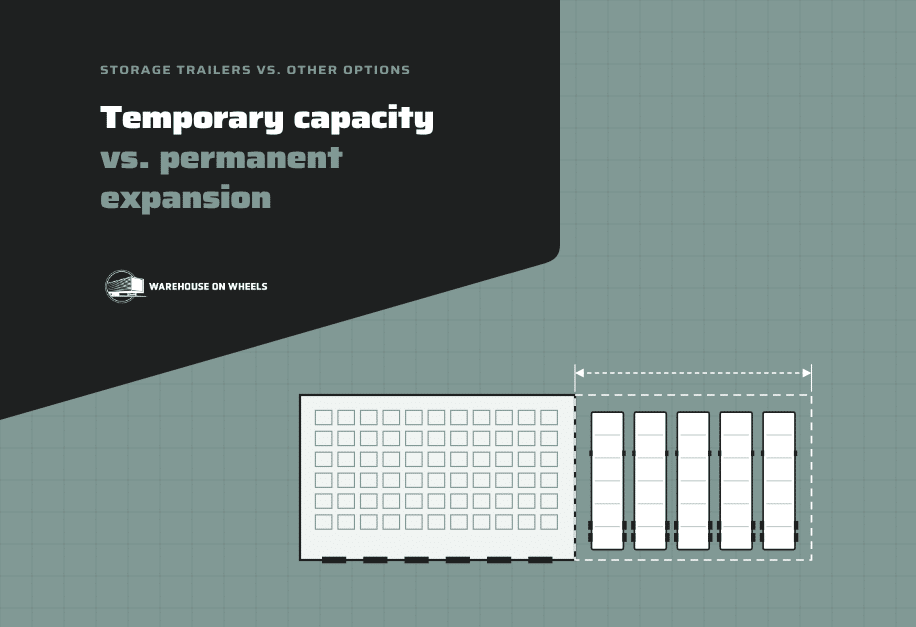
- Trailers on the property give a team access to act. A new warehouse could take six months, a year or two years to build, and it still leaves a company with brick and mortar across town that doesn’t improve the process, the speed or the customer result. Jim calls quick access to act WOW’s superpower once its trailers are on the property. For the largest thrift business in North America, which needs somewhere to put donations after yard sales and holiday cleanup, that means 10,000 square feet in 23 trailers that can flex and be removed when things level out.
- The ROI case starts with what an hour of downtime costs. Jim keeps a back-of-the-envelope ROI reminder of what an hour of production breakdown costs in WOW’s primary industries. By his own figures, an automotive shutdown runs $37.5 million an hour, and the lowest, textiles, is $400,000. Against that, sea containers can cost potentially $1,000 a day for some industries, and WOW rents trailers in 30-day blocks, so a customer doesn’t have to commit for three or five years. Jim puts the average rental at probably about 26 months.
- Clearing the floor improves safety and employee retention. Jim says the space a deal creates gives forklift drivers and warehouse managers the ability to improve safety and employee retention, and WOW has heard of OSHA inspections going smoother. Customers who brought WOW in ahead of a fire marshal visit cleared their exit doors, pathways and tripping hazards. His first step for a director of operations worried about Q2 or Q3 capacity is to look at historical trends for when the madness happens, and not to let a line item dictate rental usage.
- Some of the most efficient companies run on thousands of WOW trailers. The myth Jim hears most is “if we need trailers, we already messed up.” One customer that has had books written about its efficiency uses over 2,000 trailers from WOW, across its inbound, staging and setup. His advice for anyone looking at a full warehouse this week is to have a conversation, with him or a local branch, and let WOW help fix the problem so the team can do its core job.
Episode Chapters
Click any timestamp to jump to that section on YouTube.
- 00:00 — Meet Jim Perry
- 00:37 — Customer Struggles
- 01:10 — Finding The Way Into Commercial Logistics
- 02:24 — What Is A Commercial Business Director?
- 03:20 — Three Biggest Space Headaches
- 04:47 — When Success Becomes A Problem
- 06:27 — Band-Aid Thinking To Long Term Strategy
- 08:02 — The Trailer Solution
- 09:58 — When Customers Need A Miracle
- 11:08 — Handling Growth Spurts
- 12:46 — The Language Of ROI
- 14:59 — Affecting The Front-Lines
- 16:06 — Saving Workers From Burn-Out
- 17:04 — First Steps Before Calling WOW
- 18:58 — Strategy To Keep Things Flowing Smoothly
- 20:55 — Career Milestone
- 22:53 — What We Do Matters
- 23:59 — De-Stressing
- 25:32 — Debunking Trailer Rental Myths
- 27:13 — Stressing Out About A Full Warehouse
Transcript
[00:00] Meet Jim Perry
Mark Mann: Welcome back to The Wow Factor. I’m your host, Dr. Mark Mann. On today’s episode, we’re talking to the person who is often the first point of contact for companies that are growing too fast or up against the wall, and they need a solution by 3:00 p.m. this afternoon. He is the commercial business director for Warehouse on Wheels, the man who connects our national fleet to the customers who need it the most. Jim Perry, welcome to The Wow Factor.
Jim Perry: Dr. Mann, thank you for having me. Appreciate it.
[00:37] Customer Struggles
Mark Mann: Absolutely. Jim, in one sentence, when a customer meets you, what is usually the very first thing they say they’re struggling with?
Jim Perry: “I need control,” or “Help me with the chaos.” It’s on one of those ends. It’s very similar regardless of industry.
Mark Mann: Yeah, I hear that a lot. And so throughout this podcast, I’m going to be meeting with the GMs, the operations teams, and the guys in the yards who are managing the equipment.
[01:10] Finding The Way Into Commercial Logistics
Mark Mann: You’re managing relationships and business strategy, which often can seem more difficult than managing the operations. How did you find your way into this specific side of the industry, the commercial side of logistics and storage?
Jim Perry: The former company, American Trailer Rental Group, was my customer. I sold them the trailer tracking solution, and I became enamored with — and I know that sounds like a sales statement — I became enamored with them as a customer. And then I really started following them online and really believed in what John was building. And then when I was looking to make a change, I called John and said, “Hopefully you remember me. I’d love to be a part of what you’re building.” And true to John’s word, as everyone heard after listening to his podcast, I think three weeks later I was on board.
Mark Mann: That’s great to know. I did not know that. That’s an amazing onboarding story.
Jim Perry: That was cool.
[02:24] What Is A Commercial Business Director?
Mark Mann: Yeah. Very good. So, a lot of people might not know what a commercial business director actually does day to day. Are you on the road? Are you up against spreadsheets? What does a normal Wednesday afternoon look like for you?
Jim Perry: Everything that you just mentioned. But my core focus, my core benefit to bring to the company and to our prospects, is gaining access to have a conversation, because we don’t simply just provide a box on wheels. We provide a solution to solve their problems. So earning the opportunity to have that conversation, to really dig deep into what’s causing them the problems. That’s my number one focus, and that’s what I spend — whether it’s Wednesday, Saturday, Sunday — that’s what I am constantly thinking about.
[03:20] Three Biggest Space Headaches
Mark Mann: Yeah, absolutely. So you’ve mentioned before that you talk to leaders who are suffering through the heartache of running out of space. So when you look at the market right now, what are the three biggest space headaches that you see stopping businesses from growing?
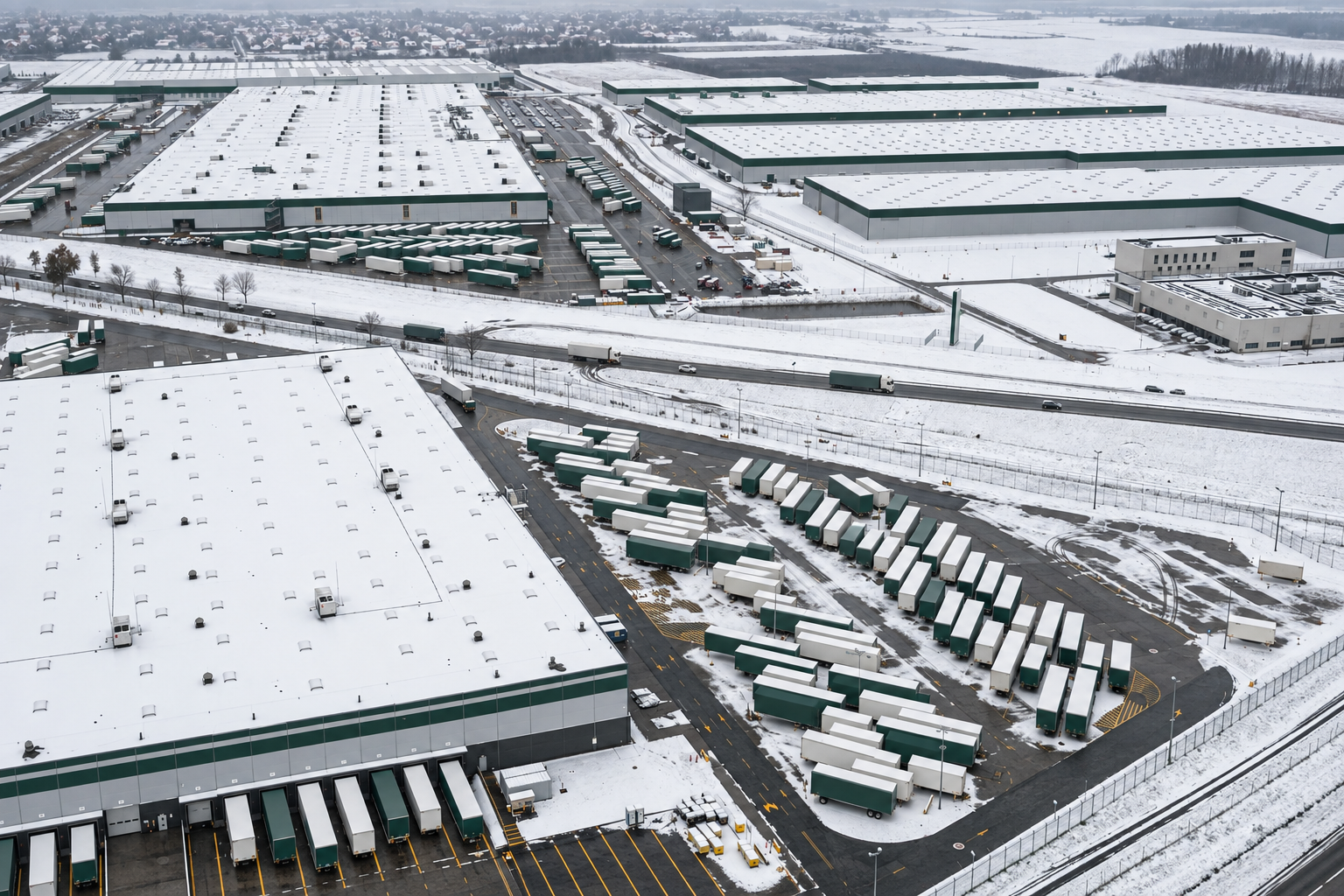
Jim Perry: Yeah. And, as I’m sure other folks have mentioned, we work with almost every industry. But when I look at what is causing that chaos that I mentioned in the beginning in all of them, I would look at demurrage and detention, which means either at the port or sitting in containers on their yard. I look at seasonal demand, which is what stresses them out. And then I would look at supplier surge, because the suppliers don’t always have visibility into what is causing pause or headaches to our prospects. So they just keep sending, and they have to have someplace to put it. And unfortunately, until they meet a company like WOW, it sits in aisles and it sits at docks, and it just causes confusion.
[04:47] When Success Becomes A Problem
Mark Mann: Yeah, we often hear about that chaos and that confusion, but we also hear about facilities that are just jam-packed. Tell me about a recent conversation with a customer where you realized, man, their success is actually becoming a problem because they have nowhere to put their products.
Jim Perry: Take it a step further. I saw it firsthand. I did a facility optimization tour, which for me as a sales guy, it’s my number one thing. If someone can give me that access, then we can really have a meaningful conversation. And I did it with a global leader in the packaging space, and the opportunity to create packaging for one of the biggest commercial trends that’s happening in the market. And I won’t say what it is.
They had to pivot. They had to pivot everything that they were doing. Change lines, change mechanisms, change process. And they knew that this trend probably wouldn’t be forever, but they didn’t want to miss it. So they needed a place to take their other product line offline and put it somewhere, move in the new product, but know that they’re going to have to have quick access to put that back into play when that time came. So it was cool to see that, and it was cool to be a part of it.
Mark Mann: That is a great short-term strategy story. I mean, let’s fix this problem right now, but let’s use mobile storage or mobile cartage so that we can turn on a dime, right? We can still be nimble.
[06:27] Band-Aid Thinking To Long Term Strategy
Mark Mann: Let’s talk about that band-aid thinking that a lot of companies have, right? Let’s try to shift from that band-aid thinking to long-term strategy. So a lot of companies think the only solution to growth is, “We’ve got to build a bigger warehouse,” right? How do you move them to see that our storage solutions might actually be the smarter financial move for you?
Jim Perry: I switch the lens, because in that example that I gave, and really with most, right, it’s access to act. So if I build a warehouse, which I could do in six months, a year, two years maybe, and it’s across town, but I need something now — now I have zero quick access to act. I have to have resources and then all of the other things that come with running that warehouse. It doesn’t improve the process. It doesn’t improve the speed. It doesn’t improve the customer result. It just gives them more brick and mortar across town. But they’re still going to deal with the pain of not having access to it. I’m going to probably use that term often, but access to act is literally our superpower once we’re on the property.
[08:02] The Trailer Solution
Mark Mann: Yeah. So, walk me through a time when a customer was ready to sign a massive, expensive lease for a new building, and you helped them realize that they could solve this problem with just a fleet of trailers instead.
Jim Perry: Yeah, we’re fortunate, and this is an existing customer that we’re continuing to grow with. We’re fortunate to provide trailers to the largest thrift business in North America. And in order to support their lifeblood, everything that they do for the communities and for the folks in the community, they need donations. And those donations have to go somewhere after yard sales, holiday cleanup, et cetera. And there’s been times where the conversation was, “Yeah, we’re going to move away from trailers,” or, “We’re not going to get more trailers. We’re going to do this.” And I have a similar conversation of what we just talked about.
And I mean, for those listening that don’t know, we can deliver 10,000 square feet of available access in 23 trailers. I don’t think people think of it as that. They think of it as, it’s not in the shape of a building. But 10,000 square feet that can flex can really solve problems, and then be removed when everything goes back to level set. And we’re fortunate that, yes, we’re doing it with those folks, but we’re doing it with many of the other businesses that we work with.
Mark Mann: Yeah. So it sounds like you deal with a lot of companies in transition. And I often hear people talk about the customer who has their hair on fire, right?
[09:58] When Customers Need A Miracle
Mark Mann: Talk about a time when a customer called you in a panic. Maybe they lost a warehouse lease, or they had a sudden surge in inventory, and they needed a miracle.
Jim Perry: Well, listen, I would love to say that this is me solving this. We have a fleet — or a fleet, I’m so used to saying fleet. We have a team of GMs. Talk about superpowers, this is their superpower. My ego would get in the way if I said that this was me that did this. These guys are the ones taking the call at 5:00 on a Friday. That customer’s hair is on fire. And I can’t tell you how many stories that have, quote, warmed my heart. They’re like, got it on a Friday, my team went to work, and by Saturday these guys had, if not all of them, they had the first stages of solving that problem. Maybe they finished it on Monday, but there’s few in this industry that would have done that at all. So again, Mark, I’d love to take credit for that. That’s not me. That’s the team that we have throughout the country and throughout North America.
[11:08] Handling Growth Spurts
Mark Mann: Yeah, absolutely. So in commercial development, you’re talking to a lot of different companies, and you’re talking to small five-man operations, and you’re also talking to Fortune 500s, right?
Jim Perry: Yes.
Mark Mann: What separates the ones who handle these growth spurts calmly from the ones who are constantly in chaos?
Jim Perry: Yes. So we look at this as a continuum of capacity, right? And those that are always hair on fire, they’re the ones that are always struggling. But those that plan, they build contingency plans and they put the process in place and look beyond a line item on a P&L. Those are the ones that can handle those surges calmly and react rationally, as opposed to overpaying or not having anything at all. And I don’t mean overpaying by us — overpaying for something, whatever they thought they needed. Maybe they went and found a building right away and now they’re tied into it. That’s where we come in.
So it really is looking beyond this as a temporary fix, even though we give them that flexibility. They don’t always think of it at the right time. Those that really get it plan a little bit ahead, right? Maybe they don’t need a hundred right away, but it’s always good to have that relief valve.
[12:46] The Language Of ROI
Mark Mann: Yeah. Do you find yourself speaking the language of ROI to a lot of folks all the time?
Jim Perry: Yeah. And it’s funny, I had a feeling ROI would come up, and I dug through my desk. I actually keep a back-of-the-envelope ROI reminder for myself. And what I did a while ago, when I first started, is I went and looked at all of our primary industries — automotive, plastics, textiles — and I did it by the hour: what is the cost of a production breakdown for an hour? And just one example I think will make people kind of look sideways. Automotive. If an automotive shutdown happens, it’s $37.5 million an hour.
Mark Mann: Wow.
Jim Perry: The lowest is $400,000, and that’s textiles. So that’s why I keep this. So when someone says to me, “Yeah, trailers, that’s not our thing,” well, let me ask you a question. What is the cost of not having the ability? Forget that it’s a trailer. What’s the cost of not having a relief valve when you need to unload those sea containers that are costing potentially $1,000 a day for some industries? Then they start switching.
The ROI becomes very crystal clear when they realize that, oh, you guys do this in 30-day blocks, so I don’t have to commit to something for three, five years. I can do it for 30 days. Now, our average, because they realize the benefit, is probably about 26 months. But we give them that flexibility to think of it that way. And you could just see the light bulb go on.
Mark Mann: Man, that math is absolutely undeniable.
Jim Perry: This is always within our reach, for me.
Mark Mann: Wow. So let’s talk about the front line.
[14:59] Affecting The Front-Lines
Mark Mann: So how does the deal that you structure at the commercial level actually change the life of that forklift driver or that warehouse manager at the warehouse level, on the front lines?
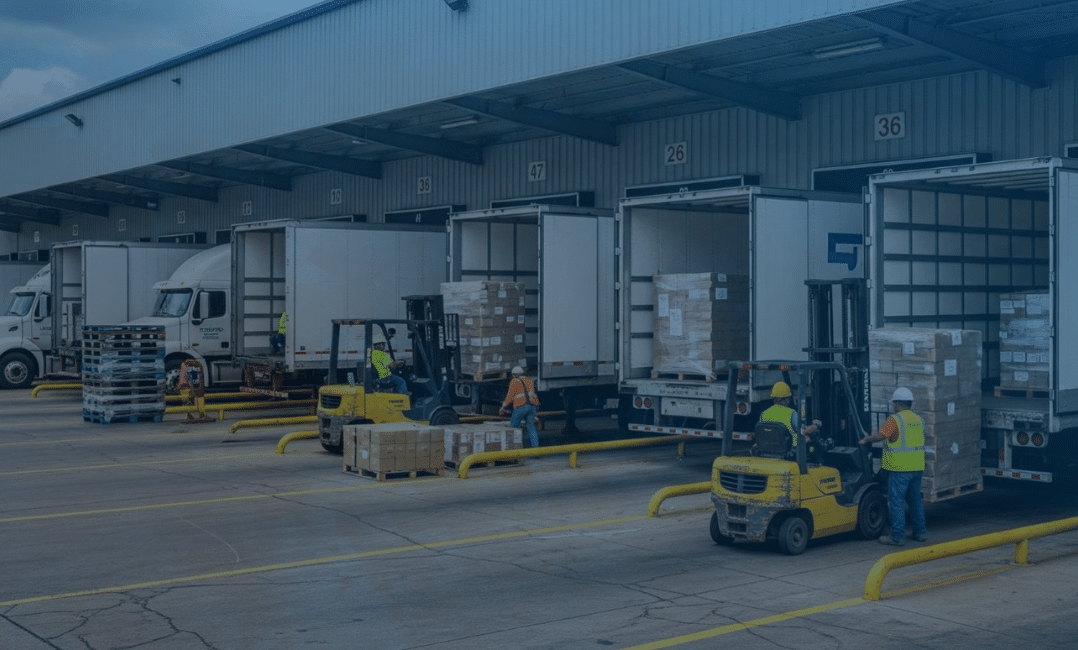
Jim Perry: Yeah, it really just gives them the ability to improve safety, improve employee retention, because who likes to come to a place that is constantly on fire, in quotes, right? We’ve heard of OSHA inspections going smoother. To use the word that I’ve overused already, it mitigates that chaos, gives them control, and allows them to run their shop the way they want it, as opposed to it being dictated by the hurried nature of what comes in, in one that doesn’t have access to something that we provide.
[16:06] Saving Workers From Burn-Out
Mark Mann: Yeah. So you’re not just giving them space. You are literally, in some cases, saving them from burnout.
Jim Perry: Yes. Without question. And we’ve heard those folks that have had fire marshals come in, and it brought us in in advance. And it literally saved them whatever fire marshals are going to do to them, because they cleared the exit doors, they cleared the pathways, they cleared tripping hazards. So everything that can go bad is potentially — obviously there’s things that they can’t put outside, but those that they can make sure that everything is running smooth, and then they can still get it. It’s, again, that access to act.
Mark Mann: Yeah, absolutely. So we hope that we have a lot of listeners here, so let’s give them some actionable advice.
[17:04] First Steps Before Calling WOW
Mark Mann: We just entered the new year, and if you were sitting with a director of operations who is really nervous about Q2 or Q3 capacity, what’s the first step you would tell them to take before they even call you, Jim?
Jim Perry: Yeah, I think they need to look at historical trends of when the madness happens, right? And each of the industries — since being here almost two years now in this seat, we can almost dictate when the calls are going to happen, right? And if they pay attention to that and ignore — wrong term, finance people are going to slap me — not ignore, but don’t dictate your rental usage based on a line item, right? And we see that disconnect. Those that are in the pit, right — and this is where I get amped up, so I apologize — but those that are in the pit, they know the value. Those that might be above the pit, they just see it as a line item. “And why do we have it?” Right? And maybe that goes away, and then in a week we’re bringing it back.
So if they would have planned, if they would have looked at trends, if they would have listened to the ones that are getting dirty, they would have known that this is going to happen. They need this, and let them run their business. Because otherwise they’re paying more, because then we have to pick it up and then bring it back. Pick it up and bring it back. And who knows what chaos could have happened in the meantime. Let’s plan. Let’s build contingency. And let’s listen to the folks that have seen this movie before.
[18:58] Strategy To Keep Things Flowing Smoothly
Mark Mann: Yeah. So, that word, plan. So what is the one simple change you see smart companies making? Is it strategy over band-aid thinking to keep things flowing smoothly?
Jim Perry: It really is. It’s looking at this not as, again, a box on wheels that’s sitting in my yard. This is flow. This is fluency. This is production. This is mitigating production stopping, because we can operate efficiently without everything that is or was blocking us. And it’s amazing, with some of the tours that I see, it allows me to suggest to folks, maybe it’s not happening here, but in the other businesses that I visited, this is causing the bottlenecks. This is causing the employee dissatisfaction and potential turnover, because they can’t do their job safely and efficiently, which makes them feel like they’re failing, which potentially makes them think that they’re not going to get their raises or bonuses, et cetera.
It’s really looking at this in a different way than just, “We have a warehouse. Why do we need trailers?” Well, there’s a reason why some of the biggest and brightest in the global space use thousands of trailers from us. And these companies are known for their excellence and known for their efficiency, but they incorporate it into their supply chain.
Mark Mann: Great point. Good conversation. All right, Jim, we’re going to switch gears. We’re going to call this our Dan Patrick round. This is our signature round. We want the audience to meet Jim, the person. So let’s go back to the beginning, right?
[20:55] Career Milestone
Mark Mann: Was there a specific moment in your career, maybe a big deal you closed or a problem you solved, where you thought, “Yeah, man. I’m really good at this. This is where I belong”?
Jim Perry: Commercial director. Yeah. I mean, well, one, I didn’t start at that role. I started as an AE, as most sales folks do. The company that I started at that really did it for me was Nextel Radios, if you remember that, right?
Mark Mann: Yeah.
Jim Perry: And which, you know, that was a game changer until it wasn’t. But that got me hooked on sales, and in that role I became a sales leader, and we got really good at working with fleets. That became my passion, which got me into the supply chain. And I can probably pinpoint in every role, or every seat, or every team that I ran, where you could trace what we were doing to solving the problem to make their life better.
I mean, one instance was I was working with a trucking company in Wisconsin, doing their refrigerated trailer tracking, right? So I can monitor. And they didn’t want it. The senior guy didn’t want it. It was a father-son. And the son came back to me. He’s like, “You proved my dad wrong.” I go, “Why?” He goes, “You just saved us $100,000 worth of spoiled product by one alert from your product.” I said, “My job’s done here,” right? So we had a laugh of it. But I mean, that’s it. When you get to do that, and we see it all the time in this business, they’re like, “Oh my gosh, that trailer, or those 10, or those 50 that you guys — it completely changed the way we’re operating.” That’s when, at the end of the day, you pat yourself, get ready to do it again the next day.
[22:53] What We Do Matters
Mark Mann: Absolutely. So I want you to think about the best boss or mentor you ever had. What is the one piece of advice they gave you about business or relationships that you still use today?
Jim Perry: What we do matters. It does. Sales folks always have the reputation of, “Oh, you’re sales. Oh, you’re that.” I wear it as a badge of honor. I couldn’t do anything else. This is what I love to do. And if I was at a company where it didn’t matter, I couldn’t do it. You don’t have that conviction, you don’t have that care, you don’t have the passion. And I joined — I wanted to join here. I wasn’t recruited. I searched out to work where I’m sitting right now. So I’m very grateful.
Mark Mann: Absolutely. So, what we do, it helps people sleep well at night, right? It takes care of their issues and it relieves their stress.
[23:59] De-Stressing
Mark Mann: So commercial roles, sales jobs, can be high stress. When you get home and shut it down for the night, what pulls you away from the business? How do you reset?
Jim Perry: Over Christmas, I became a grandpa. And so —
Mark Mann: Congratulations.
Jim Perry: So as much time as I can spend with Grayson, I take advantage of that. I love pickleball, which I know not everyone has played yet, but it’s an obsession of mine now, as a former tennis player. And all things fitness, besides spending time with my wife and my dog. But I’m a sales junkie. I am a student of this game. If I were to turn — I won’t, because it’s probably messy over there — I have more sales books than probably Barnes & Noble.
But this is just what I love. And when I joked earlier about Saturday, Sunday, it’s where my brain keeps going. So in the Midwest here, whether I’m snowplowing or shoveling, that’s where I’m thinking, “Oh, I could help that company this way.” So, I know it’s a nerdy sales answer, but when I’m not doing those other things, I’m thinking about this.
Mark Mann: Yeah, it’s not. I have a hard time taking a vacation. Over the holidays, we had a couple of days off, and I just can’t do it. I’m not good at it. My wheels just keep turning and I just keep working. So, Jim, this has been great.
[25:32] Debunking Trailer Rental Myths
Mark Mann: So before we close out here, what is one myth about renting trailers or containers that you hear all the time that you want to debunk right now?
Jim Perry: “If we need trailers, we already messed up.” We hear it all the time, right? “If we have to get trailers, we messed up a while ago. We have to fix that.” And it’s such a — I had mentioned earlier, we’re working with one of the companies that has literally had books written about them as far as their efficiency and the way they do business. They’re using over 2,000 trailers from us. If they would have had that thought many, many years ago, that they messed up by using trailers, I literally don’t know what they would do to run their internal supply chain, which then extends, obviously, to their external supply chain. And we’re part of all of it. We’re part of the inbound. We’re part of the staging. We’re part of the setup, the parts. We are so ingrained.
I don’t think they could do it without that “we made a mess” trailer that they have, and they just happen to have 2,000-plus of them. So, I mean, that’s really it. Don’t look at what we do as, “Oh my gosh, our team is a mess.” No, your team’s a mess without us. Let us come in and help rectify some of it so they can do what they’re best at. Let us support it, and then flex up and down as that demand meets.
Mark Mann: Absolutely.
[27:13] Stressing Out About A Full Warehouse
Mark Mann: So, one last question. Hopefully, like I said, there’s a lot of people listening here. So for anyone listening who’s looking at a full warehouse and feeling that stress, what is the one thing you would tell them to do this week?
Jim Perry: Yeah, I mean, let’s have a conversation. Whether it’s myself, or reach out to one of our local branches. I mean, we’re all over. We have 37-plus branches with 40,000 trailers. Don’t just sit in the chaos and stewing in it. Let’s have a conversation. We always say, bring us the problem. Let us help fix it, or if we can’t, our network of partners that we’ve grown relationships with, we’ll bring them in, and that continues to grow. Let us get together, put our heads together and solve it, as opposed to looking down the road at that building that you’re going to now have to manage. Let us worry about that part, and you do your core job. That would be my hope, and that’s that access that I was talking about. If they have that conversation, we can solve the problem.
Mark Mann: Jim Perry, commercial business director, Warehouse on Wheels. Thank you for joining the show today.
Jim Perry: Thank you, Dr. Mann. I appreciate it. It’s fun.
Mark Mann: Okay, that does it for us today, guys. Thank you for joining us, and we’ll see you on the next episode of The Wow Factor.