Rodney Barge on Storage for Live Opera Production
In this episode, host Mark Mann sits down with Rodney Barge, Associate Technical Director at the Atlanta Opera, to talk about keeping opera sets in storage trailers from Advantage Trailer Rentals, a Warehouse on Wheels brand, planning a production backwards from opening night, and what Georgia humidity means for scenery and costumes. Rodney’s warehouse in Austell, Georgia, is a little over 45,000 square feet with eight docks, and he says it’s not enough. He describes the call for two trailers he needed the next day, and the storage myth he wants retired: it all fits.
Key Takeaways
- A 45,000-square-foot warehouse still isn’t enough for the opera’s sets. Rodney’s warehouse in Austell, Georgia, is a little over 45,000 square feet with eight docks, and holds 16 or 17 full bays of sets, one after another. The opera owns one trailer and has a few more with stuff sitting in them. The trailers came about when Rodney hit it off with his contact at Advantage: he needed a place to put this set and that set, and the two of them figured it out.
- Rodney plans every production backwards from a fixed opening night. Opening night and load-out are fixed points whether the crew is ready or not. Load-in is usually the week before opening, with a prep week before that, and a run is usually four shows: opening night, two evening performances and a Sunday matinee. Rodney says it all starts with the size of the set and how much time there is to move it, and he books one more truck than he thinks he needs. If seven trucks will get it in, he books eight.
- Georgia humidity decides what the opera can store in a trailer. Rodney says even the best trailers in the world will not survive the humidity of Georgia, so the team thinks hard about what it stores and how. Many of the opera’s sets are steel and wood construction, which is okay as long as the paint isn’t a worry, while paint and costumes don’t hold up well in the humidity. Asked about the units from WOW, he says it’s better than it used to be, and knowing what can and can’t go in a trailer is still a give and take.
- Rodney called for two trailers he needed the next day. About a month before recording, while the opera was already in production, a company wanted one of the opera’s sets now and was bringing another set in. Rodney had to empty two bays of storage, so he made a very quick call to Advantage’s Atlanta team: “I need two trailers and I need them tomorrow.” The trailers were available and were brought to him, so all he had to do was book a crew and clear out those bays. With the move into the new Molly Blank Center for Opera and the Arts ahead, he says having the Advantage team readily available will make all the difference.
- Audit the lot, the driver and one open dock first. Rodney’s advice to a production manager at another major regional theater is to evaluate the parking lot first: how many trailers can you actually get in it? Find a reliable driver who can make the tight turns and give them a day cab, and try to keep at least one dock open for deliveries. The myth he wants retired is that it all fits. On an 8-foot-wide piece, the small size difference between a roll-up door and a swing door matters when there are barely inches to spare.
Episode Chapters
Click any timestamp to jump to that section on YouTube.
- 00:00 — Wagner, Mozart, and mobile storage
- 01:03 — From Cirque du Soleil to the Atlanta Opera
- 02:29 — His most memorable production
- 03:45 — Why 45,000 sq ft still isn’t enough
- 05:17 — Load-out day: “the worst game of Tetris”
- 06:33 — Planning backwards from opening night
- 08:17 — Georgia humidity and what you can’t store
- 09:22 — The big tent series and a new film studio
- 11:18 — Two trailers in 24 hours
- 13:43 — The Molly Blank Center transition
- 15:14 — What to audit in your yard first
- 16:26 — Why entertainment never throws anything away
- 18:14 — The biggest myth: “it all fits”
Transcript
[00:00] Wagner, Mozart, and mobile storage
Mark Mann: What if I told you that Wagner, Mozart, Verdi, and Puccini had something in common with the mobile storage and warehousing and logistics industry? Today, we step out of the shops and yards of the storage market and into the world of creativity and classical entertainment. Today’s guest manages an inventory that consists of 20-foot-tall castle walls and delicate costumes, period furniture, and a complete theatrical set that have to be staged with zero room for error. Joining us today to discuss how a world-class arts organization navigates tight schedules, high-value assets, and massive facility transitions is Rodney Barge, the associate technical director at the Atlanta Opera. Rodney, welcome to the show.
[01:03] From Cirque du Soleil to the Atlanta Opera
Rodney Barge: Hey, thanks for having me. Good afternoon, everyone.
Mark Mann: So, tell us a little bit about you, your background, and how you found yourself in this magical world of opera.
Rodney Barge: Well, it’s a long story, but I’ll do my best to cut it as short as possible. I actually went to school for technical theater, so I have my BFA in technical theater. I spent a great number of years in Las Vegas working for Cirque du Soleil on some of their large, very large-scale productions. I spent a couple years in Macau, China, on one of the shows over there. And just before the pandemic hit, I was down in Orlando, Florida, working on a circus show that’s partnered with Disney. So that was my full circle, from one side of the country, back to the other side of the globe, down to Florida, and now I’m in Atlanta.
Mark Mann: Now you’re in hot Atlanta, one of the greatest cities in the country. And you guys are hosting the World Cup here too, right?
Rodney Barge: That is correct. It’s here.
Mark Mann: Absolutely. Very cool. Busy time. So, I know this is probably a tough question for you, for a professional who’s done this for a long time, but if you had to choose, what’s your favorite or most memorable performance in your career?
Rodney Barge: Oh man, that is a hard one for sure. There have been a great number of productions that I’ve done in my very, very long career.
[02:29] His most memorable production
Rodney Barge: Honestly, my favorite show, I would have to say, was my first show, my first show ever, when I was in high school running a follow spot. Didn’t know anything about anything, and we were doing The Wizard of Oz, believe it or not. And because it was a musical, the girl playing Dorothy, she just caught me. She had the most beautiful voice I’d ever heard, and I was the one holding the spotlight. So, yeah, that was by far my favorite one. Still remember it.
Mark Mann: Yeah, it is magical. I love the theater. I was the vice president of our thespian troupe in high school, believe it or not. So, yeah. So, we did a lot of Rebel Without a Cause. We did Fall of the House of Usher. We did All American, a bunch of different musicals, Brigadoon. So, yeah, I come from that background as well, and I love it. So, storage issues.
One would assume that managing technical production for the Atlanta Opera, I mean, it’s a master class in heavy logistics, right? You have oversight of scenery and props and complex incoming show rentals. At what point did art collide with warehouse operations, leading you to reach out to Advantage Trailer Rentals in Atlanta?
[03:45] Why 45,000 sq ft still isn’t enough
Rodney Barge: Believe it or not, my warehouse facility is a little over 45,000 square feet, and it’s not enough. It’s not enough. So all this junk’s got to go somewhere. It really just happened. Like, I think Troy is an amazing guy, and we just hit it off really well, and one thing led to another, and it’s like, I need a place to put this set. I need a place to put that set. And the two of us together just figured it out. Just figured it out.
Mark Mann: Yeah. So, do you store those sets in a drop lot, or do you have some place there near the opera house?
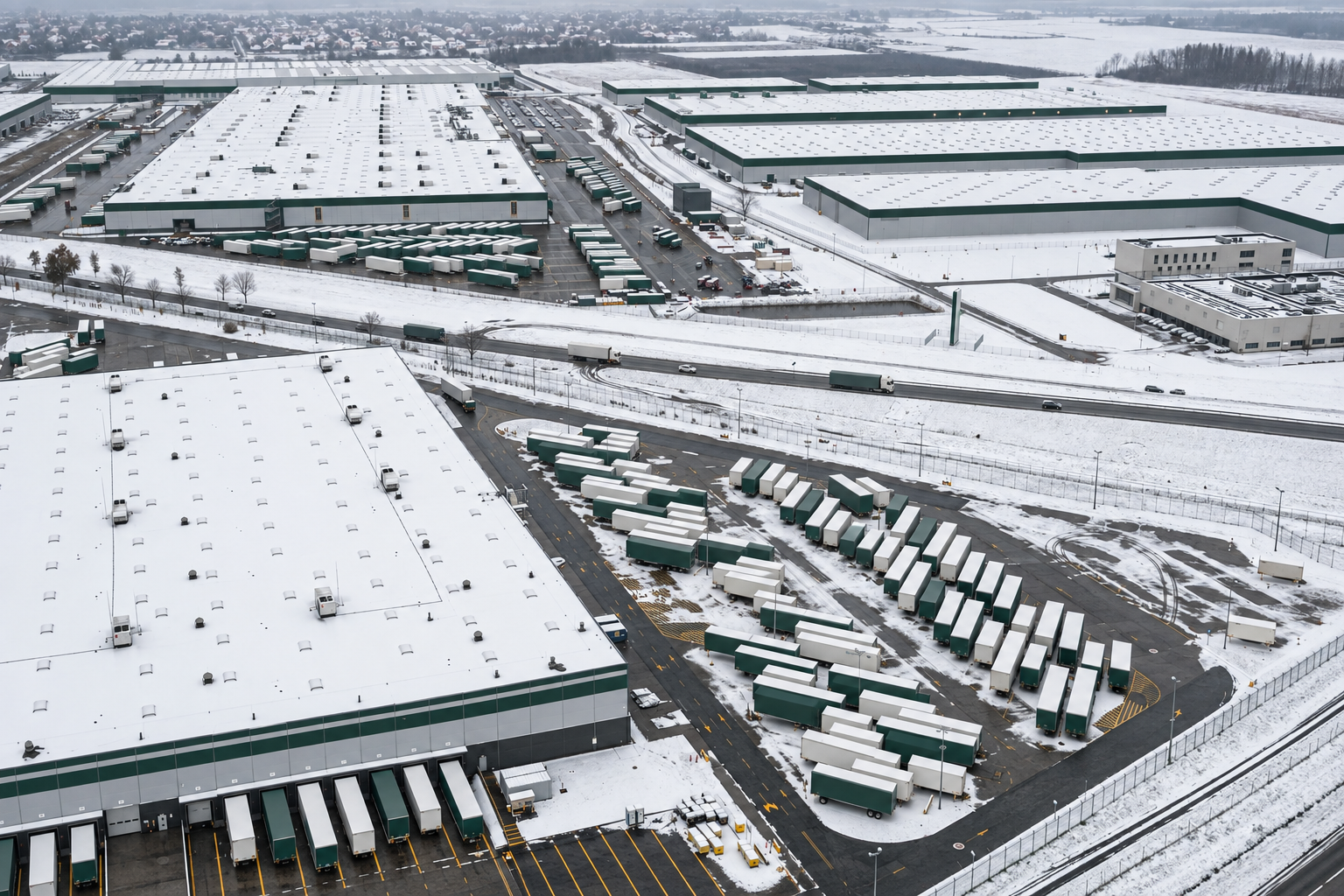
Rodney Barge: We have a warehouse here in Austell, Georgia. The opera house that we work out of is the Cobb Energy Center, which is way up north a little bit, but I have 45,000 square feet. I’ve got eight docks. I’ve got one trailer that the opera owns, and then a few more with stuff sitting in them.
Mark Mann: Yeah. So, that’s fascinating. I mean, we talk to a lot of companies that are, you know, they’re manufacturers, or, you know, they’re doing retail. I love it that you guys are using trailers to store sets. So, between coordinating crews and managing budgets and overseeing layout and planning and all that, what does a normal day look like for you when you’ve got a massive mainstage production that’s getting ready to load out?
[05:17] Load-out day: “the worst game of Tetris”
Rodney Barge: It’s a give and take, man. It is the worst game of Tetris you can ever imagine, when you think about it. Like, just figuring out how big this show is and what it’s going to actually take to move it. Just the sheer size of the biggest piece. How can we get it in? How can we get it out? How many people is it going to take to move it? What are we going to need? Do I need another tank of propane for the forklift? It is a really, very challenging game of give and take. It all really starts with the size of the set and how much time we have to get it from point A to point B.
Mark Mann: Yeah. So, let’s talk about timing. When a show comes in, how long do they normally run?
Rodney Barge: We usually do four shows. So, we have an opening night, we have two evening performances, and then we have a Sunday matinee, and then that’s it. Game over.
Mark Mann: So, just over a weekend or something like that, and then you’re tearing down.
Rodney Barge: Yes, sir.
Mark Mann: Wow. So, that’s very transient, right? So, the sets arrive, live on stage for just a few days, and then they’ve got to be struck and stored immediately. Tell us about that. How do you manage the relationship between space and time?
[06:33] Planning backwards from opening night
Rodney Barge: Well, opening night is a fixed point. Whether we are ready for the show to open or not, opening night is a fixed point. Load-out is a fixed point. Whether we’re ready to tear down or not, that is a fixed point. So, for me, the planning part starts backwards. I start with opening night and I work my way back. When does opening night happen? And then a week before that is usually load-in. So we have a week of getting ready to go for opening night. And before load-in, we have prep week. So that whole week is getting ready to go to load-in, to get ready to open the show.
And that week in itself, that’s how I break down where it all starts. If I’ve got, you know, 17 massive walls that I have to go up, I have to figure out how many carpenters do I need, what’s the lighting package look like, what’s the props package look like, if it has a video wall, what’s the video package look like? And I’ve gotten pretty good at overestimating on paper how many trucks I actually need. So, I usually always end up with one more than I actually needed, and it’s gotten me out of trouble more than a few times. So yeah, if I think it’s going to take us seven trucks to get in there, I’m going to book eight.
Mark Mann: Yeah. So you’re telling Troy, “Hey, just give me one extra. Just one extra. Just give me one extra for another week.”
Rodney Barge: Yeah.
Mark Mann: You mentioned forklift. So opera scenery is notoriously bulky, and some of it is completely non-collapsible. So before you reached out to the team at Advantage, what was the specific breaking point in your permanent warehouse or your shop, where you looked at the incoming scenic flats and realized your fixed footprint can no longer sustain this volume in there?
[08:17] Georgia humidity and what you can’t store
Rodney Barge: Yeah, it’s, again, it’s another game of give and take, because even the best trailers in the world will not survive the humidity of Georgia. So, we have to really, really think about what we store and how we’re storing it. A great number of our sets are just steel and wood construction. So, a lot of that is okay, as long as we’re not too terribly worried about the paint. Paint doesn’t really hold up too well in Georgia humidity either. Neither do costumes, but we can get away with some stuff going in trailers.
In my warehouse proper, I’d say we have 16 or 17 full bays of just sets, one set after another. And however they break down, they still got to get in and they still got to get out. So, a lot of that plays into how much truck space we need. Just how much bay space does it take up? You only got 53 foot of truck space, so you got to make it fit somewhere.
[09:22] The big tent series and a new film studio
Mark Mann: That’s it. Yeah. 450 feet in that 53-foot storage trailer.
Mark Mann: So, the Atlanta Opera, you guys have been celebrated for your courage and your innovation. I heard a story that you guys were famous for continuing to operate during the pandemic under a big tent series. I also heard that you guys are launching your own film studio. Is that right?
Rodney Barge: That is correct.
Mark Mann: I mean, that is a huge deal. So without the flexibility of mobile storage offered by Warehouse on Wheels and Advantage, you guys may have had to say no to some of those big, ambitious ideas. Would you say there might have been a huge financial opportunity cost for the opera if you didn’t have a partner like Troy and Tanner?
Rodney Barge: Again, it’s a give and take. It is a give and take. We store a lot in this facility, but we have to keep our eyes on the prize. I mean, we are led by a very, very great man, Tomer Zvulun. I hope I said his name right. I will never hear the end of it if I mispronounced his name, but he is a visionary. He’s got a great mind and an eye for detail. So he does a very good job of keeping us all on track. You know, we may have to turn down an opportunity here or there, but there’s a bigger picture. There’s always a bigger goal.
Mark Mann: Yeah. So, a lot of leaders still see storage trailers as a temporary fix for a messy warehouse or a messy yard. In show business, opening night is, like you said, this immovable deadline, right? It’s fixed. Can you walk us through a high-pressure week where the ability to quickly scale your storage capacity up or down with a few phone calls to Troy and those guys completely saved, you know, a technical rehearsal or production timeline?
[11:18] Two trailers in 24 hours
Rodney Barge: I got a great one for you. This actually happened about a month ago, because we’re constantly moving. We’re always in production, but we also rent some of our sets to other opera companies around the country out of this warehouse, too. Like, we co-own a couple of our sets, we own a couple of sets, we rent out a few sets, but when we’re in production, we’re in production. Like, we’re doing the thing.
But we got a call from somebody saying, I can’t remember which company it was, but, “Hey, we want the set. We want it now. We’re going to bring you another set.” It was like, okay, cool. Now we’ve got to empty out an entire two bays of storage so that we can take a show, and we’re already doing a show. So that was a very quick call to Troy, like, “Hey, I need two trailers and I need them tomorrow. What can you do?” So Troy got me two trailers, drop a hat. It probably cost a little more than I would have liked to have paid for it, but they were available and he brought them to me. All I had to do was book a crew and clear out those bays.
So yeah, Troy really came through in a pinch. It was very, very cool to be able to just pick up the phone like, “Hey, I need two trailers tomorrow. Can you do it and bring them to me? Bill me. I don’t— send me an invoice. I’ll take care of it later.”
Rodney Barge: “Can just do the work. I’ll pay the bill.”
Mark Mann: Troy loves those hair-on-fire moments, and, you know, we joke around that he and I don’t have to worry about that. And neither do you, Rodney. Neither do you. So, you know, you mentioned humidity, and, you know, the whole Warehouse on Wheels team prides itself on providing, I mean, it’s a quote around here, clean, dark, dry and safe storage options, right? How has the weatherproofing and security of the mobile units that you get from us changed your personal stress level during unpredictable storms or, like you said, high-humidity seasons?
Rodney Barge: It’s better than it used to be. I tell you that, like, the trailer that we own here on property, I’ve had to seal more than once. So, I mean, it is what it is. It’s an old trailer. It’s been around since probably before me. It’s expected. You know, cracks, leaks, things are going to happen. It’s fine. But, like I said, it is definitely a give and take of knowing what you can and can’t get away with storing in a trailer for those just-in-case moments.
[13:43] The Molly Blank Center transition
Mark Mann: Yes, that’s right. Yeah, there are certain things that just don’t go. So, you guys recently broke ground on a big Molly Blank Center for Opera and the Arts. Is that right? Like, Beltline loop area. Okay, good. So, you’re going to be integrating rehearsal halls and costume shops, and from what I read, it’s like a 56,000-square-foot campus.
Rodney Barge: Yep.
Mark Mann: How are you envisioning using mobile storage as a strategic pressure valve while you transition operations into this permanent new home over the next year?
Rodney Barge: Honestly, I have no idea how this is all going to work. This is new territory for a lot of us. I mean, I’ve never opened a building before. I don’t know too many people that can say that they have. But having Troy and Tanner and the guys readily available, it’s going to make all the difference when we need something quick. So yeah, man, it’s when we have to move out of one place and into another. I can’t even begin to imagine what that looks like, to move an entire office building, but we’re going to do it. We’re going to do it.
Mark Mann: Yeah. Just keep Troy on speed dial.
Rodney Barge: I already got him on speed dial. That’s my—
Mark Mann: All right. What I’m hoping is that a lot of folks like you are watching this. So, if an associate technical director or production manager at another major regional theater in Dallas, or even Las Vegas—
Rodney Barge: New York.
[15:14] What to audit in your yard first
Mark Mann: —if they are currently just making it work, so to speak, with choked backstage and packed warehouses, what’s the first thing you would tell them to audit in their yards?
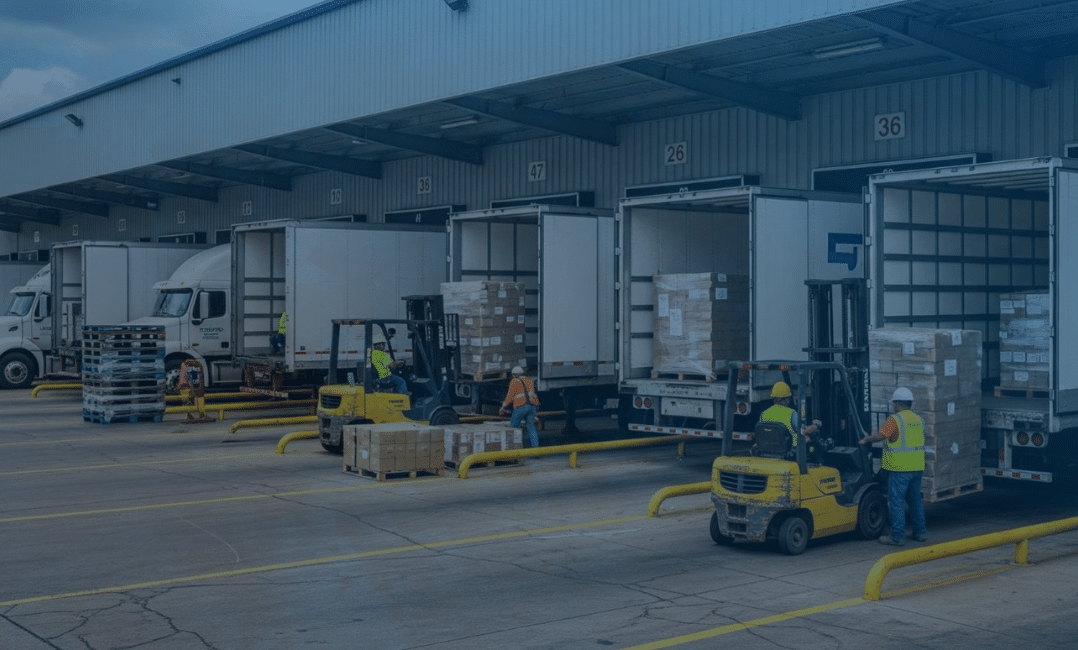
Rodney Barge: I would say evaluate your parking lot. Like, how many trailers can you actually get in that lot? Find yourself a reliable driver who’s really good, who can make those tight turns, and get them a day cab, because nobody wants to move a trailer back there with a sleeper cab. Get yourself a good driver with a day cab. Evaluate your space, and if you can, try to keep at least one dock open for deliveries.
Mark Mann: Yes. Yeah. You can’t load all those up. So why do you think so many companies in the entertainment and event space, and we have a location in Vegas, and I know the entertainment industry out there rents a lot of trailers from us, why do you think they wait until a set is actively blocking an exit or a dock, and maybe the fire marshal comes in, before they move ahead with a mobile storage option?
[16:26] Why entertainment never throws anything away
Rodney Barge: Well, the sad reality of entertainment is we try really hard not to throw anything away, because you never know when you’re going to need that thing that was on that show, and that set that got put together, and maybe it’s over there, maybe it’s, you know, way over there. So, speaking for myself especially, I need to be able to see everything. I need to be able to see where everything is before I can decide where it’s going to go. So that’s part of the reason for the clutter. Like, my office is messy now, but I know exactly where everything is.
When it comes to an entire set, that’s different, because there are so many pieces and parts that get reused, recycled, you know, stock stage flats, stock stair units. You know, maybe there’s a chair that’s a piece of furniture that gets used in this show and that show and that show. Trying to figure out where it actually goes, always the hard part. And it gets even harder if you put it in a trailer.
Mark Mann: Mhm.
Rodney Barge: That’s my opinion. And that’s a big part of it. It’s a huge part of it in my world, because when I put a set in a trailer, I got to get as much of it in there as I can. And it doesn’t always all fit.
Mark Mann: Yeah. You almost have to have an inventory, or maybe like a QR code scanner that pulls up exactly what’s in there and all of that.
Mark Mann: When we took the tour of Warner Brothers and went through the prop room, I mean, you’re right, they hang on to everything. There’s stuff in there from movies and films that happened in the ’20s that are still in that prop room right now at Warner Brothers. It’s crazy.
Mark Mann: What would you say is the biggest, most outdated myth about mobile storage trailers that you hope the commercial world or entertainment world can completely retire after they hear from you on this episode?
[18:14] The biggest myth: “it all fits”
Rodney Barge: It all fits, and that’s a myth. It does not always fit. And contrary to popular belief, one thing that I want to make sure that people are paying attention to: the smallest size difference between a roll-up door and a swing door is very, very small, but it matters. It matters when you’re trying to get an 8-foot-wide piece through a door and you only got inches, barely inches, to spare. Like, those minute amounts of differences matter when you’re talking about a very, very large piece.
Mark Mann: You know our world so well. This is amazing. I love it. Rodney Barge, associate technical director at the Atlanta Opera, thank you for showing us the Wow Factor in entertainment.
Rodney Barge: Thanks again for having me. Appreciate it.
Mark Mann: All right, folks. It’s time for the curtain to fall on this episode. That’s it for this week. I’m Dr. Mark Mann, and we’ll see you on the next episode of The Wow Factor.