
Brent Meadors on Selling Industrial Storage Capacity
In this episode, host Mark Mann sits down with Brent Meadors, Chief Operating Officer and President of US Operations at Warehouse on Wheels, to talk about what the business actually sells, why storage and cartage trailers are priced differently, why orders freeze when the headlines move, and where the value “people matter” came from. Brent describes WOW as industrial storage capacity, delivered 450 square feet at a time by renting trailers, compares month-to-month rental with a warehouse landlord who wants a minimum of five years, ideally seven to 10, and follows one trailer from 10 years over the road to potentially up to 40 years of useful life.
Key Takeaways
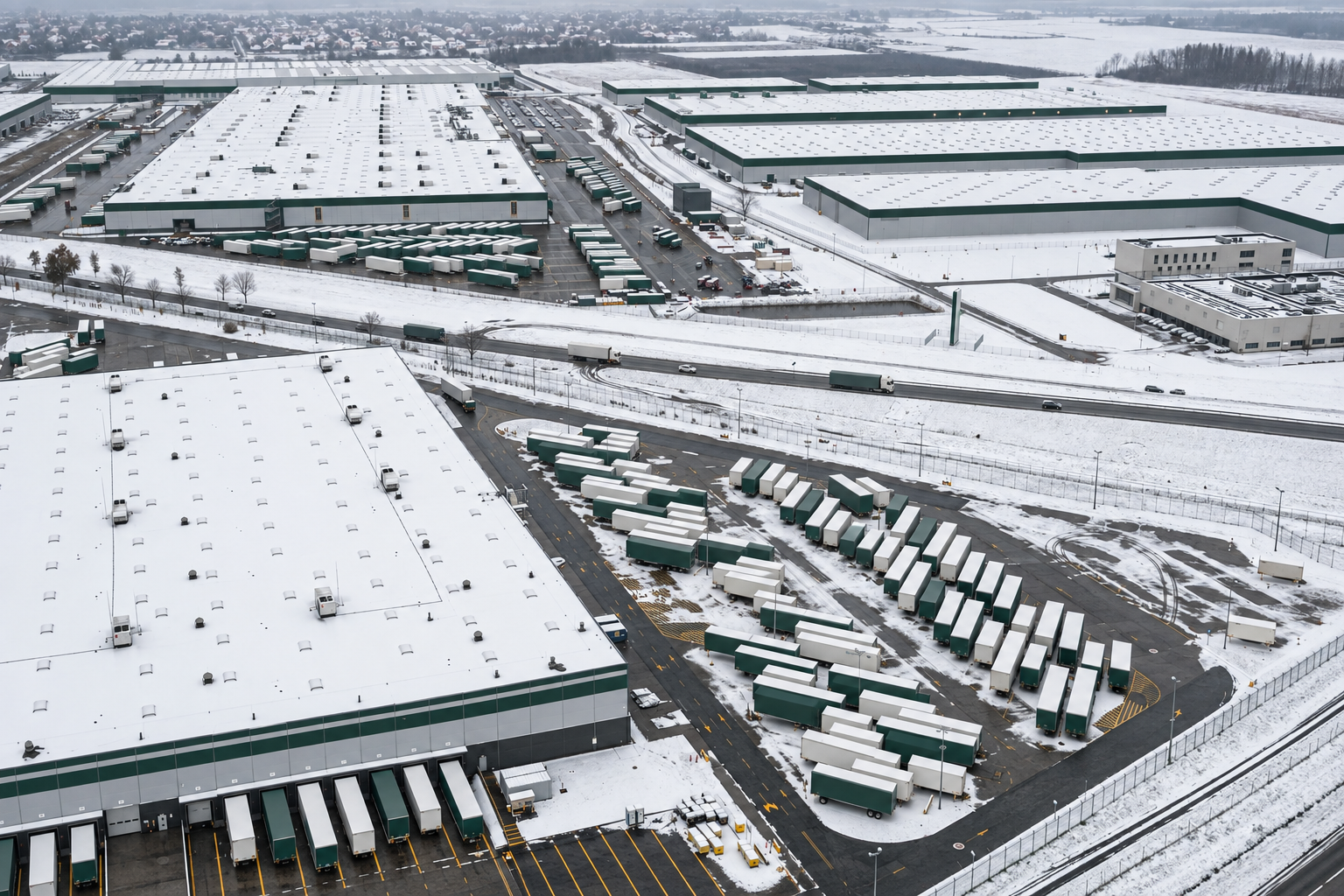
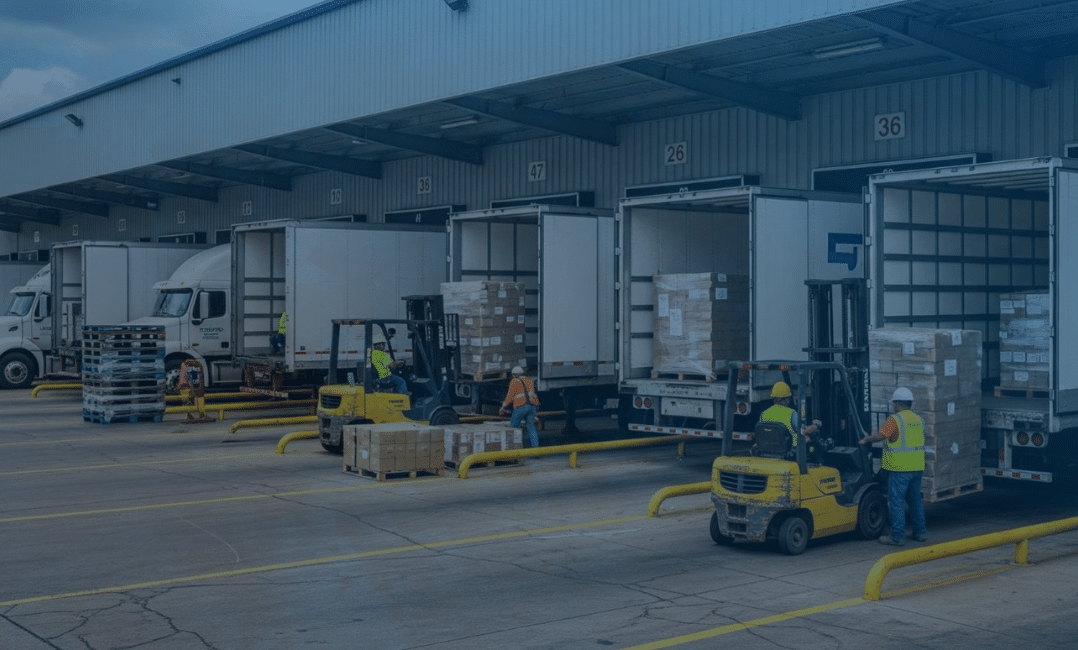
- WOW supplies industrial storage capacity, 450 square feet at a time. Asked what business WOW is really in, Brent describes it without using the words trailer or rental: WOW supplies industrial storage capacity, an alternative to warehousing space for a distribution center, warehouse or manufacturing facility that needs more room under a roof. Customers scale it up or down, calling at a moment’s notice for 10, 20, 30, 40 or 100 trailers, and WOW picks them back up and gets them off the books just as quickly once they’re emptied. An existing customer can call or send an email saying how many they need and where, and the trailers show up.
- Storage and cartage trailers are priced differently because they wear differently. A storage trailer sits on the customer’s yard holding goods until they’re needed, sometimes for a month and sometimes for 10 years, which means a lot less activity, maintenance and wear and tear for WOW, so WOW can price it as such. A cartage trailer travels in town from one facility to another, anywhere from once a week to five times a day, with much more wear on its moving components. Brent’s teams run discovery on the application and usage first, so the customer gets the right trailer and isn’t overpaying for what they need.
- Brent asks about usage before he answers the price question. Callers who run straight to price think a trailer is a trailer. Brent says each customer’s usage, and so how WOW delivers and maintains the trailer, is unique, and a price given before discovery will be a little conservative. On terms, a typical trailer leasing company wants a minimum of a year and a typical warehouse landlord probably wants a minimum of five years, ideally seven to 10, while WOW rents month to month. A customer renting month to month who needs prices fixed for the next 6 months gets a “no problem”.
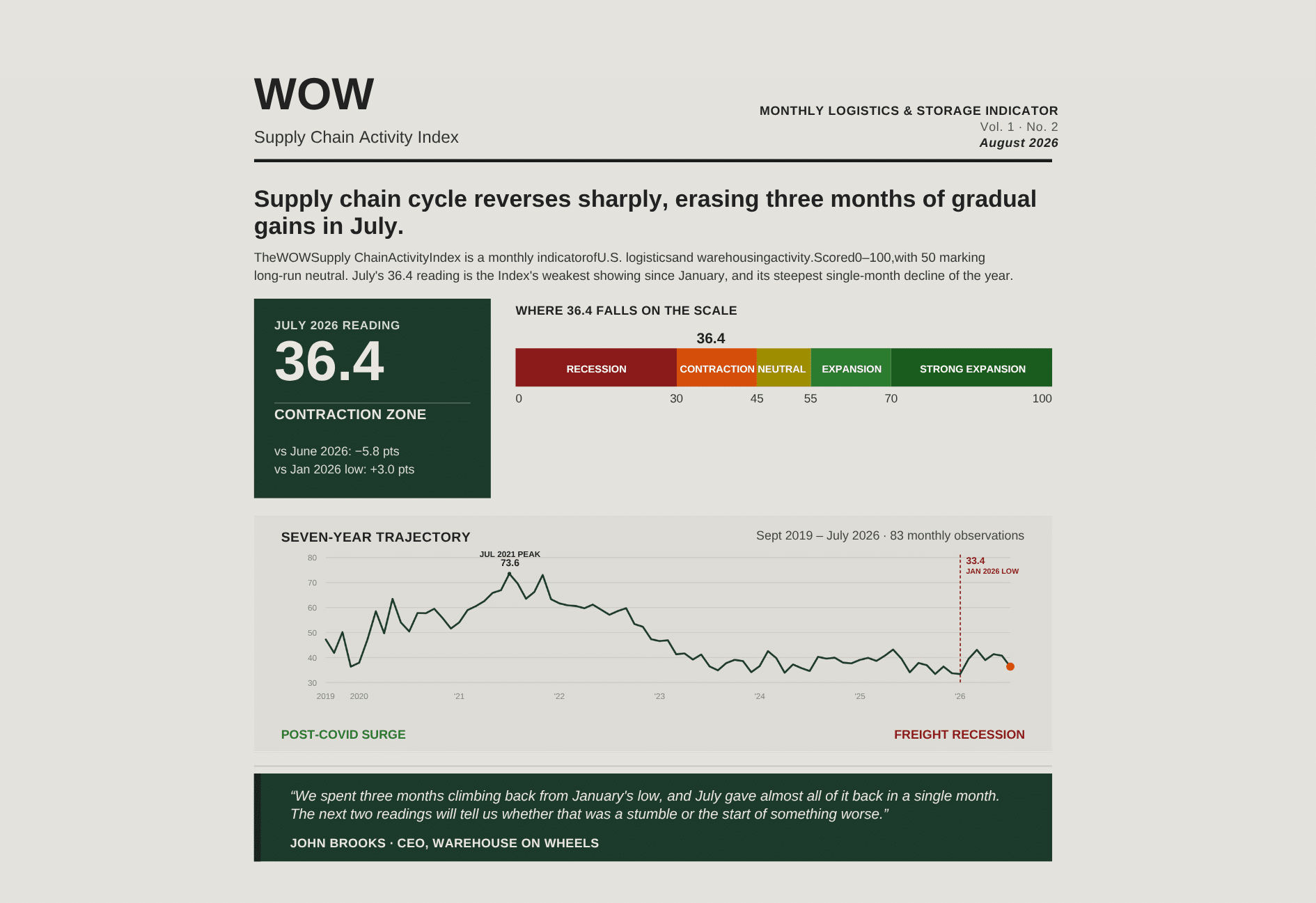
- Orders freeze when the headlines move, then return until the next event. Brent says WOW’s open pipeline tends to look really good until fuel prices go up on the latest headlines; then everybody freezes and nobody presses the order button for a week or two. Overlay the headlines on the order graph and there’s a pretty close correlation. A manufacturer coming out of a slow period may not know if new demand is permanent or temporary, and WOW’s trailers bridge that gap. Some customers find the cost effectiveness superior to fixed space and become renters for life, storing the trailers in their own yard or in WOW’s yard.
- WOW gives 10-year-old trailers potentially up to 40 years of life. A new trailer spends about its first 10 years moving freight over the road. Then WOW buys it, fixes it up, checks the mechanical side and refreshes the paint to match WOW’s branding, runs it in cartage for 5 to 10 years and then in storage for the remainder of its life, before retiring it through approved scrap vendors, with the tires sent to recyclers. Mark adds that EcoVadis has rated WOW every year since 2023, with its score going from 38 to 51 out of 100, in a system where the best in the world barely get into the 80s.
Episode Chapters
Click any timestamp to jump to that section on YouTube.
- 00:00 — Fuel Prices And 40 Pallets
- 01:52 — Twenty Years In Fleet Management
- 03:19 — What COVID Changed Forever
- 04:54 — Not Trailer Rental, Storage Capacity
- 07:39 — Storage Versus Cartage Explained
- 10:54 — Why Price Comes Last
- 12:56 — Storage Trailers Versus Warehouse Lease
- 15:42 — Reading Orders And Headlines
- 24:34 — Where People Matter Came From
- 34:19 — Scale, Contracts, And Doing Nothing
- 38:24 — The Forty Year Trailer
- 47:31 — Lightning Round: Strongest Market
Transcript
[00:00] Fuel Prices And 40 Pallets
Mark Mann: From the warehouse floor to the yard, this is Dock Stars. In every episode, we shine a light on the people who keep the supply chain moving: the warehouse pros, the logistics leaders, the operators who make it all happen. These are the rock stars of the dock. Let’s meet today’s Dock Star.
Mark Mann: Welcome to Dock Stars, where we celebrate the people who keep the supply chain moving.
Diesel closed at $5.31 a gallon last week. Three weeks before that, it was $4.57. That’s 74 cents in 21 days. And it’s happening for all kinds of geopolitical reasons. But somewhere downstream of all that is a plant manager or a warehouse manager in Spartanburg, South Carolina, trying to figure out where to put 40 pallets. And that’s where we can help. So that’s what we’re going to do today.
And this is the first episode of the Dock Stars podcast. So my guest today is a legend. He manages US operations for Warehouse on Wheels. Brent Meadors is our COO and president of US operations. We’re going to talk about what the business actually is, what a trailer costs and why that number moves, what fuel and global conflicts do to us, what we believe around here, and what happens to a trailer when it’s finally done working. Right. So, Brent, thank you for making the time today.
Brent Meadors: Thanks, Mark. And wow, legend. That escalated quickly.
Mark Mann: Well, before we get into the meat and potatoes of mobile storage and sustainability and fuel prices and all that, I’d like for our audience to get to know you. How did you get started in this supply chain and logistics industry?
[01:52] Twenty Years In Fleet Management
Brent Meadors: You know, probably not that uncommon of a story. Went to school for a degree that I’m not using. Spent some time right out of college working for Ryder on their fleet management side. That’s where I was introduced into the transportation logistics world, if you will. And after working with them for about eight years, I joined Warehouse on Wheels. At that time it was Meisler Trailer Rental, a small company in southern Indiana that developed into American Trailer Rental Group and now Warehouse on Wheels. So I’ve spent 20-plus years in fleet management, and the last, oh gosh, 16 in particularly the transportation rental business.
The trailer industry is— I like it. We always kind of joke around: it’s amazing the world’s problems you can solve with a 53-foot semi-trailer, because there’s all different types of application uses for a box, right? A storage container. We have them all over our house and put various things in them. And so that’s really no different with businesses either. So, yeah, that’s kind of a quick summary of my background in this business and maybe what we’re doing today.
[03:19] What COVID Changed Forever
Mark Mann: So, you’ve been in this industry a long time. What would you say has changed the most since you started?
Brent Meadors: I don’t have firsthand experience with this, but spending time with customers, spending time at trade show events, I think the COVID epidemic, the impact it had on supply chains, really woke the world up to how important their supply chain was. And I’ve heard many executives, and had those conversations with folks, that they didn’t have the seat at the board or table pre-COVID, but now they do. People realized the fragility of their supply chains, and they realized how important that continuous flow of raw materials or goods or inventory in and out the door was, so paramount to their business, and when that was disrupted, the negative consequences, potential negative consequences, it could have.
And so really the biggest change I’ve noticed is just the attention on the industry, the attention on the supply chains of these companies, and the investment that they have now. You think about technology and just capital expenditure and things like that. They really have a spotlight on it, and a lot of these companies are really professionalizing their supply chains.
[04:54] Not Trailer Rental, Storage Capacity
Mark Mann: It’s definitely in the news a lot more. We’re also seeing universities that have advanced supply chain degrees. We’re talking master’s degrees in logistics and supply chain management. So the focus is definitely there.
A lot of people hear trailer rental and they picture a moving truck, or somebody will say, “So you lease trailers?” Well, we don’t really lease them. We rent them. So in your own words, what business are we actually in when we say trailer rental? What does that mean for the folks that are listening?
Brent Meadors: Yeah. And Mark, I’d actually say without even using the words trailer or rental, right? I would most describe it as: we supply industrial storage capacity. We’re an alternative to warehousing space. And so if your distribution center, your warehouse, your manufacturing facility just needs more space, to keep things outside the weather, inside between some walls and under a roof, that’s really what we do. And so we can deliver it 450 square feet at a time, and you can scale that up or down however much you need to. And how do we do it? Well, we do that by renting trailers. So the solution is industrial storage capacity when, where you need it, and how much you need. And it’s accomplished through bringing your trailers.
Mark Mann: And it’s not long-term, right? We’re not talking a three-year lease or even a year lease or a five-year lease. This could be a month-to-month solution, right?
Brent Meadors: Yeah. That’s really one of our big value propositions. When you think about fast, flexible storage, a long-term lease doesn’t really fit into that equation, right? We want our customers to know that they’ve got a partner that can bring them what they need when they need it, and we will pick it back up and get it off their books just as quickly. We’re okay with that. It creates a busy business for us, and we’re okay with that, too. It’s what we do. It’s how we want to service our customers.
We want them to know that they can call us at a moment’s notice and we can deliver 10, 20, 30, 40, 100 trailers to that site, to that facility, wherever they need that space. And again, as they use or consume whatever is on those trailers and they empty them out and they want them off their yard, just call. We’ll come pick them back up.
[07:39] Storage Versus Cartage Explained
Mark Mann: We hear storage, we hear cartage. So, for someone who’s never really stood in a yard, tell me why that distinction matters, what it is, and why it matters so much to a customer’s wallet in particular.
Brent Meadors: Yeah, we used to use a tagline. We don’t use it as much anymore; we kind of changed our marketing around a little bit. But it was “the smartest way to rent a trailer.” And that wasn’t really saying that our company was that much superior, that our trailers were something special or anything different. Where that “smartest way to rent a trailer” came from was our expertise in our teams to be able to find you the right trailer for the application you need it for. And so that comes from intentional conversations, good discovery with our customers through the sales process: understanding their need, understanding the application, what they’re going to use it for, how long they’re going to need it. And so through that conversation, we can find them the trailer that they need for the most economical price, right?
So, storage trailers, for example. When we say storage trailer in general, that means that somebody’s going to take one of our trailers, they’re going to put it on their yard, they’re going to put their goods in it, and it’s going to sit there for a period of time until they need to retrieve those goods or use them. Sometimes that’s a month. Sometimes that’s 10 years. We all have stuff that we just can’t get rid of, and these businesses are no different. And so that’s a storage trailer. It’ll hold your stuff. It’ll keep it dry, keep it safe. It’ll park on your yard and doesn’t go anywhere. Well, for us, a storage trailer is a lot less activity on our business, a lot less maintenance, a lot less wear and tear. So we can price it as such.
Now, a cartage trailer. In general, again, these are terms of art, not science. Sometimes a cartage trailer in general will travel in town. You’ll put your stuff in it. You’ll go from one facility to another. Again, that could be once a week, once a month, or five times a day. Through the discovery process and understanding the application and the usage, we’ll make sure we get you the right trailer, and we price it accordingly so that you’re not overpaying for what you need. Those obviously have much more wear on all the moving components, and vibration and things like that. And therefore we make sure we take that maintenance cost into account, to make sure we have our local team resourced to service it appropriately as well.
[10:54] Why Price Comes Last
Mark Mann: So that discovery process is a lot about solution, right? You’re answering the who, what, when, and where type questions. But I’m sure we get a lot of people that call and say, “How much? How much? How much?” Right? They’re interested in talking money. How much is this going to cost us? So why is that a harder question than it sounds?
Brent Meadors: Yeah. It’s just what I said: the terms of art, the application and usage for these. It’s different. When we started this conversation, I talked about all the different usage and problems we solve with trailers. When somebody just wants to run straight to price, they think a trailer is a trailer. But their usage of the trailer is unique to them, and how we perform our service, or how we deliver it to them, or how they use it and therefore we must maintain it, is going to be unique. So, yeah, I don’t like answering the price question first, because in general we’re going to be a little conservative with that and make sure that we’re trying to cover our bases. Whereas a little bit more information, a little bit more discovery, a little bit more openness with us and the customer, and building the relationship and the trust amongst one another, obviously is a benefit of that, but it really helps us hone in on the right solution for them.
Mark Mann: Absolutely. So, when I’ve looked at the Warehouse on Wheels economic benefit analysis, it puts a five-year present value savings of around $2.6 million for the aggregate customer. When a general manager, I guess, is sitting across from a warehouse manager, a logistics supervisor, which lands harder: the savings number or the flexibility?
[12:56] Storage Trailers Versus Warehouse Lease
Brent Meadors: I guess it would just depend on the usage, right? Or the solution. You know, real estate’s expensive. We have operational sites that we manage. I oversee the real estate, and not only is price per square foot or price per acre expensive, it keeps going up, like, by a lot. And in certain markets, it’s hard to find. So when you think about the comparison of a trailer to fixed warehouse space, i.e. real estate, that’s very difficult to solve for when you’re trying to find a warehouse. It’s expensive. There’s not that many of them.
And the lease negotiation, the contract side of things. We’re month-to-month, and your typical trailer leasing company wants at least a minimum of a year. And then your typical warehouse landlord probably wants a minimum of five years, ideally seven to 10, right? And so it’s almost like there’s not even a comparison there, right, when you compare putting your stuff in a trailer versus a warehouse, and the ease of doing business with one of those two solutions. Call us up. Especially if you’re already an existing customer of ours, no paperwork can be done. You call us up, send an email, tell us how many you need, where you want them, and they’ll show up, right?
Even if you have an existing relationship with a landlord, or a property investment company, and you want an additional warehouse, you’re going through the whole process on that specific warehouse. You’re trying to find it. You’re trying to figure out when it’s available. You’re trying to figure out your CAM expense and all your utility costs and all those things. In the end, you have to staff it with security and the employees and everybody operating in it, to put the racking in, and all sorts of things. When you stick it in a trailer and you put the trailer in a parking lot, it’s self-contained, and you don’t need security outside of what already exists on your perimeter. You don’t need cleaning and maintenance and all sorts of things. So, I don’t know. Although we’re the alternative to warehouse space, it’s really almost hard to compare the two because of how much easier it is to rent the trailer. You’d asked me about the flexibility side of it, and that really kind of answers that too: it’s just so much more flexible than fixed space.
[15:42] Reading Orders And Headlines
Mark Mann: Yeah. Doing some research for this episode, I was looking at the industry as a whole, not specifically Warehouse on Wheels, but just our industry. And it basically looked like quarter one and quarter two for the industry, trailer orders were up more than 200% year-over-year, and they’ve kind of stayed there going into Q3. Obviously there’s a lot of churn, but demand is still pretty steady. How do you read that from a chief operating officer, US operations president seat? What’s the rest of the year going to look like?
Brent Meadors: Yeah. So, when you say it’s up, you have to look at where it was coming from. We were in a very depressed transportation industry for the past, what, three or four years. Someone told me it was the largest trucking recession since trucking existed. So, I don’t know if there was a—
Mark Mann: Wow.
Brent Meadors: —if there was a horse and cart shortage maybe back in the 1400s that we just don’t know about. But since then, the modern era since that’s been tracked, we’ve been in a really tough, slow transportation environment. So obviously new equipment orders are going to be down during that period. So it’s up, but it’s not up in the sense that trailer manufacturers are going gangbusters all of a sudden. It’s just up from a really low low.
Now, what that means for us, though, is there’s activity, and we all want to see more activity in our markets: goods and services being produced and shipped. It’s good for all of us. You get the trickle-down effect of an economy moving, and really we all win in that situation. And so for a trailer rental provider, movement is good, activity is good. We want to see activity, and it helps us with our positioning, with activity, to be a quick solution for anybody that may need something temporarily.
If you think about it, if you’re a business, a manufacturer, and things have been really slow and all of a sudden they start to pick up and you start to stretch the limits of your capacity. Well, we’ve just come out of a really, really slow period. You’re not really going to be ready to put a bunch of capital investment into your business, because you don’t know if this is permanent or if this is temporary. So—
Mark Mann: Right.
Brent Meadors: —you need a temporary solution, and that’s where we come in. Call us. We’ll bring you the capacity you need. You can wait it out. You can see how this is going to turn out. If you decide later you want to do capital investment and expand your footprint, you’ve got a temporary solution to bridge that gap. Some never take that leap. Some start using our solution and realize the cost effectiveness is superior to the fixed space, and they just stick with it. They’ll store the trailer in their yard. They’ll store the trailer in our yard. That’s something we can solve for as well. And they’ll just be a trailer renter for life, right?
Mark Mann: Yeah. So, I mentioned in our opening the fluctuation in fuel prices, and I think flexibility is the answer to fluctuation, really. But what does a 74-cent move in 21 days in fuel do to the operation? And what other factors impact what we’re doing on a daily basis here, on a quarterly basis?
Brent Meadors: Yeah, from our vantage point, when things jump around, people tend to withdraw. They tend to be conservative. They tend to not take any action on things. Sort of shelter in place would be the best way to describe it. Because as quickly as those fuel prices can shoot up, when you look at currently in this environment, the things driving that fuel fluctuation, it changes daily, hourly, right?
Mark Mann: Yeah.
Brent Meadors: Yeah. The headlines are different on the current conflict in the Middle East every day. And that’s exactly what’s having the impact, at least most of the impact right now, on the fluctuation. So, what that causes people to do is pull in, and they get into a wait-and-see mode: we’re going to wait and see what happens.
And again, we see that on our sales data, right? So, open pipeline in our sales data tends to look really good. Some bombs get dropped, fuel prices go up, and all of a sudden everybody freezes and you don’t close any deals. And a week or two later, those pipelines are still going up. People are still calling in, inquiring; just nobody’s pressing the order button, so to speak. And they’ll wait it out. And if no movement happens, those orders will start to come through, until the next event, right? And then you freeze. And so we just see that— it’s almost like, I won’t say an EKG, but it’s a pretty volatile graph if you look at the orders. And if you do an overlay with the headlines, there’s a pretty close correlation there.
Mark Mann: Yeah. I mean, tariffs were the same way. It’s like, we have a tariff on Canada, and two days later it’s like, well, they’re— they’re going to drop that tariff in Canada. It was just—
Brent Meadors: Yeah, a roller coaster.
Mark Mann: And that— you know, when you’re a company that relies heavily on space and storage, any little fluctuation like that, or any news that hits, it’s going to put the brakes on, right? I mean, we run yards in the US and Canada and Mexico, and I’m sure there are policy mechanics out there that you’re watching all the time that hit us directly: steel and aluminum costs, changes in cross-border rules, emissions requirements on tractors, hours of service, all of those things, right? So, what does that kind of policy change actually do to us?
Brent Meadors: Yeah. I mean, look, if I was a manufacturer of a product that was subject to tariffs, I would be absolutely terrified to sign any long-term commitment on—
Mark Mann: Yes.
Brent Meadors: —a warehouse, or any sort of fixed space, or a new production facility. Yeah, you feel bad for the folks that are having to ride these waves. There’s a small manufacturer that we’ve done business with that actually, just a couple weeks ago, received a letter. They’re closing their doors. They’ve had enough of it. A family-owned business, and they’ve just decided to exit the market, and their product will disappear. No buyers of it because of the tariff stuff. So we’re seeing that in our business on the vendor side, and obviously it has an impact on our input costs for sure in our business, and then on the customer side.
Again, I think with us, the benefit too is our prices, they’re relatively the same. You call us, you say, “Hey, I want a trailer month to month, but I need to make sure the prices stay fixed for the next 6 months.” Yeah, no problem. So you can get some consistency from us. You can get a partner that’s going to honor those commitments and give you some sort of stability in your operation, in your life. We get it. We understand that. We support businesses all the time. And so again, it’s relationships. It’s understanding what’s going on with you, with your business. Let us know your problems. Let us know your challenges. Let us help solve for them. We do that. Our general managers at their locations do such a good job with that, and they’re doing it day in and day out.
[24:34] Where People Matter Came From
Mark Mann: So, I want to go to the locations, because you’ve got US operations, you’ve got 40 locations or 35 locations across the US and Canada and Mexico. And we have really strong mission and values, right? And I’m sure you see the associates at the various locations living out those values, right? These are things we hire for. Give me the last time you watched somebody live out those. Give me some examples, from the field or from the locations, of some of the real Dock Stars that are out there in the locations living out our values.
Brent Meadors: So, I visited Canada last week, actually, and spent some time out there with our team members. Probably one of our values that’s near and dear to me is, we always say, people matter. And at one time, when we first started this, Mark, one of our values was “employees matter.” And when I started to look at how our team members interacted with those outside the organization, how our company interacted with the family members of the employees— one of our team members maybe had a hard time selling their family, and the company stepped in to help out. When we looked at our customers— and not the customer: when I say XYZ company, I’m talking about Bill, the operations manager at XYZ company, that talks to our operations manager on a daily basis, right? There’s a relationship there. And when Bill’s stressed out, our team member’s stressed out, because they feel for Bill, right? And they want to make sure that they’re taken care of, and they become friends at that point.
We stood back and observed what was really going on, and we said, you know what, it’s not “employees matter.” That’s really the value here. It’s “people matter.” And that value came from real-life demonstration of how we operated, of how we interacted with those around us. And so I’m really proud of that one, because I think a lot of times when you look at company values, there’s always like a whiteboard session, and you get your corporate heads together and they’re going to figure out what the values are and set the vision and all that. And for us to have a value that was developed from the ground up, developed from what was actually taking place, and all we had to do is say, “Hey, we’re doing this and we never want to let go of that. We always want to continue to operate this way.” It really is great. I really like that value. I love to see it demonstrated.
I was in Canada last week. I’ve seen it demonstrated continuously amongst our team members out there, looking out for one another. There was one team member in particular. We had some people out on medical leave, and absences with PTO and things like that, and this individual just took on everything. And I went and visited, and I was like, oh my goodness, you’re trying to take on multiple people’s jobs. Why? And it was because they cared. They cared about what was going on in the business, they cared about the customer, and when those people were absent, they cared about making sure that what they were responsible for continued to take place, right? And so when they would return, then obviously they could just pick up and not have a big mess to clean up. And so there’s a lot of things that go into that: work ethic, discipline, great attitude. But when it’s driven from a culture of “I’m taking care of the people around me,” because that’s just— I won’t say the right thing to do. It’s just what we do. And you can’t go wrong with that being ingrained in your company.
Mark Mann: Yeah. When the values actually come off the poster on the wall, right? It’s one thing to have them posted. It’s another thing to be able to walk in, or to have them on the podcast. I’ve heard your GMs talk about being trustworthy, being responsive, being approachable. They don’t call them customers, they call them partners, right? They want to be steady. And I facilitate the Extreme Ownership Academy here, and I see ownership showing up everywhere. So I have to ask: where does it show up in operations when something goes wrong? Where do you see that kind of popping up when there’s a challenge at a location?
Brent Meadors: You know, again, it comes from all those things you just mentioned, what I just discussed. And you mentioned as well, we have a very strong extreme ownership culture within this organization. And by extreme ownership, I mean, like, literally the Echelon Front Extreme Ownership—
Mark Mann: Right.
Brent Meadors: —whatever you could process, I guess, is the best way to put it. And so it’s required reading for all our managers. All employees are given the book. You teach the class, as you mentioned. And there’s the values of extreme ownership: when I think prioritize and execute, keep things simple. But just within the title of Extreme Ownership— and to be clear, there was clarification on this from the author, Jocko, in his podcast, if you listen to that. He’s like, “I wish I just would have called the book Ownership,” because there’s nothing extreme about it, right? If you really peel it open, it’s just how it should be, right?
And so if you think about within your organization, when something goes wrong, getting back to your question: when the people within the organization just own the problem and handle it, and they’re keeping the people around them first, including the customer and the other associates that they work with, it just demonstrates— I don’t know. Those things are demonstrated every day in an operation. In a rental business, working in supply chain, we’re always ripe for things to not go correctly. We work with mechanical equipment, we work with people, we work with businesses that are impacted by things like the weather, even—
Mark Mann: Right.
Brent Meadors: —we will have emergencies pop up. They do, and they will continue to, and that’s part of our solution. It’s part of the service we provide as well. And so when things come up, people just handle it, because they take ownership, because it’s just what you do, right? It’s part of the culture.
Mark Mann: It’s the culture, you know.
Brent Meadors: Yeah. Yeah. You look to your left and to your right, and it’s, you know, if not me, then who, sort of thing. And I see that demonstrated daily with our team: if something happens around me, I’m just going to own it, right? And that’s kind of a proud thing to see within this organization.
Mark Mann: It really is. I teach that every Friday, and I love seeing the hands raised and people making comments and telling stories, and it’s incredible.
Brent Meadors: Do you have a favorite—
Mark Mann: Um, a favorite—
Brent Meadors: Yeah, a favorite example of maybe somebody within the organization that had shared?
Mark Mann: You know, I think it’s the exact same one. You didn’t name names, but I think it’s the exact same one that you talked about earlier in Canada. Not only taking ownership for what happens at their location, but raising their hand and taking ownership to ask two or three of the other operations managers that are also in the class, “Hey, after this call, let’s take 30 minutes together, because I want to pick your brain,” right? Taking ownership for learning from other people who have been doing it maybe longer than they have. That’s the connection. That’s how it becomes contagious, right, as part of the culture: by sharing it. But I’m pretty sure it’s probably the same individual you were talking about earlier—
Brent Meadors: In Canada. Yeah.
Mark Mann: Yeah. So, I want to talk about partners, not customers, partners, for a minute. If you’ve got a partner who is deciding between us and maybe some other options on the table, what would you say are the three things that lean in our favor, that kind of push them over the edge to choose Warehouse on Wheels?
[34:19] Scale, Contracts, And Doing Nothing
Brent Meadors: One thing, and look, other options could be other companies who rent storage trailers, right? Another option could be a warehouse. Another option could be doing nothing. We see that a lot. They have a need and they decide to do nothing. They cancel the plans, or reroute whatever it is that they were going to do. So when I look at those options, you sort of have to break it down into which one are we talking about when you’re comparing.
And so when I compare to other companies that could rent them a storage trailer, scale is a big thing that we have, right? We are in Canada, US, and Mexico, just as you mentioned. We are nearly coast to coast. We have good coverage throughout the Midwest and the central part of the United States. And so I can help them in that location, or I can help them in the next location. Again, we know what it’s like working with large organizations and getting contracts in place and terms and conditions ironed out. And a benefit is, once you do that with us one time and put on a master agreement, with most companies you’re good across their entire network, their entire platform. And so when you work with a company such as ours that has scale and has that coverage, it’s on contract, and it’s a partner that can take care of you pretty much wherever you have a need. And again, you get that rapid service. You get that rapid solution at any one of your locations. So, that’s a big advantage that we have, especially on the trailer side of things.
We already talked about the flexibility when you compare it to the fixed space and things like that. Obviously, doing nothing. We see, I think, some hesitation from companies. They have a need, and they’ll decide to do nothing, and they’ll delay the issue. Many times, not always, but many times, they come back. That thing that they hoped just went away didn’t go away, and we’re always ready to take that next phone call, just as we were happy to have the first one. And in those cases, a lot of times I’ll urge them on the first go-around. I’m like, “Hey, why don’t you go ahead and set us up as a vendor in your system? So when this, or if this, comes back, that part’s done, and then we can just go ahead and start delivering you what you need so you can take care of this problem.” Right? So, I don’t know if I really answered your question entirely, but just a few examples when you look at the different options that are out there compared to renting a storage shed from us.
Mark Mann: Yeah, I think that answers it perfectly, because when I talk to people, it’s like, what do you guys do? Well, we are an international network with local service. We talk about Ritz-Carlton service at Hampton prices, and being that partner rather than a vendor. And I think you hit on speed also, right? Go ahead and set yourself up, let us get you set up, because then when you’re ready, it’s 24 to 48 hours and we’ve got trailers sitting there for you. We’re ready to go.
Brent Meadors: Yeah.
Mark Mann: Right.
Brent Meadors: We can be very, very nimble. So, yeah, I think it’s really important.
Mark Mann: Let’s move over to sustainability as we wrap up here. Follow one trailer for me. It gets built where? It gets to us how? It works for how long, and how does that life cycle end? What’s the whole life of a trailer?
[38:24] The Forty Year Trailer
Brent Meadors: Yeah. So, most of the manufacturers we use, you’re talking about trailers built in the United States. I live in Indiana; there’s a few of them in Indiana. They’re building semi-trailers. It will be sold initially, brand new, to a company that’s going to use it for the first 10 years of its life, moving freight over the road. And over the road could mean New York to LA, right? Toronto to Mexico City, right? Moving freight up and down the interstates. They’ll do that for about 10 years, and then most of those companies, asset management, they’ll start to sell them off. That’s where we come in.
We’ll buy those trailers that are 10 years old. We bring them into our facilities. We’ll fix them up. We’ll check over the mechanical side of things. We’ll go ahead and rebrand it and refresh the paint on it to match our branding. And then we’re going to rent it for probably another 30 years. And what that looks like in our business is, when you’re renting into the cartage side of things, you’re keeping it local: lower mileage, a little bit less usage. We’ll run them in cartage for 5 to 10 years, and then we’re going to run it in storage for the remainder of its life. When we determine the cost to replace versus the cost to fix is not advantageous to fix anymore, we’ll retire it to the scrapyard.
And so if you think about extending the useful life of an asset, right? Something that had to go through a manufacturing process. You’re thinking about the metal, the energy, the resources used to build a piece of equipment like that. It’s pretty vast. If it doesn’t go into a storage application, it probably gets scrapped at a much sooner stage of that life, right? And therefore you’re going to repeat that process more frequently: build new, and then scrap the trailer, and then you’ve got to replace it with a new trailer. So when you look at what we’re doing, we’re taking that exact same trailer that took all those resources to produce, and we’re going to give it a useful life not for 10, 20 years, but potentially up to 40 years before we completely retire it. It really does help with the energy consumption, right, when you think about the life of a trailer.
Also, we’re responsible with our disposal, right? So, we’re taking them to approved scrap vendors, and we’re taking the things that are not reusable off, and we’re taking the tires off and sending those to the tire recyclers, and those sorts of things. So again, we’re very responsible with not only extending the useful life of that piece of equipment, so you don’t get into as frequent a recycle process, but also how we dispose of it. We do it the right way. And so it’s taking useful metals and being able to repurpose those. It’s taking some of those things, such as tires like I mentioned, and being able to reuse those with the appropriate vendors that can recycle them and do their thing.
Mark Mann: Yeah, that’s what— that was going to be my next question: what impact environmentally does it have when a trailer is headed for scrap and then is able to sit for another two decades as a storage trailer? It makes a huge impact.
Brent Meadors: Yeah. And, you know, I know, Mark— probably a lot of folks, well, I don’t know why they would know this, but you oversee our environmental health and safety, right, at Warehouse on Wheels. It’s one of the many hats that you wear, amongst doing the podcast. I was going to ask you, as Dr. Mann, the man that oversees the environmental aspect of this business: what’s your take on it?
Mark Mann: We measure all of that through a third-party company called EcoVadis. And EcoVadis scores us on four things: not only environment, but labor and human rights, ethics, and then sustainable procurement, and things that we’re talking about here. And we’ve been rated every year since 2023, and our score has gone from 38 to 51 out of 100 in that time period, and we hold a badge from EcoVadis. And by the way, we’re all kind of conditioned to hear 51 out of 100 and think, well, that’s an F. We’ve got to get out of this educational grading scale, because the best of the best in the world barely get into the 80s out of 100. So, no company is perfect when it comes to sustainability. So I would say we’re really sitting at about a C or a C-minus here, and we have a lot of work to do, but we’ve come a long way.
The cool thing about managing this at Warehouse on Wheels is that we didn’t start this because somebody in a conference room all of a sudden got inspired, right? We started it because our customers asked for it. Our partners asked for it. Amazon actually requires it. So we’re occasionally asked to run our profile with companies because they asked for it. When a large customer wants to know how we do things, how we run, EcoVadis is the form that that answer comes in.
So, when we first started down this environmental sustainability path, we did four things. The first thing is, we filled out a questionnaire, right, for the first time in January, I think, of 2023. Second thing, we had to write down what we actually do, right? We built out an environmental procedures manual. We laid out standards for everything from used oil and spent absorbents to empty aerosol cans and scrap metal, and we found we really have a pretty small environmental footprint. We also had to start collecting manifests, right? We had to route all of our scrap to permitted facilities and then keep those manifests for three years.
The third thing we had to do was start to measure. We had to look at fuel by quarter. We had to take scope one emissions. We measured that through our Samsara units and our Comdata cards, just to figure out how much fuel we are using to move trailers around the country at all of our locations. That has come down every year for the past three years. We started at like 1,900 metric tons of CO2. We’re down to like 1,839, I think, this past year. And the last thing we had to do is, we had to keep feeding EcoVadis, right? So, we input our team member handbook. We gave them our training hours per employee and our safety metrics, OSHA 300 forms. We had to turn over that stuff. Our engagement surveys are in there. And so we really started to take a look at what we can do better. Obviously we measure scope one and scope two emissions. We don’t measure scope 3 yet. We haven’t set a formal reduction target there. But Brennan Neville, who is on the team, environmental health and safety manager, that’s his big goal for the end of this year and into 2027: let’s start to try to measure scope 3.
Mark Mann: I think if we can get 13 more points, we’ll be a bronze medal company. So, yeah, I mean, it’s measuring the aluminum roof sheets, the wheels, the tires, all the steel, the wood floors. Everything gets recycled. So, I would say that is—
Brent Meadors: Oh, yeah. I mean, the real answer is that a trailer’s last day is a great day environmentally, and we’re getting better at measuring it every year. So, I can’t tell you how many tons of steel we put back into the supply chain last year, but I can tell you that it is recycled, because we have the manifest to prove it.
Mark Mann: Yeah.
Brent Meadors: Yeah.
Mark Mann: Work has gone in.
[47:31] Lightning Round: Strongest Market
Mark Mann: All right, let’s go to the lightning round before we close out. Strongest market in the country right now for us, Brent. What is it?
Brent Meadors: Strongest market in the country right now for us is going to be Indianapolis, Indiana. I don’t know if it’s because IU won a national championship in football, or what’s driving that, but it has just become a great market for us. I’m really happy with our team there and the results and care they’re providing to our customers up there. Just a really, really bright spot in this organization.
Mark Mann: Yeah. So, what’s one thing that you wish every customer knew before they picked up the phone?
Brent Meadors: So, one thing the customer knew before they picked up the phone to inquire, right? I think I wish they would know, like, hey, be transparent. If we’re going to provide a solution, right— and that’s the thing, we’re providing a solution, and part of that solution is bringing you a semi-trailer, right? That’s part of it. It’s not all that we do. And so be transparent with us. Let us know the application, the need. Let us know what your pain points are, what you’re trying to solve for. We can get creative on many aspects of how we provide the service. I can’t do it if I don’t have the information. And so, yeah, just be open with us about what you’re looking for, what you need, what’s driving the decision to call us, and what you’re trying to solve for within your organization.
Mark Mann: Great. Last question of the lightning round: best advice anybody in this business ever gave you?
Brent Meadors: I was working with a customer one time, and it was an older gentleman. This was quite a few years ago, and I was helping them with the service aspect. He was a customer, and he brought something to our attention, and I dispatched some people to take care of it. And as soon as I dispatched them, I called him and I said, “Hey, I verified that we’re taking care of it.” And he said, “What did you do?” I said, “Oh, I called my local guys and I sent them to go take care of it.” And I think there was probably a 30, 40-year age gap between he and I. He said, “Son, that’s not much of a verification. All you did was send somebody to take care of it, but you haven’t verified my problem’s been taken care of.”
And it was a good moment. It was like, “You’re right. I will give them an hour to go assess what’s going on, make sure that we have the solution in place, and then I will call you and follow up.” And he said, “I like that response.” So, that was a really good one, as somebody that provides customer service, or solutions, for a living. I think sometimes, myself included, we’re quick to just take care of things. But when you put yourself in their shoes, they’re quick to have it solved, right? Or, I’d say, completely taken care of, not just solved for.
Mark Mann: Well, Brent, thank you very much for joining us on the podcast today.
Brent Meadors: Thanks, Mark.
Mark Mann: I think it was worth everybody’s time. We learned a lot here. I appreciate it.
Brent Meadors: Appreciate it.
Mark Mann: That’s it for this episode of Dock Stars. Thanks for spending time with us. If you enjoyed this episode, please follow, rate, and share it with someone who’d appreciate it. You can find resources from this episode and the full show notes at warehouseonwheels.com. Until next time, keep those wheels turning. I’m Dr. Mark Mann, and I’ll catch you on the next episode of Dock Stars.