
Renting vs. Buying Storage Trailers: What Makes Sense for Your Business?
Renting vs. Buying Storage Trailers: What Makes Sense for Your Business?
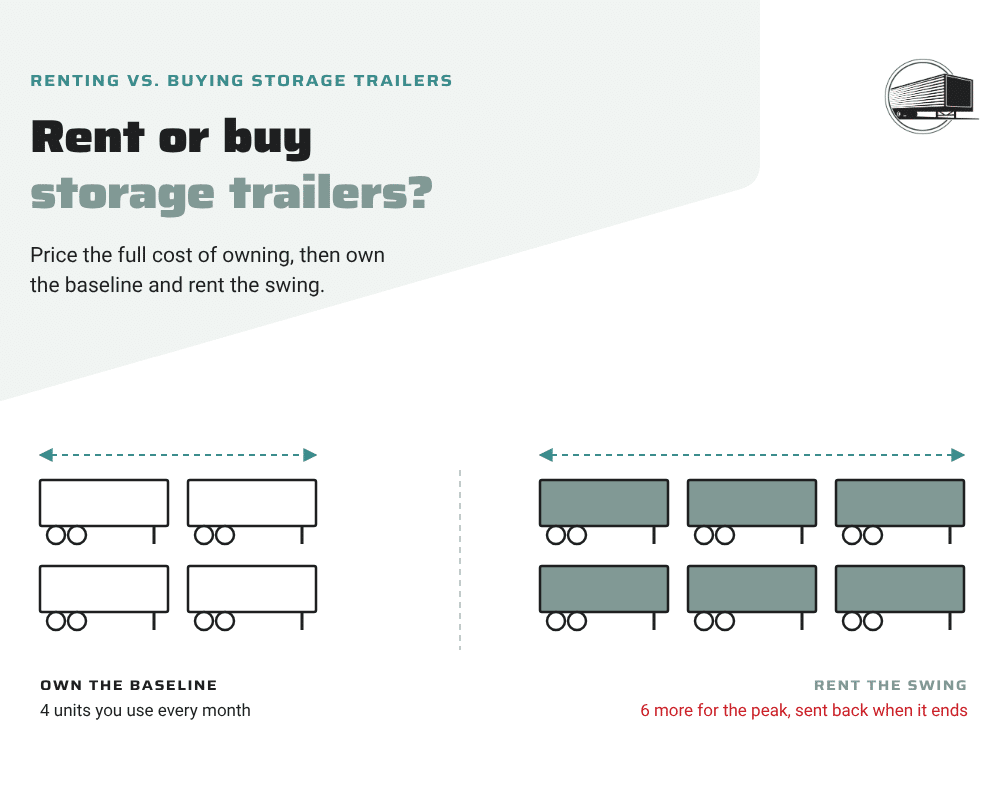
Buy storage trailers when you’ll use the same number of units every month for years and you have the people and yard space to maintain and park them. Rent when your need swings with seasons, projects, or growth, because a rental covers repairs, delivery, swaps, and pickup, and you stop paying when the need ends. Most businesses need a mix: a steady baseline and a swing on top of it.
Someone on your team found used trailers listed for what looks like a few months of rent, and now finance wants to know why the company doesn’t just buy a few. It’s a fair question. The purchase price is real, but it’s only the first line of what owning a trailer costs.
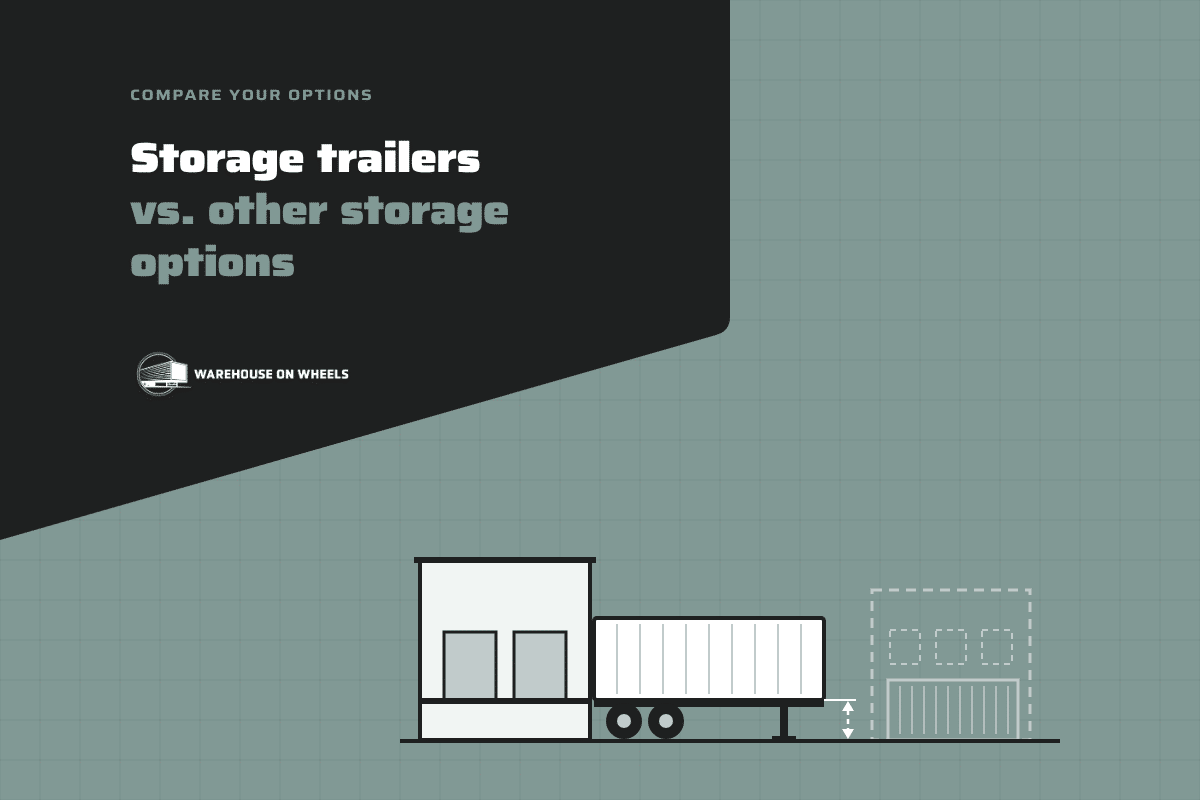
This guide lists every cost of ownership you should price, gives you a utilization test to run on your own monthly numbers, and says plainly when buying is the better call. If you’re weighing more than trailers, our comparison of every temporary storage option puts warehouse leases, containers, 3PL space, and the rest side by side.
Renting vs. buying at a glance
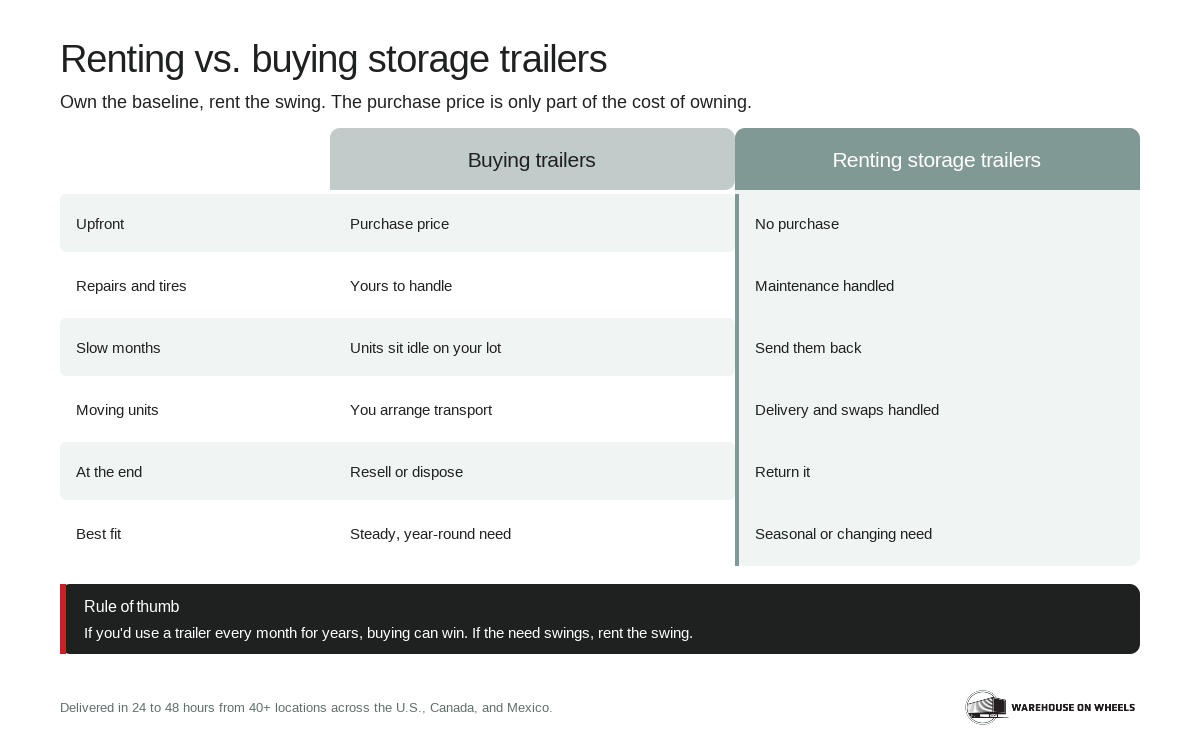
Buying puts every cost and every task on your side of the ledger; renting hands most of them back. Here’s how the two compare, line by line.
| Buying a storage trailer | Renting from Warehouse on Wheels | |
|---|---|---|
| Upfront cost | Purchase price, paid up front | No purchase; a monthly rental |
| Repairs and inspections | Yours to schedule, staff, and pay for | Handled by Warehouse on Wheels |
| Delivery and moving units | You hire a tractor and driver each time | Delivery, swaps, and pickup handled |
| Slow months | The unit sits idle on your lot | Send it back |
| A surge | Buy more, or rent on top anyway | Add units in 24 to 48 hours |
| End of life | Resell it or pay to dispose of it | Return it |
What owning a storage trailer really costs beyond the price tag
The purchase price covers the trailer on day one; everything after that is yours. Before you compare a sticker price against a rental, price each of these:
- Repairs. Roofs leak, floor boards crack, and doors and seals wear out. On a storage trailer, a leak puts the product inside at risk.
- Tires and landing gear. Even a trailer that sits still needs tires that hold air and landing gear that holds weight, and both need attention before it moves.
- Inspections. Someone has to check each unit on a schedule and keep the records.
- Insurance. Owned trailers go on your policy. Ask your broker what each unit adds.
- Registration or plating. Some states and provinces require it even for a trailer that never leaves your property, and some don’t.
- Moving the unit. Every time a trailer changes docks or sites, you hire a tractor and a driver.
- Yard space. An empty trailer still takes a parking spot, every month of the year.
- Disposal or resale. At the end of its life, you sell it, scrap it, or pay to have it hauled away.
On a Warehouse on Wheels rental, none of those lines are yours. Our team handles maintenance, inspections, and repairs on every rented unit, so a roof leak is a phone call, not a project. At our Walton, Kentucky yard, three mechanics keep rented units in working order.
“A trailer is a trailer is a trailer to a lot of people, but what they don’t think about is the downtime that can get caused by a trailer getting delivered late or repair not being done in a timely manner.” Kelly McCane, General Manager, Walton, KY
The utilization test: how steady is your need?
Owned trailers pay off only when they stay full; rentals flex. The test comes down to one question: how many units do you need every single month, and how many do you need only some months? Run it in five steps.
- List your monthly need. Write down how many storage trailers you need each month for the next 12 months. Say you need 4 units every month, rising to 10 from August through November.
- Find your baseline and your swing. Your baseline is the lowest month: 4 units. Your swing is everything above it: up to 6 more units, 4 months a year.
- See what buying for the peak means. Buying 10 units means owning, maintaining, insuring, and parking 10 trailers all year, with 6 of them empty 8 months a year.
- Price the baseline. If the baseline of 4 is steady for several years and you have a shop and yard space, price owning or long-term leasing those 4 against renting them, using the checklist above. Rent the 6-unit swing.
- Check how certain the baseline is. If even the baseline could change (a contract could end, a building could change), rent it all and keep the flexibility.
The costs that don’t show up on a quote: idle months and bad timing
An owned trailer you don’t need in February still costs you money. It takes up yard space, it still needs upkeep, and it stays on your insurance whether it holds anything or not. A rental quote shows you everything you’ll pay; a purchase price leaves out the months a trailer sits empty.
Timing cuts the other way, too. A surge usually needs more units than you own, so owners end up renting anyway, often in the busiest weeks of the year. Buy for the peak and you pay for idle trailers most of the year. Buy for the baseline and you’re renting the peak either way.
Renting the swing avoids both problems. Trailers arrive in 24 to 48 hours when volume climbs and go back when it drops, and you never pay to own a unit you only need four months a year.
When buying storage trailers makes more sense
Buying makes more sense when your need is steady and your operation is already set up to own trailers. If all four of these are true, price a purchase seriously:
- You need the same number of units every month, year-round, for several years.
- You have an in-house shop or fleet team that already maintains trailers.
- You have spare yard space to park units, including empty ones.
- The units will never need to move.
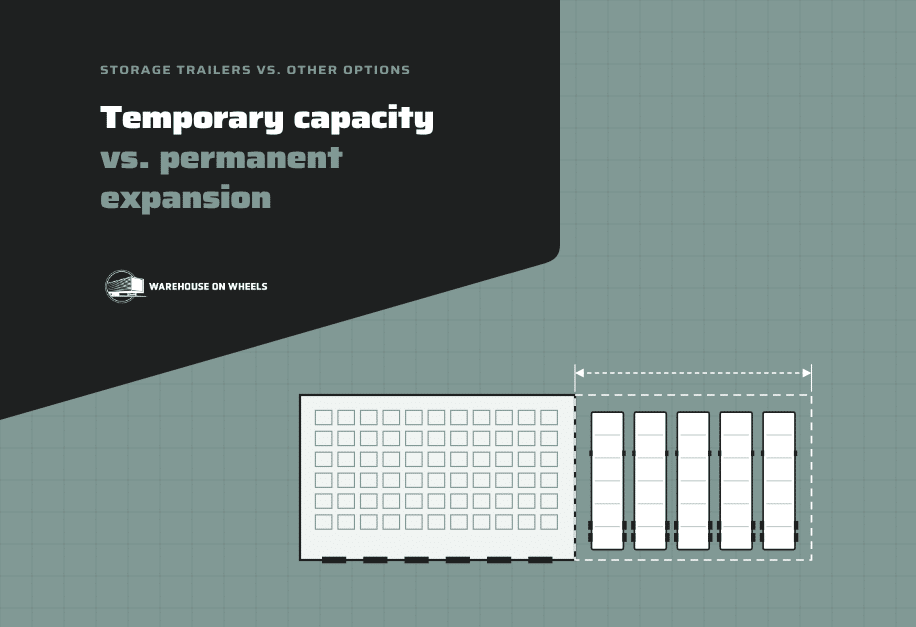
If that’s you, buying can be the better call, and we’ll tell you so. How a purchase shows up on your books is a question for your accountant, not this guide. And if what’s growing is your whole operation rather than your trailer count, the real question may be whether to build, which our guide to temporary capacity vs. permanent expansion works through.
Own the baseline, rent the swing
Many operators don’t choose one or the other: they own or long-term lease what they use every month and rent on top of it for peaks, projects, and surprises. The baseline gets the lowest long-run cost, and the swing stays flexible.
It’s the same logic many companies use for buildings, where a lease covers the steady volume and trailers cover the rest, as our comparison of storage trailers vs. a warehouse lease lays out. With trailers, it plays out a few ways:
- Seasonal peaks. The baseline covers the year, and rented trailers absorb the fall build, then go back.
- Projects and surprises. A new contract, a line changeover, or a delayed shipment needs space for a few months. Rent it, then send it back.
- A longer rental instead of a purchase. If you want a baseline you don’t own, the way storage rentals differ from over-the-road trailer rentals and leases matters for the terms you sign.
Already own a few trailers? You can rent on top of them whenever the swing shows up.
Run your own numbers
The fastest way to settle rent vs. buy is to put your own numbers next to each other in the Warehouse on Wheels Savings Calculator. Have these ready:
- Units needed by month for the next 12 months
- How many years you expect the need to last
- Your ownership cost estimates from the checklist above
- The shop capacity and yard space you have today
Frequently asked questions
Is it cheaper to buy a used storage trailer than to rent one? The price tag can look lower than a year of rent, but the price tag isn’t the full cost. Add repairs, tires, inspections, insurance, moves, yard space, and disposal, then compare. If you’ll use the trailer every month for years, buying can come out ahead. If your need swings, renting keeps you from paying for idle months.
Who handles repairs on a rented storage trailer? Warehouse on Wheels does. We handle maintenance, inspections, and repairs on rented units, so you call your local team and we take care of it.
Do I need to register or plate a storage trailer that never leaves my property? Rules vary by state and province. Check with your local authorities before you buy; the permit guide linked above is a good place to start.
Can I rent extra trailers on top of ones I already own? Yes. Many operators own a baseline and rent for peaks, projects, and surprises. Warehouse on Wheels delivers in 24 to 48 hours from more than 40 locations across the United States, Canada, and Mexico.
How long would I need a trailer before buying makes sense? Run the utilization test above instead of counting months. Buying makes sense for the units you need every month for several years, with a shop and yard space to support them. Rent the rest.
Not sure where your baseline ends and your swing begins? Find out before you buy.
Run your numbers in the Savings Calculator
Or talk to your local Warehouse on Wheels team for a quote, and we’ll tell you straight if buying is the better fit. Find your local Warehouse on Wheels team
Still weighing every option on the table? Our side-by-side look at temporary storage options shows how storage trailers stack up against leases, containers, 3PL space, and more.