

Newmark’s 82-Page Industrial Report Is One Slide Short
Newmark’s 2Q26 U.S. Industrial Market Conditions and Trends report runs 82 pages. It is careful, well-sourced work, and if you plan capacity for a living you should read it. Page after page lands on the same finding: occupiers want flexibility and buffer space. Then every path the report lays out ends with a signature on a multi-year commitment for a fixed building.
There should have been a slide 83.
Flexibility Is the Through-Line of the Whole Report
Newmark says it plainly in the section on trade policy. With tariffs in near-constant flux, “many occupiers are placing a premium on flexible lease terms, buffer space near ports and border crossings and diversified supply chains.”
Look at why. U.S. tariff policy changed on average every 6.7 days across the tracked period. The longest stretch of stability in the past year and a half was 29 days. New Section 301 tariffs of 10% to 12.5% now apply to nearly all goods from 60 countries. Nobody builds a three-year footprint plan on a 29-day runway.
The leasing data says the same thing from a different angle. Logistics, distribution, 3PLs, and manufacturing accounted for roughly 55% of major leasing volume in the first half of 2026. Newmark reads the 3PL strength as a signal, noting it “reflects occupiers’ need for flexibility amid uneven demand, inventory uncertainty and shifting supply-chain strategies.” When companies hand freight to a 3PL, part of what they are buying is the ability to change their minds.
Then there is the whipsaw. Importers pulled peak-season cargo forward ahead of tariff changes, and Newmark expects imports to fall in the second half of the year. Too much product landing now, then a drop-off. Any warehouse manager reading that paragraph already knows what it feels like on the dock.
The Space That Is Available Is Not the Space You Want
The report’s market fundamentals make the squeeze concrete. Vacancy sits at 7.4% and has fallen two straight quarters. Average direct asking rents are $10.66 per square foot, up 3.7% year over year and climbing again. New leasing volume is up roughly 24% year to date, and second-quarter absorption hit 68 million square feet, the strongest quarter since 2023. New deliveries are tracking to a decade low of 210 to 220 million square feet against 240 to 250 million square feet of absorption.
Here is the part worth sitting with. Roughly 30% of all available industrial space is now “long-available,” meaning it has sat on the market at least 24 months. Those buildings average 38 years old, and 66% were built before 2006. Low clear heights, tight columns, not enough doors. Available on paper, unusable in practice.
Subleasing out of a commitment is no easier. Availability is still elevated at about 196 million square feet, and Newmark notes sublease space is proving sticky this cycle because of buildout costs, limited transferability of lease rights, and how specialized modern facilities have become. The escape hatch has a lock on it.
Add diesel averaging over $5.00 a gallon since March 2026, up from the mid-$3.00 range at the start of the year, with fuel running 20% to 30% of transportation costs. Shuttling product to an off-site warehouse across town costs more every month it continues.
Square Feet Under Commitment Is the Only Unit the Report Has
None of this is a knock on Newmark. The report measures the industrial market accurately. It just measures it in one unit: square feet under a long-term commitment. That is the unit the brokerage market trades in.
The trouble is that a plant manager with three containers landing Thursday and a jammed floor cannot solve a Thursday problem with a five-year decision. A five-year decision answers next year’s plan. It does nothing for this week.
Slide 83 Is Storage Capacity You Can Add This Week
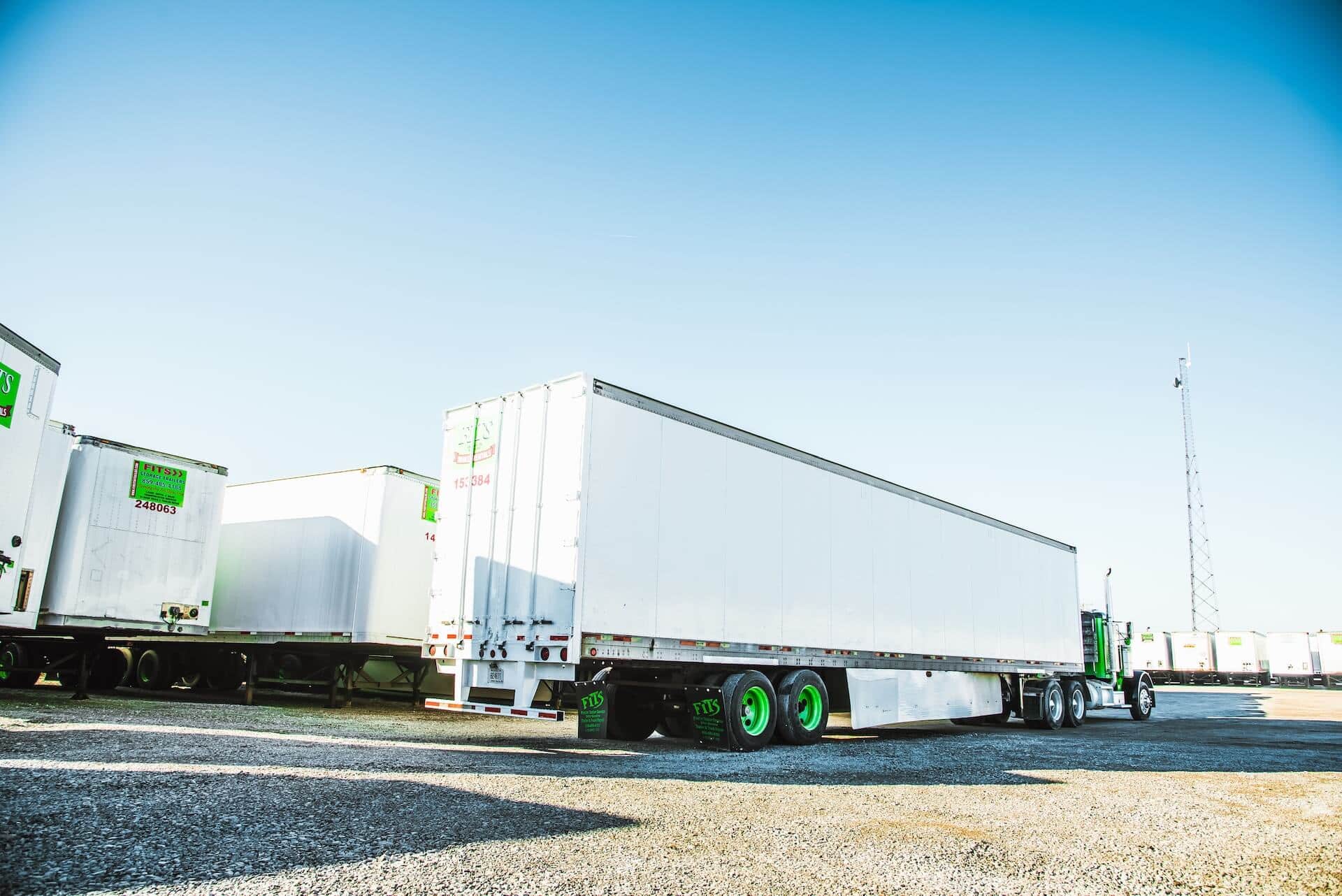
Warehouse on Wheels rents storage trailers by the month. They arrive at your facility, distribution center, or yard, typically within 24 to 48 hours, and they sit where you need them: dock high, in the yard, or wherever your operation works best.
Match that against the pressures Newmark names.
Buffer space near ports and border crossings. Storage trailers give you staging capacity at the plant or the yard without adding permanent square footage anywhere.
Container backups. When a 3PL client’s freight arrived early, Warehouse on Wheels had storage trailers on site within 24 hours, and the freight came off the equipment before detention charges started running. A regional warehouse partner facing container delays added temporary capacity across two locations and eliminated more than $10,000 a day in detention charges. Avoided demurrage and detention often cover a full month of storage trailer rental on their own.
The inventory whipsaw. Customers commonly flex between 50 and 500 storage trailers over the course of a year with no penalty. Take them for peak, send them back when volume normalizes. A national retailer handled a surge of inbound freight before peak season with storage trailers on site and skipped the warehouse expansion entirely.
The cost line. Customers report cutting storage costs by up to 75% compared with leased warehouse space, and Warehouse on Wheels runs up to 4x cheaper per square foot than a fixed building.
Behind all of it: 40+ locations across the U.S., Canada, and Mexico, tens of thousands of storage trailers, and more than 7,000 customers. Local crews who know your yard, backed by a national network. On-site maintenance included, so a bad door seal does not cost you a shift.
The Next 82-Page Report Will Say the Same Thing
Volatility is not scheduled to end. The next quarterly report will document another stretch of policy changes, another gap between what is available and what is usable, another set of occupiers saying they want room to move.
You do not have to wait for the market to hand you flexibility. It is already sitting in a yard near you, on wheels, ready to roll Thursday.
Call or get a quote your local Warehouse on Wheels team and ask what is available in your market this week.
Source: Newmark Research, 2Q26 U.S. Industrial Market Conditions & Trends, July 2026.
– John Brooks, CEO