Gerry Lovell on Growing Without a Building in Ontario
In this episode, host Mark Mann sits down with Gerry Lovell, General Manager of Smartway Trailer Rentals, Warehouse on Wheels’ brand in Ontario and Quebec, to talk about scarce industrial space around Paris, Bradford, and Colborne, seasonal stock swings for retail customers, and how storage trailers compare with a warehouse lease. Gerry describes a customer that asked for a couple trailers on a Monday and had 40 trailers delivered, loaded and back in Smartway’s yard by Friday, a customer that keeps turkeys in trailers when its processing line stops, and his first step for any manager short on space: walk your floor.
Key Takeaways
- A request for a couple trailers became 40 within five days. The customer first asked for a quote at the start of winter, then called on a Monday saying it needed a couple trailers. By Friday, Smartway had delivered 40 trailers, had them loaded, and returned them to its yard, where they went into storage. Some of those trailers may now go straight to the customer’s other DCs in Ottawa and Montreal, so the freight never has to be cross-docked to a different transportation provider.
- Retail customers move stock they won’t need for months into trailers. Gerry says retail clients in Ontario have really adapted to the model, partly because stock there swings from summer clothing to winter clothing. A warehouse full of product from A to Zed hides the stock a team needs to see today. Moving the inventory it won’t need for six months into trailers, in the customer’s yard or Smartway’s, lets managers see what they have, make clearer decisions and order less overflow inventory.
- Clearing skids off the floor gives teams breathing room and safer aisles. When a Paris customer’s inbound stock surged this past winter while the weather slowed its outbound shipments, trailers let it keep producing without halting everything. Gerry says the biggest change was breathing room. Skids packed into a warehouse create blind spots and obstacles for forklift drivers, and production slows because everyone has to move more cautiously. With 50 or 60 trailers on site, he says, things calm down.
- A warehouse carries costs a trailer rental doesn’t. On the warehouse side of the whiteboard, Gerry lists property taxes, utilities, racking, labor, Wi-Fi extenders, electrical and the HVAC system, all tied to a long-term lease that won’t let you shut off half the building. On the trailer side, there’s the monthly rental fee, yard storage if you pay for it, and loading and unloading. If a customer needs 100 trailers or 500, Smartway can supply them, and if business drops to 200, it takes the other 300 back.
- Gerry sees storage trailers as a long-term way to grow without building. He wants to retire the idea that trailers are a short-term band-aid: big Canadian corporations use hundreds of storage trailers from Smartway because the model flexes with the business. A company might start with 500, drop to 300 or 100, then need more again, which a lease can’t do. One fast-growing factory that landed big corporate accounts was worried about signing a long-term lease, and now keeps its inventory in trailers moved off its site and brought back when demand comes.
Episode Chapters
Click any timestamp to jump to that section on YouTube.
- 00:00 — Intro
- 01:27 — Gerry’s Background In Logistics
- 03:18 — A Day In The Life At Smartway
- 04:17 — The Biggest Space Pressures In Ontario
- 05:35 — When “A Couple Trailers” Becomes 40
- 07:23 — From Band-Aid Thinking To Long-Term Strategy
- 10:54 — The Winter Panic Call
- 11:57 — Breathing Room, Safety, And Flow
- 16:13 — The Dollar Impact Of Mobile Storage
- 18:27 — Warehouse vs Trailer Cost Breakdown
- 20:59 — The First Step Before You Call
- 22:15 — Turkeys In Trailers
- 31:52 — The Biggest Myth About Storage Trailers
- 33:37 — What To Do This Week If You’re Tight On Space
Transcript
[00:00] Intro
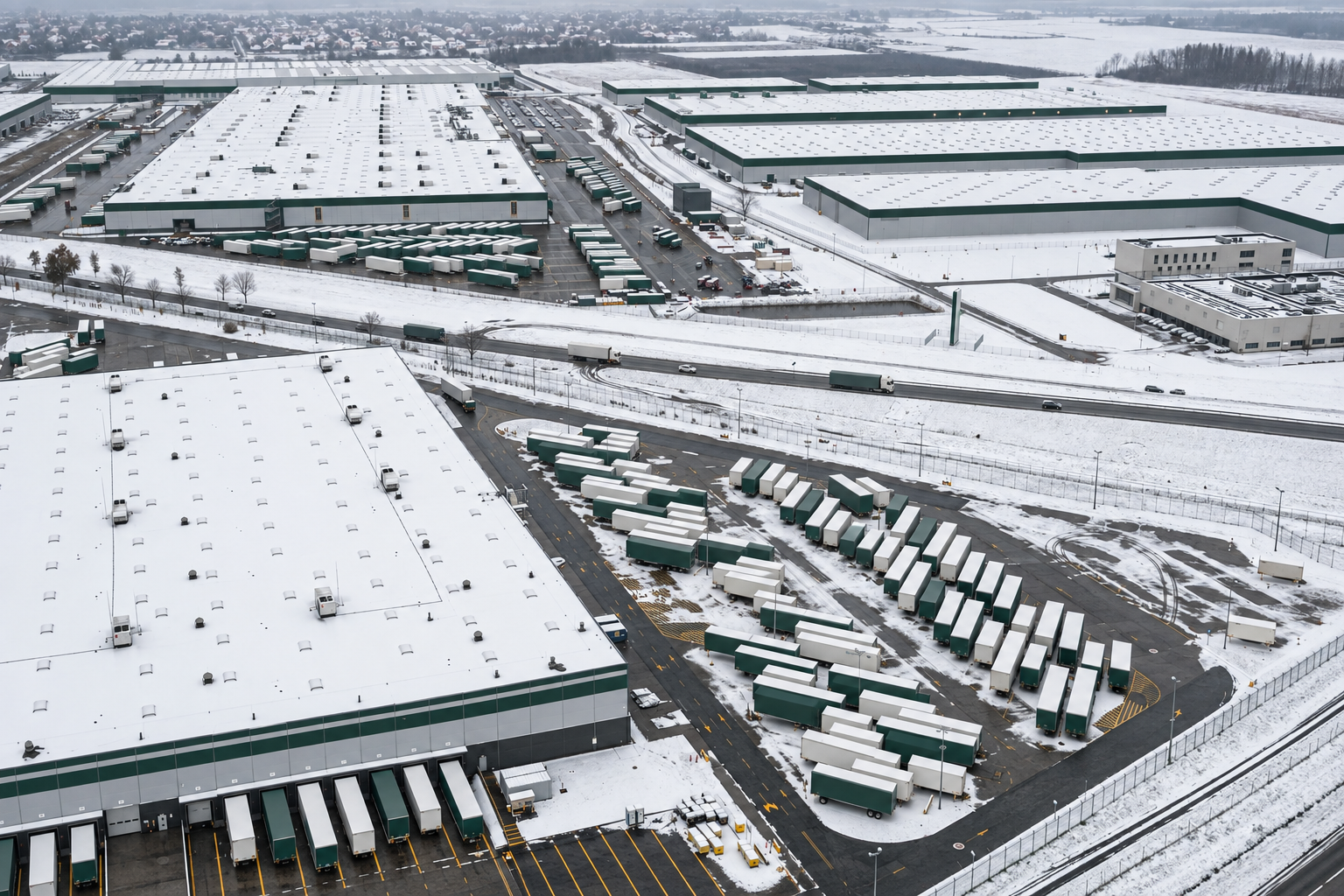
Mark Mann: Welcome back to The Wow Factor. I’m your host, Dr. Mark Mann. The last time we visited Canada on the podcast, we talked strategy with Dan Leslie, the President of Canadian Operations. On this episode of The Wow Factor, we talk tactics with one of Smartway’s general managers who works in the heart of Canada’s industrial engine. Paris and Bradford, Ontario are critical hubs that bridge the gap between the Greater Toronto Area and the heavy manufacturing corridors of southwestern Ontario. With the Canadian industrial vacancy rates at historic lows and rental costs rising, maybe even soaring, Smartway Trailer Rentals’ team provides the elasticity that allows Canadian businesses to scale without the crippling overhead of traditional real estate.
Joining me today is the gentleman who leads our operations at the Paris, Bradford, and Colborne, Ontario locations. With a background in fleet solutions and a heart for his people and his customers, he is definitely the man to talk to about why the smartest way to grow a business in Canada right now might actually be to stop looking for more warehouse space.
[01:27] Gerry’s Background In Logistics
Mark Mann: He’s the general manager for Smartway Trailer Rentals, Gerry Lovell. Gerry, welcome to the show.
Gerry Lovell: Hey Mark, thanks very much for having me. Full disclosure, it’s my first podcast ever. Done a few TikToks with my daughter. Never a podcast, but I’m hoping you don’t ask me to dance like she does, so we’re good there.
Mark Mann: Awesome. Well, I’m so happy to have you here, my friend. Now, let’s start with the basics. You lead a company that’s been a staple in the Greater Toronto Area for nearly 30 years. How did you first find your way into this world of yards, storage, and cartage?
Gerry Lovell: Yeah, actually, I started back in the day when I was actually in high school. So, I grew up in this industry doing transportation. I was fortunate to get a job at an early age, and through that career, I moved up through into logistics, and got a little bit further out of transportation and more into logistics. What I’ve always loved about that is just solving problems. So, figuring out a better way to do things, smarter ways to do things. And that’s how I really ended up here. Today, I get to solve problems, but I’m not just solving our problems. I’m actually getting to solve our customers’ problems, which, you know, that actually feels better for me at that point. I get to solve other people’s problems.
Mark Mann: Yeah, there’s a big focus on customer service. I noticed that with the Smartway locations up there in Canada. Now, you guys have 6,000 trailers in your fleet, and I think you’ve got seven, six locations or seven locations across Ontario and Quebec. Is that right?
Gerry Lovell: Yeah, we also have a number of what we’d call service yards. So yards where we can actually drop and ship trailers from, which allows our customers a lot of flexibility as well.
[03:18] A Day In The Life At Smartway
Mark Mann: Great. Now with that many trailers spread across all of Ontario and Quebec, what does a normal day look like for you there in the Greater Toronto market?
Gerry Lovell: Yeah, I don’t know. I mean, to be fair, I don’t know if there is such a thing as normal around here. But what I would say is our normal day-to-day is coming in and, you know, we’re checking the yards. We’re making sure everything’s where we left it. We’re looking at our pipeline, what’s left to come up. But the reality is what we tend to do more than anything is make sure that we have everything available and ready so that when a customer calls, cuz it happens all the time where they call last minute and they need something urgently, we’re able to jump and react quickly and get them exactly what they need. So, we’re not really just, you know, planning for months ahead. We’re planning for that emergency situation that’s happening today.
[04:17] The Biggest Space Pressures In Ontario
Mark Mann: Yeah. So, let’s talk a little bit about that. When we spoke to Dan, he indicated that the Greater Toronto Area is one of the tightest industrial markets in the world right now. When you look at the Ontario market today, what would you say are the three biggest space headaches your customers are bringing to you again and again?
Gerry Lovell: Yeah, I mean, for us I would say first it’s warehouse space. There’s just never enough space. Real estate is so difficult to acquire out here, and if you’re going to get real estate, it’s outside of the city. So, you know, for us, a lot of our customers, it’s space, space, right? And then on top of that, it’s where do you put it all, right? So that’s where yard solutions come in. So, we have yard storage here, which allows us to move your product to one of the facilities that are close by, that are easy to be able to bring back and forth.
I would also say seasonality, because of the type of weather and environment that we’re in here. Even the stores, the stocks change, and I mean, we all see the holiday stuff go in and out, but up here, you literally go from summer clothing to winter clothing, from, you know, summer maintenance to winter maintenance. And that’s where we come in for the seasonality for those things, too, because we can actually store all of that product for those retail-type customers, and we’re able to take it off their site and put it in our storage yards to then move back to them.
[05:35] When “A Couple Trailers” Becomes 40
Mark Mann: Yeah. So, tell me about a recent week where you saw a company in the Paris or Bradford area really just hit a wall because their production outpaced their floor space.
Gerry Lovell: So, this one’s kind of funny, because we literally just had this happen, where a customer, they had called about two weeks ago. They actually called in the winter and asked for a quote on different things at the very beginning of the winter, and then they kind of came in and hot, and they weren’t sure what they were going to do. And about two weeks ago, they called and they said, “Okay, we’re ready to start. We need a couple trailers. Here’s the situation. This is what we have going on.”
Within the five days, so this call happened on Monday, by Friday we had delivered 40 trailers, had 40 trailers loaded, 40 trailers returned to our yard and actually put into storage at this time. And now, instead of just bringing them back to their warehouse, they’ve thought about the solution. We’ve talked about it, and we may just deliver some of these trailers straight to other DCs for them across Canada. So, into Ottawa, Montreal, so forth, allowing them to not even have to cross-dock this freight into a different transportation provider.
Mark Mann: It’s amazing that a customer will call and say, “We need a couple of trailers,” and it ends up being 50, and you store it for them. That’s fantastic.
Gerry Lovell: Yeah, it’s a lot of moving parts, but it’s what we do.
Mark Mann: Great customer service. Dan took us on a 10,000-foot-view trip across Ontario and Quebec. You’re really positioned to give us a boots-on-the-ground story here. And I know you probably talked to a few customers who still see a storage trailer or container as a temporary band-aid for a messy yard, but tell me about a customer where that thinking flipped, where they realized that 53-foot trailers are actually a better long-term plan in terms of strategy than a 10-year warehouse lease.
[07:23] From Band-Aid Thinking To Long-Term Strategy
Gerry Lovell: Yeah, absolutely. I mean, I think we talk a lot about manufacturers when it comes to these types of scenarios, but I’m going to flip it up here for retail. And the reason I’m going to do that is just up here, we find that the retail clients have really adapted to this model. They realize how meaningful these trailers are to them. Warehouse space is, for one, very expensive, but the other part, too, is when you think about it, you have all this product in your warehouse that you’re not going to touch for many, many months, and you don’t have a good visual of the product that you’re actually working with today and the inventory that you need to actually confirm. So, you know, do we need more of product A, do we need more product B? If your warehouse is full of, you know, A to Zed, you can’t see A and B all the time without getting past, you know, the XYZs.
So, that’s where our trailers come in handy, cuz you put everything in these things. We move them outside of your door, they’re put in your yard or they’re put in our yard, and you don’t have to deal with, you know, the inventory that you don’t need to see for six months. That congestion allows you to think clearly, allows you to make meaningful decisions about your business going forward, and you’re not ordering as much overflow inventory as you may need, because you can actually see your inventory.
Mark Mann: Yeah, that’s a great point. So, walk me through a time when a customer was ready to sign another expensive lease and you were like, “Whoa, whoa, whoa,” and you helped them compare that flexibility you offer in terms of mobile storage to the rigid cost of Canadian industrial real estate.
Gerry Lovell: Yeah. We had a customer who was growing really fast. They originally were just, you know, kind of a mom-and-pop factory. They were doing, you know, every year they do the same production. And someone took notice. They landed some really big, you know, corporate accounts that allowed them to expand their business quite rapidly. And the conversations that we had were, you know, how can we get some of this product moved to a new building if we’re moving? What can we do to be able to then off-lease the equipment, you know? And it all sounded very positive for them, but there was some fear, for sure.
And the more we talked about it, this gentleman and I actually had a good conversation. We realized a lot of his fear came from the unknown, which is signing a long-term lease. How long will these corporate deals actually last? Are they as big as they tell them they are, right? And we had a good conversation, and it turned out, you know, part of the problem was that he just didn’t have the space on his yard. He had to build a large inventory of items so that when the demand came from these corporate stores, he was able to fulfill their needs.
Well, we talked about the fact that not only do we have the trailers, but we can move them here and store them here. And all of a sudden, that just took a ton of weight off of his shoulders. He realized that instead of having to store all this stuff on his own or put it into warehousing, he could just put it in the same trailers that he’s put it in for years, but he can use more trailers and just have them removed from his site. And then when the demand came, we’d move them right back. He could then offload them, or we could move them direct to the ship. It took a lot of the pressure and weight off of him, for sure. And he’s a great customer. We’re always working with him.
Mark Mann: So tell me about a time when a customer called you in a real, like, “We are out of space” moment. You know, maybe during a winter rush or supply chain surge.
[10:54] The Winter Panic Call
Gerry Lovell: We had a customer in Paris this past winter call us in a bit of a panic. They had a bit of a surge with the inbound inventory right before a major seasonal push. At the same time, the weather had really slowed down the outbound shipments. So they were filling their warehouse quicker than the shipments would get out, because of the seasonal demand and the weather that was actually happening. So they called us in a panic. We brought over some equipment. They were able to fill these trailers quickly, and then be able to offload them when the transportation was actually able to arrive, and be able to pull them out of this bind that they were in. Those trailers allowed them the space to continue production without having to halt everything. And, you know, last thing you want to do is hold production and have everybody sitting and waiting.
Mark Mann: Yeah. And knowing what you know about how mobile storage changes the entire dynamics of an organization, what would you say changed for that customer and their employees in the first 48 hours after your team got involved and trailers landed on their lot?
[11:57] Breathing Room, Safety, And Flow
Gerry Lovell: Yeah. I mean, breathing room. Breathing room was the biggest thing, right? And I guess it’s underrated sometimes. You don’t realize how much that clutter can just cause chaos, right? And removing that gave them the breathing room and the space to realize, like, they can continue, they can keep moving. You know, as much as they need the carriers there to get the product out, not everything is a complete stop. It’s not feeling so chaotic anymore. And then, you know, they can actually move around safely in their warehouse as well.
I think safety is underrated when it comes to the warehouse space. People are like, “Well, just fill it, fill it, fill it.” But production slows completely down when there’s clutter, cuz you have to be a lot more cautious moving around. You have to make sure that nobody’s getting hurt. And when you just fill a warehouse like that because you’re waiting for people to be able to outbound ship… I mean, that’s where the trailers help, right?
Mark Mann: It’s like stretching a warehouse.
Gerry Lovell: It’s all literally stretching somebody’s warehouse for them.
Mark Mann: Yeah. And in those calls, what separates the companies that recover and move on from those who keep fighting the same problems, you know, month in and month out? Is it planning? Is it budget? What is it?
Gerry Lovell: Sometimes they’re done with this and they, okay, we survived this, we can move on. But then they don’t always think, how did we get here in the first place? For us, you know, we bring in that solution. We get rid of that fire drill that they just had, and then we can actually talk with them and figure out ways to make sure that that solution is always available for them. I think once somebody’s used the trailer once, they realize how beneficial it actually is to them, and they continue to always want or need that equipment going forward. I guess need is a better safe for that, because the reality is that we’d love to have more space at all times. So by providing these trailers, they’re allowed to have all the space that they need, and they can do it on a moment’s notice, and it’s very flexible.
Mark Mann: Now, you are a big proponent of one-call resolution, and even during this podcast, our discussion here, you’ve talked about solution, solution, solution. And I’ve heard you say that your one-call solution is what keeps customers coming back. Think of your favorite warehouse manager or an operations manager you’ve worked with recently. How does having 50 or 60 trailers from Smartway quietly make their job easier when their docks are full?
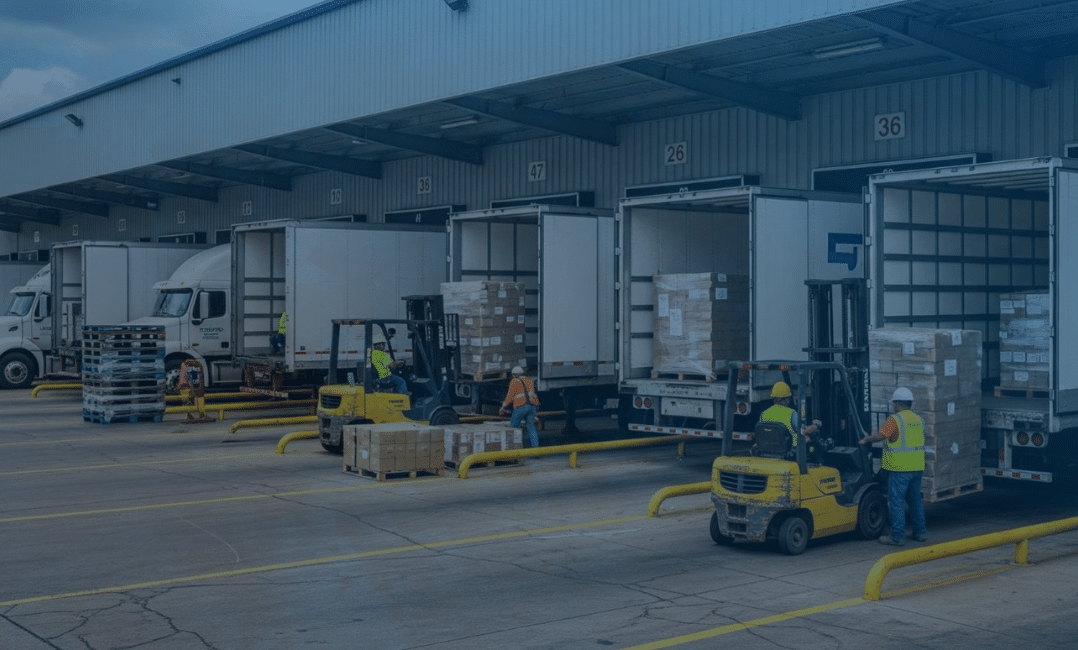
Gerry Lovell: Yeah, I think, you know, it can kind of relate to what I was saying prior to, with the hecticness, right? So once you have 50 or 60 trailers, or even more depending on the location, it calms things down. You know, we take out the blind spots in a warehouse. We remove the obstacles that you’re dealing with, right, by bringing in those trailers. It can slow down production extremely fast when it’s overpacked and overloaded, because people can’t focus on what they need to focus on. You know, worse, somebody could get hurt, right? Those skids in your warehouse create blind spots, obstacles for your forklift drivers.
And, you know, I’ve worked in a busy warehouse. I’ve been there. And those skids, you know, when you’re walking around, you’re, you know, looking around the corner hoping nobody’s coming, and the forklift driver, he’s in a rush to get trailers loaded, and unfortunately he or she may not be looking, right? Or they miss you. So it’s just, you know, safety first, safety always is a big motto here. But that, you know, that’s something that we can pass on to our customers too, right, by bringing in these trailers.
Mark Mann: Absolutely. Yeah. Safety first, safety always, as we talk about it all the time. All right, Gerry, I want you to put on your P&L hat for a minute. Let’s talk about the math. All right, warehouse rates in Ontario are skyrocketing. I hear it from everybody. Dan alluded to that when we spoke to him. Without naming names, tell me about a customer who saw a clear dollar impact on things like demurrage fees, detention, staffing costs once they moved to a mobile storage model.
[16:13] The Dollar Impact Of Mobile Storage
Gerry Lovell: Yeah, we had a customer, and I won’t name, who, you know, they had a great opportunity to save a ton of money with buying in bulk. And right now, with the uncertainty with the markets, you never know what’s going to cost what in the next month. You know, what taxes we’re going to have on what, what tariffs we may have on what. It allowed them to go out and invest into something that they knew they were going to need for a long term, but they could buy it in bulk and have space to put it. So, prior to, they would just buy what they needed from time to time, because the flux with the pricing didn’t change as drastically as it does today, right?
So, today they’re able to go out, and they have recently just bought a ton of material. They’ve put it into our trailers, and they actually move the material into the warehouse when they’re producing something of that product, and they move it back out and they’ll move in the other trailers for the next product. And they keep doing this over and over, and they’ve, you know, they’ve called and said, like, “I didn’t even think of this. This is fantastic. I don’t know why we didn’t do this sooner.” And I think they’ve opened up their eyes to the fact that now when they’re doing a procurement, they’re looking at, okay, so how can we save the most, right? And maybe it’s buying in large bulk items. We do it internally. We buy bulk parts for our drillers, right? And that’s what they’re doing now.
Mark Mann: Great point. So, what is the cost of warehouse space in Ontario? Is it like 12, 15, $20 a square foot?
Gerry Lovell: Yeah, it’s quite exp… Even land out here is quite expensive. Everything has added up drastically, and then the taxes. So, it’s hard to actually put a number on some of it, because the reality is that, you know, you’re going to go do a $15, $20 square foot deal, but then taxes, utilities, everything like that really starts to add up, and there’s a lot of unknowns.
[18:27] Warehouse vs Trailer Cost Breakdown
Mark Mann: So, if a VP of supply chain asked for a simple way to compare a warehouse lease to mobile storage at a whiteboard, how would you walk them through the cost per pallet or per square foot?
Gerry Lovell: I mean, that’s a great question, because we do that, whether it’s on a whiteboard or over the phone or in an email, right? We literally try to work through it with people, and it’s not in a sales-pitchy type way. It’s literally, this is the numbers, right? But we’ll split it. We’ll just say, “Okay, so let’s draw a line in the sand.” It’s like doing your pros and cons, right? But you’re doing warehouse and trailer. And on one side, you’re going to put your warehouse, and you’re going to put in stuff like your property taxes, utilities, you know, racking, labor, right? You need labor to be able to move that product around inside, especially a large building. All the hidden costs that nobody thinks of, like Wi-Fi extenders. I mean, you don’t think of it, but you need it. Electrical: you have to have electricity through the entire building at that point. And that, you know, your HVAC system, your fresh air system, everything adds up so quickly.
And they’re on long-term lease agreements that you can’t just shut off half the building. You can turn off some lights, absolutely, but you can’t turn off the HVAC system. You can’t get rid of the electrical that you’ve paid for. Whereas a trailer, on the other side of the board, you’re going to write “trailer,” and you’re going to go off the fact that your monthly rental fee, you have your yard storage if you’re paying for yard storage, but you have your loading and unloading of the trailer, but that’s it. You don’t have the extra. And the perk is that if you need 100 trailers, I can get you 100. You need 500, I can get you 500. If business changes and you need 200, that’s fine. We’ll get the 300 back off your yard, and we’ll have them here when you want them back. It’s that simple, right? Whereas a warehouse, you can’t do that.
Mark Mann: Yeah. It’s month-to-month, right? And it’s probably a dollar a square foot. Is that right?
Gerry Lovell: It’s so much cheaper up here, for sure. I mean, it’s less than a dollar a square foot, I can assure you that. And it actually, you know, it’s a dollar a day, $10 a day type thing, depending on what you’re getting, right? So, it’s fractional.
Mark Mann: All right. So, let’s give the listeners an actionable Canadian playbook. If a manager in the GTA or southwestern Ontario is out of space, and maybe even out of budget today, what’s the first step they should take before they even call you?
[20:59] The First Step Before You Call
Gerry Lovell: Yeah, I think I can answer this one pretty quickly. And what I’d say is walk your floor, right? Walk your floor. Figure out what needs to be inside your building versus what doesn’t, right? What do you need to see today? What don’t you need to see today? Right? And then we can have a good conversation about the type of product that you need, you know, whether it’s a smaller trailer, a larger trailer, you know, a reefer, heater, whatever it may be. But that’s where the first step, I would say, is always, you know, get familiar with what you actually need. And if you’re not sure, give us a call. I mean, we’ll help. Glad… I’ll come walk your floor with you.
Mark Mann: One-call solution, right?
Gerry Lovell: You got it. You got it. No whiteboards needed. Just call me.
Mark Mann: All right, let’s switch gears to a little bit of a fun question here. I recently interviewed a colleague of yours in the southern US market, and we discussed trailers full of Christmas trees in November and cured tobacco during tobacco season in the Carolinas. What is the most unusual use case for our trailers up there in Ontario?
[22:15] Turkeys In Trailers
Gerry Lovell: It’s funny, cuz the GMs, every once in a while when we’re talking, we hear all the different stories we have, and we’re like, “That’s what you put in those things?” But up here, you know, we have a customer that actually puts turkeys in the trailers. And again, some of it’s due to weather, so shipments coming in quicker than they expected. Sometimes they’re delayed and they come in in bulk. They need to be able to offload and move the turkeys around. Also during processing times, if the line has to stop, they have to be able to put the product away in a nice cold, dark, clean, dry van trailer, and they need to be able to, you know, not lose all that production. So that trailer, it’s crazy to think, but the value inside that trailer during that exact stressful moment for them is extremely high, but they rely on it. And they have an abundance of our trailers that they rely on daily that are always there, operational, and ready to go.
Mark Mann: Turkeys, that’s a new one for me. That’s a new one. I’ve also heard stories from your colleagues who have told me that they have saved customers millions of dollars a year by offering, you know, a couple hundred dry vans for storage instead of, you know, the customer leasing warehouse space, like we talked about earlier. What’s the best problem-solving or cost-saving story up there in your market?
Gerry Lovell: Yeah. So I think for us, it’s being able to grow without building, right? So they’re able to save a ton of money because they can actually bring in what they need at the exact moment that they need it. They can remove what they need when they don’t need it. We don’t have the same fixed cost that a building does, right, which we’ve discussed already. But it’s honestly like, it’s expansion and subtraction when they need it, and that allows them to be so flexible.
You know, stores don’t keep their Christmas stuff on the shelves all year round, for that exact reason, right? You’re not keeping product out that you don’t need, right? And that’s when they’re calling us, as you said, putting Christmas trees in a trailer, right? That’s exactly what they’re doing. And they’re storing them somewhere so that when they’re needed, it’s there, but it’s not out in your face all day long. I mean, we don’t want our warehouses looking like our garages.
Mark Mann: That’s absolutely true. All right, so we’re going to move on to the signature round. You know, Dan Patrick always has his signature round. So, buckle up. Here we go. What was the moment? What was the moment when you thought to yourself, “Yeah, this is my world. Warehouses, yards, the 401, the 403, all of it”?
Gerry Lovell: Well, the psychiatrist might come and get me in a minute. But I think for me, like, it’s funny, cuz I started in high school in logistics and transportation, and I was actually planning to be in culinary management, right? So, restaurant management. I loved commercial kitchens. There was just something about it. But as I worked into this industry, the people that are in this industry are so connected. Everybody is so connected. Everybody, you know, actually means well for each other. And the problem solving: my brain is just wired in a way that I just want to solve different problems, whether they’re number problems, you know, personnel problems, whatever it was, and warehouse solutions. But, you know, for me, I love that, you know, where does everything fit, the puzzle part, right?
So, it’s kind of what kept me into this, and I’ve tried to get out of it. I will admit, I went and built homes for a couple years, completely different in some ways, but I ended up being a project manager there, and, you know, technically still managing a project. But I missed all of it. So, I’m still here. I’m right back where, you know, where I started, in a sense. Just in a different hat, different zone.
Mark Mann: I guess I didn’t know that you were a commercial kitchen guy. Are you, like, cooking? Is that…
Gerry Lovell: Yeah.
Mark Mann: Like, I… Really?
Gerry Lovell: I loved cooking. I did culinary in high school, and we were fortunate, we had a restaurant at the high school. So I ran the restaurant for a couple years. They had closed it down, and I was fortunate that they allowed me to open it back up for a couple years. And I don’t know, I just loved it. But I don’t know, it’s just something about logistics. It just kept me here. It’s that problem. It’s constantly a different problem that you’re solving, but they’re all solvable. I haven’t met a problem that we couldn’t solve.
Mark Mann: That’s a great testimony. Absolutely great. If you can say that you haven’t met a problem you can’t solve, then you are having loads of success up there. That’s absolutely fantastic. So, when you get home and shut it down for the weekend, what pulls you away from freight and storage? How do you reset for the next week?
Gerry Lovell: Yeah. I mean, with my brain, I don’t know if I completely shut down, cuz I think we’re always looking for the next solution. But honestly, what pulls me away is my wife and kids, right? They allow me to reset. My daughter plays competitive volleyball. My son loves to build Lego. Lego is… I love it because it’s just building another puzzle. But that’s honestly, it’s my family. And you know, it’s funny, cuz I think people say all the time, “If I won the lottery, oh, I’d buy this, or I’d buy this, and a car, a house, and you know, I’d have a Lamborghini,” and all these things. For me, man, if I won the lottery, it’s just with my family, right? I just want to make meaningful moments with my family. So, when I get out of here, that’s where I want to be. I want to be with them all day, every day.
Mark Mann: If you won the lottery, you would open a commercial kitchen, right?
Gerry Lovell: I might, but…
Mark Mann: You’d be rivaling Tim Hortons, right?
Gerry Lovell: Yeah. No, for sure. I think, again, it’s about my family for me when I want to reset.
Mark Mann: But absolutely.
Gerry Lovell: I’m also the type of guy that I can’t stop working. So I could just be here, just, you know, maybe a flash of your death than everybody else at that point.
Mark Mann: Yeah, I’m the same way. I am not good at vacation. You know, you get a couple days off around Christmas or New Year’s, and I work. I can’t help it. You know, I’m just not good at taking time off. It’s something I need to improve, I think. So, think about the best boss or mentor you ever had. What is the one thing that stuck with you? What’s the thing that they said to you that you now hear yourself repeating to your teams there at Bradford and Colborne and Paris?
Gerry Lovell: Yeah. I think there’s two main things that stick out. One of them wasn’t even a person. It was a motto that was up on a wall at a building that I worked at for the first 20 years of my life. And on the wall in the warehouse, it said, “There’s a better way to find it.” That stuck with me forever, because it meant two things. For one, what we’re doing today could possibly be done better, but also don’t be scared of change, right? And I think that’s something that people tend to get scared of. The reality is that those two things meant so much to me, on one side.
Other than that, I think another mentor of mine… I prefer to call them mentors than bosses. A mentor of mine said to me that, you know, don’t be afraid to ask questions, right? And I try to relate that to my staff as well. You know, even if you’ve worked here for 10 years, and everybody comes to you, there’s going to be times where you might have a question. Don’t be scared to ask. I’m also the type, I will gladly go to my staff and ask them a question that I don’t know. I will call other GMs or, you know, other coordinators throughout the company and ask questions that may seem silly, like, “How did you not know that?” But I didn’t know, so I’m going to ask the question. And I think that’s one thing that I always try to get my teams out here to believe in, is that you can ask any question and it won’t make you weak. It won’t make you sound like you don’t know what you’re doing. And we’ll get you the answer, and then we’re all better off at that point. Those are the two things that really stuck with me.
Mark Mann: Yeah. I had a former mentor, former boss and mentor, that always said change is always easy, right? Change is always easy, with that emphasis on “always,” in a world full of people that say that change is never easy. And I’ve got that still hanging on my wall in my home office: change is always easy. And I, you know, I default to that, especially if you embrace it, right? It’s always going to be easy. So, Gerry, as we wrap this up, what is one myth about storage trailers that you hope that we can retire after this episode?
[31:52] The Biggest Myth About Storage Trailers
Gerry Lovell: Yeah, I think for me, it’s that they’re not a short-term band-aid solution. They are something that you can keep and use and flex with your business. A lot of the Canadian companies, big corporations out here, use hundreds of storage trailers from us, and they use it because they know the business model works. And you know, one example that I’d love to explain is, you know, I used to ship movies, and we’d ship VHS movies, and they took up a ton of space. And, you know, all the Blockbuster, Rogers Video, and I might be dating myself here, but, you know, we’ve shipped a ton of videos to these people. And then eventually it went to Blu-ray, and there was less trailers. The boxes held many more movies, which meant less skids. And eventually it went to Netflix sites, where, you know, with streaming services, where those didn’t really exist. So now it’s very few and far.
But that kind of shows how the business model can change, and this is where the storage solution changes, right? I mean, you might start with 500, you might get down to 300, you might get down to 100, but then you may want to… a new adventure where you need some more. And that’s kind of where, you know, a lease can’t do that for you, whereas a storage trailer can. But it can be a long-term solution, not a short term, I think, is the main thing there.
Mark Mann: Absolutely. And I agree with you. So, we’ve got thousands of listeners across Ontario listening to this podcast right now. So for those folks who are listening and they’re quietly thinking to themselves, “We might be in trouble on space,” what’s the one thing they should do this week?
[33:37] What To Do This Week If You’re Tight On Space
Gerry Lovell: I’d say walk your floor, confirm what you have, what needs to be in that building, and then, you know, I would say have a conversation, reach out, and we’ll help you get to your next step and your next goal, and make sure that you’ve got a win for your, you know, your ownership team as well, so that you have a financially sound, a good, solid win for your group as well. It’s not only a financial win: safety in the warehouse, clutter. I can’t see how it wouldn’t be a solution for anybody.
Mark Mann: Gerry Lovell, general manager at Smartway Trailer Rentals. This has been a great conversation, my friend. Thanks for showing us the Wow Factor in Ontario today.
Gerry Lovell: Thank you, Mark. This was great. I really appreciate it. And I didn’t have to dance like I do on the TikTok video, so that’s even better. Thank you.
Mark Mann: Very good, guys. I’m Mark Mann, and we will see you on the next episode of The Wow Factor.