
Brady Rodgers on Nearshoring in Mexico’s Golden Triangle
In this episode, host Mark Mann sits down with Brady Rodgers, President of Mexico Operations for Warehouse on Wheels, to talk about the nearshoring boom in Mexico’s Golden Triangle, WOW’s locations near Monterrey and Querétaro, and how storage trailers compare with an offsite warehouse or a new build. Brady traces his first storage trailers back to his family’s farm in Missouri, explains the friction of keeping trucking companies’ trailers for storage, and describes customers whose rented trailers are now their whole warehouse.
Key Takeaways
- Brady learned early how costly a plant shutdown can be. Selling railcar movers to large plants after university, and later as a plant operations supervisor at a frozen foods company, he saw what a delayed supply line costs. By his figures, a day’s shutdown at an automotive plant in Mexico costs $30 million to $50 million, in electronics $5 million to $50 million, and in food and snack production $100,000 to $1 million. In his example, if one hour of downtime waiting on raw materials costs $40,000, renting five, six or seven trailers becomes pretty cheap.
- Holding trucking companies’ trailers for storage creates constant friction. Brady says Mexico has an overall shortage of good over-the-road trailers. When a plant keeps a trucking company’s trailers for extra storage, the penalties are high, spare trailers may leak or may not be safe, dry and dark, and the carrier keeps pressing for them back because it makes money shipping with them.
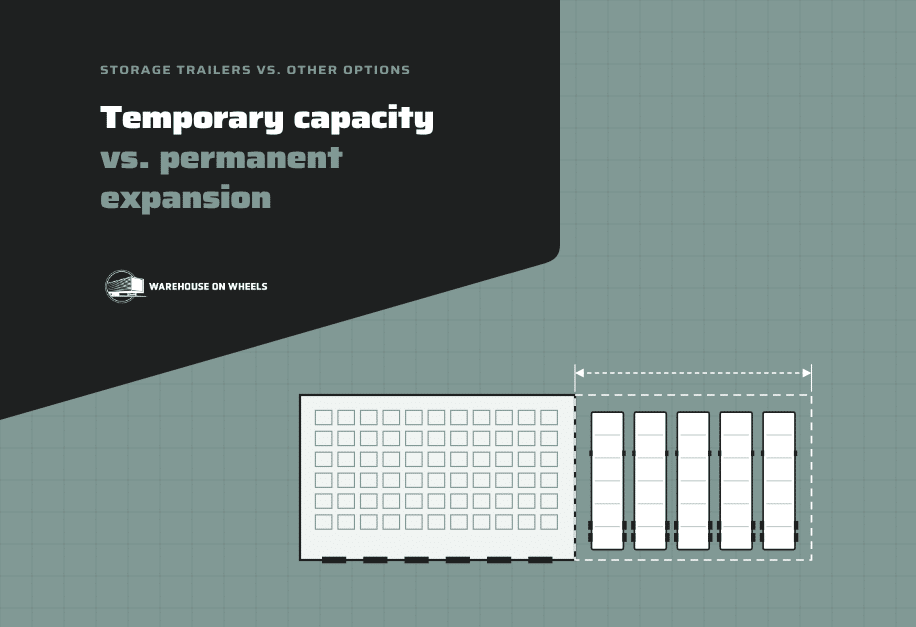
- Offsite warehouses and new builds each bring problems in Monterrey. An affordable offsite warehouse may be in a less safe area, and Monterrey traffic can make it take 4 hours to drive 15 kilometers, or an entire day to offload one trailer. Building means a significant cash outlay on a fixed asset that is sometimes full and sometimes empty, and some industrial parks have no room to add space. Trailers let a plant shrink or expand its space as it needs.
- Customers planning on a month or two often keep trailers long term. Most customers start out expecting to take two or three trailers for a month or two, Brady says. Customers that won other projects went from five production lines to six because they needed extra space under roof, and their rented trailers are now 100% their warehouse. In some plants, three or four different user groups now use trailers, as one manager sees how another is using them.
- Brady’s team starts vendor registration early so trailers aren’t held up. In Mexico, a new customer typically has to prove the business case, review documents, register the vendor and issue purchase orders, which can take four weeks when the user needs trailers in a week. Brady’s team starts that process as soon as a company shows interest and works through the 15 to 20 types of questions in the application analysis right away. Existing customers move faster: when one called for three more trailers, they were delivered the same day.
Episode Chapters
Click any timestamp to jump to that section on YouTube.
- 00:00 — Introducing Brady Rodgers
- 01:29 — Answering In English And Spanish
- 02:57 — Early Trailer Use On A Missouri Farm
- 06:19 — Early Supply Chain Lessons And The Cost Of Shutdowns
- 10:13 — Why Mexico Is Personal To Brady
- 16:00 — WOW’s Two Key Mexico Locations (Monterrey + Querétaro)
- 23:05 — Nearshoring Boom And The Fight For Space
- 23:40 — The Three Options: Offsite Warehouse, Build, Or Mobile Storage
- 24:12 — Why Using Trucking Trailers Creates Friction
- 27:00 — Traffic, Security, And The Hidden Cost Of Offsite Storage
- 29:04 — The Real Cost Of One Hour Of Downtime
- 33:00 — When Trailers Become A Core Strategy
- 40:03 — Mexico’s Relationship-Driven Business Culture
- 46:00 — The Three-Point Inspection Process
- 47:58 — The Vendor Setup Bottleneck (And How To Start Early)
- 54:53 — First Steps For Companies In Mexico
- 59:08 — Before You Sign A Long-Term Warehouse Contract
Transcript
[00:00] Introducing Brady Rodgers
Mark Mann: Welcome back to The Wow Factor. I’m your host, Dr. Mark Mann. On today’s episode, we head south of the border. As US companies accelerate their shift from production in China to Mexico, we’re seeing unprecedented concentration of manufacturing investment inside Mexico’s Golden Triangle of Monterrey, Mexico City, and Guadalajara. This massive nearshoring wave presents tremendous opportunities, but also turbulent challenges, especially when industrial space is at a premium. Mexican freight is dominated by trucking, and supply chain activity is really unprecedented.
Joining me to discuss how we are supporting manufacturers, distributors, and logistics companies is El Presidente of our Mexican operations, Brady Rodgers. Brady, bienvenido al Espalolo.
Brady Rodgers: Good morning, Dr. Mann. Thank you for having me. I’m excited to join you and excited to have this discussion this morning about how we’re supporting the market and the industry in Mexico.
[01:29] Answering In English And Spanish
Mark Mann: Absolutely. Well, my Spanish is not really great. So, what I’m hoping we can do here is, as we’re having the conversation, I’ve got a couple of questions for you today. Maybe you can answer in English and also in Spanish. Would that be—
Brady Rodgers: Wonderful. I’ll repeat. I’ll repeat what you said.
Okay.
Mark Mann: Thank you very much. Now, let’s dive in here. So, you have said that our recent expansion into Mexico underscores a strong level of dedication to the Mexican market and meeting evolving storage needs with practical solutions. Now, you had some early exposure to storage trailers and the supply chain world already. Can you please tell us a little bit about that?
Brady Rodgers: Okay.
[02:57] Early Trailer Use On A Missouri Farm
Brady Rodgers: So, sure. Mark, to answer your question, first of all, I had some early exposure to trailer use because I grew up here in Missouri on a farming and ranching operation. We had several acres. We ran quite a few head of cattle and horses, and we had several hundred acres of row crops. And it was interesting. I’ll date myself. So my first exposure to storage trailers goes back, you know, 40, 45 years, if you will, and we used to use storage trailers in our production. We would store grain for feeding our cattle, and we also would keep seed for our planting in a 53-foot box trailer that my dad had.
Because we had a pretty significant horse operation, we actually had a horse stable, and in the horse world, tack and saddles and all those things are pretty expensive, and we actually had a dry van trailer that we kept locked up, and we used it as our tack room and saddle room. And then we had another trailer that we just kind of used for miscellaneous items that we just wanted to get out of the way. Sometimes, you know, it can get a bit messy when you have things of value, but you need a place to put them out of the way.
And it’s interesting, because those three uses that we saw on the farm when I was a kid, we see that often today. Sometimes you have valuable things that you want to isolate and secure. Sometimes you have, you know, raw materials for your production that you want to have sort of a buffer and keep extra on hand. And then sometimes you just want to clean up your dock, your aisleways, your production area, your warehouse itself, and stick things out of the way. I’m going to repeat that in Spanish.
[06:19] Early Supply Chain Lessons And The Cost Of Shutdowns
Brady Rodgers: Another thing about, you know… So the second part of that answer is I had some early exposure in the supply chain world, Mark, because right out of the university, I sold mobile railcar movers, and so I was dealing with large plants all over the western US, and then eventually in Mexico, that would ship or receive their product by rail. And I was able to learn early on how costly it was if the supply line was somehow delayed or the sending line was somehow delayed. It was very, very costly.
You know, when you think about automotive production, some of the plants that we have in Mexico, if they were just shut down for one day, that cost anywhere from 30 million to up to $50 million per day with shutdown productions. In the electronics sector, which we also offer storage trailers in the electronics world, you’re looking anywhere from 5 million up to $50 million per day, depending on the operation. We also support the food and snack production industry. If you have a plant shutdown in that sector, you’re talking about 100,000 up to a million dollars a day, depending on the size of the plant.
And one example that, and I knew this from my third exposure, I was a plant operations supervisor for ConAgra Frozen Foods. We had two 8-hour production shifts and we had one 8-hour sanitation and maintenance shift. And you know, when a plant like that is shut down, if you just have one production line shut down for a day in that industry, that equates out to anywhere from 100,000 to $300,000 a day of finished product. So, it can get pretty expensive pretty quick if supply lines are somehow shut down or you don’t have extra material to feed the supply line. So, it can become very costly. And I did have, you know, early exposure to that. Now, let me repeat that long-winded answer in Spanish.
Mark Mann: Excelente. Excelente. That’s about as far as it goes. So, let me ask you this. You mentioned growing up on a farm in Missouri. So, how did a farm boy from Missouri end up fluent in Spanish and doing business in Mexico for the past 25 years? And more importantly, why is Mexico so special to you, Brady?
[10:13] Why Mexico Is Personal To Brady
Brady Rodgers: Okay, that’s a great question. I appreciate you asking that, Mark. So, many of you may know or may not know, in Guatemala there was an extensive amount of conflict for over 35 years, from 1960 to 1996. I was part of a disaster relief team in 1986 and went to Guatemala when I was 16 years old. We were in the mountains there working to build homes for orphans and widows, which there were many in the 1980s. It was when the conflict was the absolute worst. And so working, I had the opportunity, it was just for a couple of weeks, Mark, but I had the opportunity to work side by side with the Guatemalan people.
And it gave me this appreciation for Latinos. It gave me appreciation for their hard work, their hospitality, their kindness, especially when you consider the tremendous devastation that they had been going through. And I think that really planted a seed in my heart to want to learn more about the culture, but also to be able to learn the language and communicate with Hispanic peoples. So, that’s kind of what really got it all started.
And then when I was in college, I did a year abroad. I went to the University of the Americas in Puebla, Mexico, where I studied Spanish. And then I began at that time some very simple business operations as well as ministry work in Mexico. And really, I guess I’ve just kind of continued that ever since. So early in life, I really got to travel all over Mexico in the early 1990s. And Mark, it didn’t matter where I went, but I was always warmly greeted by these wonderful people with open arms. And I got to learn more about this beautiful culture, the people, the landscape, the architecture, the music, of course, the food.
And I just really began to love Mexico and love the Mexican people. And so today, I’m just really honored to be a part of supporting the diverse manufacturing, distribution, and logistics operations in such an incredible country with such diverse businesses and with such incredibly talented and warm-hearted people. I guess that’s a bit of a long answer, but that’s why. Now, I’ll attempt to give you that version in Spanish real quick.
Thank you, Mark.
[16:00] WOW’s Two Key Mexico Locations (Monterrey + Querétaro)
Mark Mann: Very good. So, Warehouse on Wheels currently has two key locations in Mexico to support all the different industrial parks surrounding Monterrey and the Bajío. Can you tell us a little bit about all of that and how it affects your ability to support current and future customers in those areas?
Brady Rodgers: Sure. Thank you, Mark. First of all, I want to talk a minute about our team. Then I want to talk a minute about our company, and then I want to mention a few things about that actual location and our inventory. We have really a wonderful team, from our commercial team to our operations team to our administrative team: very dedicated, hardworking, loyal to me, loyal to our customers, loyal to WOW and our business, and loyal to one another. And I’m so pleased. You know, some of the guys in that team, as I mentioned earlier, I’ve been doing business in Mexico for a long time. My operations manager has more than 10 years with me on other projects. My administrative manager has about eight years with me on other projects. And then everybody else now that is on our team down there, they’re like family. I feel like I’ve known them for a long time, but they’re so dedicated to the customer. They’re so dedicated to this project and these specific areas.
Our locations that we have selected to sort of plant our flag: first of all, right there just north of downtown Monterrey. We are actually in Apodaca, Mexico, which is a suburb of Monterrey. And we’re positioned right off the highway that goes to Saltillo and right off of the highway that goes to Laredo, Texas, which, many of you know, Laredo is the busiest port in the world. And so we’re positioned very well at kind of the top, or the head, of that Golden Triangle. And then when you work further down that corridor, we are located just outside of Querétaro, Mexico, on the highway that heads toward Mexico City. And so it is a wonderful location to support what is known as the Bajío, and all of that industry that goes on in those places.
In the Monterrey area, there are over 130 industrial parks. In Querétaro, it’s very similar. In the Bajío, I will say, not just Querétaro but that region, which encompasses, you know, five or six cities there, there’s about 125 to 130 industrial parks. And somewhere between, depending on whose statistics you believe, somewhere between 80 and 90% of the production, distribution, logistics work is within that Golden Triangle. And so we are there with our first two locations, and we’re able to support that with inventory.
I’m so thankful. You know, Warehouse on Wheels is a tremendous company, you know, over 40,000 trailers in 36, 37 different locations between the US, Canada, and now Mexico. Having those kind of resources is vital, because it allows me to have the fleet that I need to be able to give a timely response. We always have fleet on hand. We always have rent-ready fleet on hand that is in excellent condition: dry, safe, and dark, as Jonathan always says. And we are able to respond quickly, which we’ll talk about a little more later, I think. So those kind of factors combined to really allow us, if you will, the ability to be positioned in such a way to support the markets and the supply chain. Now I will attempt to answer that in Spanish for you, Mark.
Thank you, Mark.
[23:05] Nearshoring Boom And The Fight For Space
Mark Mann: Absolutely… boom, right? So the boom here in Mexico, it has significantly increased the need for more production, warehousing space, and distribution centers. What are some of the current challenges that your customers and potential customers face when they need more space for raw materials and goods in process, parts, finished products, etc.?
Brady Rodgers: Okay, thank you, Mark.
[23:40] The Three Options: Offsite Warehouse, Build, Or Mobile Storage
Brady Rodgers: So if you think about it, our customers, when they need more space, they kind of have three different options, right? They can either rent a warehouse offsite, they can add an additional warehouse in their particular plant that they already have, or they can use the mobile warehouse solution of using trailers. I’ll address those in reverse order.
[24:12] Why Using Trucking Trailers Creates Friction
Brady Rodgers: There really is no one who is providing this service at a national level, really focused in the storage rental business. Now, I will make a quick mention for our friends BMS, positioned in Sonora, and they cover that market there and Nogales, but there is really no national company that is focused on storage trailers. And so what happens today, a lot of our customers prior often were using the trailers from their existing trucking companies for temporary storage. But that presents a problem. First of all, in Mexico, there is an overall shortage of good over-the-road trailers. Okay? There is a shortage of trucking trailers, 53-foot, 48-foot dry van trailers.
When our customers have a need and they’re not able to unload those trailers right away and they need to keep them for extra storage, first of all, the cost is extremely high. You know, the penalties that they will often pay their trucking companies are high. If the trucking companies have excess trailers they can use, oftentimes they are not in over-the-road conditions. So, a lot of times the trailers that they do leave behind might have leaks. They might not be safe. They might not be dry. They might not be dark, right?
And so there’s this constant pressure. If I’m the trucking company and I leave you, the industrial customer, some of my trailers for two or three days or four days or five days, I’m going to constantly pressure you to give those back to me, because I make money when I’m using those trailers to ship goods and services. I don’t make a lot of money having them sit there, you know, in your warehouse space. And so I’m going to either swap those out for inferior trailers, I’m going to charge you an extremely high fee comparable to what I could make shipping, or I’m just going to pressure the heck out of you to give them back to me. So there’s constantly this friction that exists when that happens in the current market.
If they were to go offsite and rent a warehouse, that also presents challenges. It presents security challenges. If it’s an affordable warehouse, it might not be in an area that is as safe. It presents challenges, logistics challenges, because Monterrey has very high traffic.
[27:00] Traffic, Security, And The Hidden Cost Of Offsite Storage
Brady Rodgers: And so to get from point A to point B in Monterrey, if you’re hitting the wrong time of the day and you need to offload some of your products at a warehouse, it might take you an entire day just to get that done with one trailer. And so it’s not very pragmatic. It’s not very practical if it takes you 4 hours to drive 15 kilometers. That’s just not practical. And so it may sound attractive to be able to rent offsite warehouse space, but it’s a bit complicated when you take it in the context of where we’re located.
And building additional space is also a challenge, because if you think about the capital expenditure that requires, let’s say I have an existing plant. Well, the nice thing, and I love when Jonathan talks about the elasticity of our— you can shrink or expand your space as you need. So, if you needed 10 trailers, say you need about 5,000 square feet of space, you can handle that with 10 trailers, right? But are you going to build it? If you’re going to take the time and the money to build a warehouse, are you just going to build one that’s small? What if you build one that’s 100,000 square feet? Sometimes it’s full, sometimes it’s empty, but you have made a significant outlay in cash on that fixed asset when you need every dollar you can for production, when you need every dollar you can, you know, to make money. And so it’s not the most viable option.
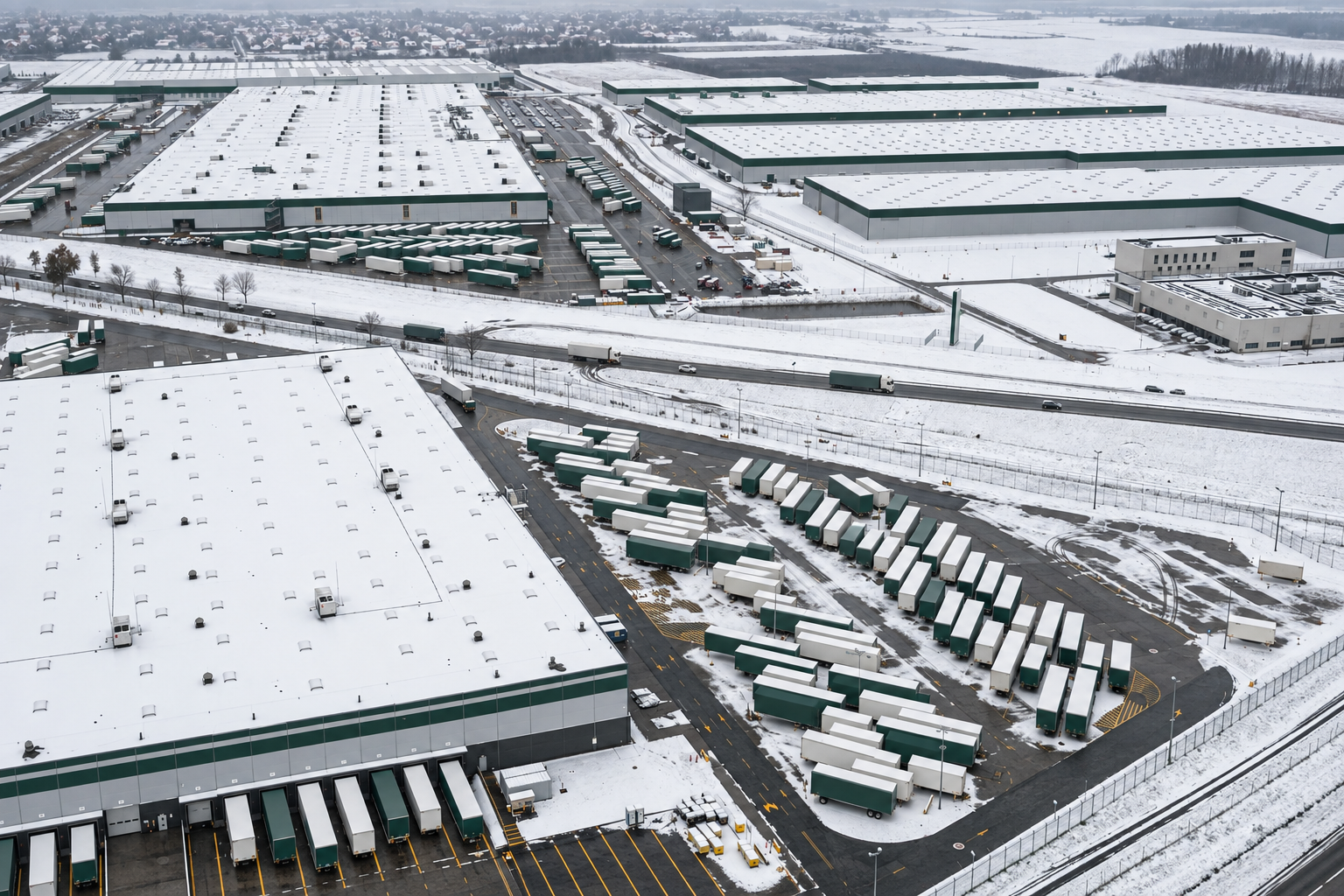
Not to mention the fact that, you know, Monterrey has been a warehousing manufacturing hub for a long time. And so there are some industrial parks where you just can’t go adding additional space like that. You know, there’s always room to park another five trailers or 10 trailers, but some places it’s pretty tight, and there’s really no practical or pragmatic way to construct extra space, right?
[29:04] The Real Cost Of One Hour Of Downtime
Brady Rodgers: And then the other option is, you know, simply that, when you consider our value proposition, and we’ll probably get into that in a little more detail, but when you consider the time lost, back to that first comment that I made, if you have a production line that gets shut down for one hour waiting on buffer for raw materials to arrive, and that hour just cost you $40,000, all of a sudden the rental of five or six or seven rental trailers becomes pretty cheap. It’s one of the best decisions you can make. And that’s what I love about our business and about our option, because we have a very simple solution that can solve incredibly large problems, right? Now, I suppose I should answer that in Spanish.
Mark Mann: All right. Very good. So, you mentioned the word elasticity a little bit ago. And in the US, we do talk about trailers from the standpoint of elasticity. In Mexico, industrial parks are really strategically located near major highways and border crossings. So, the ability to rent and use offsite warehousing is really hindered, like you said, by heavy traffic delays. I mean, it could take you a day, right, to get to and from. So, there’s also security issues related to off-site storage space, and that flexibility is even more critical. So, a lot of leaders are still seeing storage trailers as that short-term band-aid. Tell me about a customer in Mexico where that thinking changed and they started to treat mobile storage as a core part of their operation.
[33:00] When Trailers Become A Core Strategy
Brady Rodgers: Right. No, thank you, Mark. That’s a great question. And so, honestly, it almost has happened with us every time. Most of the customers who begin renting trailers from me have rented trailers thinking, we’re going to take two or three, we might need them for a month, two months. But then when they see the utilization of these trailers and they see how efficient it is to be able to load them, unload them, move them to favorable areas in their plant, when they see the ability to store extra material, when they see the ability to reduce cost, when they see the ability to… I mean, my gosh, we’ve even had customers who’ve expanded production lines.
We have customers that have won other projects, went from five lines up to six lines because they needed extra space under roof. And so they would rent our trailers. They’ve been renting our trailers long term, and that is 100% their warehouse. A bit similar to the Toyota business model, where now what used to be their storage warehouse is now where they’ve added additional production lines and productivity, and they count 100% on storage trailers to store their goods and materials.
We have some other examples. You know, we have some customers where they had to ramp up production, and the production sort of got ahead of the supply chain, either because there were delays at the border, you know, just three or four hours north there. Remember I said that the Laredo border is the busiest. Thousands and thousands of trucks go through that border every day. But what happens when there are delays and then you get stuck there at the border? Again, that gets extremely expensive. So, some of our customers prefer to hold off, hold them there at the plant.
We have had customers, we’ve gotten there with storage trailers and their outloading dock was so full, they couldn’t get anything else in their dock. And so, when we’ve delivered the trailers, we’ve pulled them right up to their loading dock, let them load them, and then actually that added service where we move them away as we’re bringing storage trailers in. So we’ve, you know, freed up their loading docks, added production areas, reduced general storage cost, allowed them to have buffer materials for spikes in production, long-needed spikes in production, allowed them to clean up areas. You know, it can become very unsafe in a plant if your corridors and your working areas are overloaded with material. It can be very unproductive and even unsafe. And so there have just been a lot of benefits that our customers have seen from that, right?
Yeah. I will kind of mention… I’ll repeat that in Spanish. Repeat your original question, though. I want to make sure I get that right in Spanish.
Mark Mann: Yeah. So we talked earlier about elasticity. So in the US, you know, we talk about trailers from the standpoint of being elastic, and in Mexico…
Brady Rodgers: That’s right.
Mark Mann: Industrial parks are strategically located near major highways and border crossings. You mentioned that. And if there are traffic delays, there are major problems. And security issues are also related to off-site warehouse space.
Brady Rodgers: That’s right.
Mark Mann: And that flexibility is even more critical. So, a lot of leaders still see storage trailers as the band-aid. But tell me about a customer in Mexico where that thinking changed and they started to treat mobile storage as part of the core operation.
Brady Rodgers: I was also mentioning that within some plants, we actually have three or four different user groups or user types, and that didn’t happen right away, but over the course of the weeks and months, one person over here sees how this person over here is using them, and all of a sudden you have another manager saying, hey, we need to add storage trailers. So it’s been very interesting and exciting to see how all this develops, and the way that it does allow them to have a business model that is scalable, cost-effective, very elastic: have the space when you need it, scale it down when you don’t. It’s been a tremendous value add to our customers, Mark.
Mark Mann: Perfecto. Love it. So, you mentioned earlier the rich and beautiful culture in Mexico and Central America. And Mexico has a relationship-driven operating culture. It’s built on trust, reliability, long-term partnerships. So, how have you earned your way into the market, and more importantly, how do you foster repeat business?
[40:03] Mexico’s Relationship-Driven Business Culture
Brady Rodgers: Thank you, Mark. I really appreciate that question, because you’re right, Mexico is a very relationship-driven culture: trust, reliability, long-term partnerships that even turn into friendships. I think for me that starts with quality people. I think people are the most important thing you can have in any organization, and it certainly doesn’t fall short here, to have people on your team that are quality from the word go, from the things they say, from the things they do, that are attentive, responsive to emails, responsive to phone calls, responsive to demands. When our customers call… We had a customer just yesterday call and said, “Hey, we need three more trailers.” We got them delivered the same day.
And so, one of the ways that we have earned our way into these relationships, and I think that’s an important word, is earning, because we do need to earn it. I don’t want anybody to take us at face value. Anybody can just make all kinds of promises and say anything, but what has helped us earn our way is that we keep our promises. And having such dedicated staff has been a huge part of that. Our service team is so responsive. When we’re delivering, we’re so responsive. Our administrative team is so responsive to, you know, Mexico, lots of documents going back and forth, as you can imagine. And our administrative team is very quick to respond and get you the documents that you need, invoicing issues, answering those kind of concerns. We want to be someone who is easy to do business with.
And also, I think just the fact that our pricing is fair, our policies are very fair. We don’t, you know, we don’t call something damage that would be normal wear, right? If something is normal wear, it’s normal wear. And oftentimes in the rental business in general, I’m not just talking about Mexico, but oftentimes in the rental business, companies can try to pass off damage fees for something that was really just normal wear. And our companies will find that Warehouse on Wheels is very fair, upright. You know, one of our core values is do the right thing, and we believe in doing the right thing.
And then another thing that I try to do is pull my team into things right away, when we have a new customer, or even before you start doing business with us. You know, through our process of getting to know your application, through our process of you getting to know us, through our process of discovery: we can’t serve you well if we don’t understand your business well. And so, I really believe in discovery. I really believe in getting to know where your pain points are in your business, or even just your likes and dislikes. And so I think all those things are important as we earn our way into the market, as we earn our way to get repeat business.
We’re just not going to get somebody’s business and forget about them. We have a saying in Mexico, and that is, my team will move mountains to take care of you, and we will do that. The other thing we like to talk about: we talk about the Golden Triangle in Mexico. Well, within that Golden Triangle exists a golden customer base, because we believe in treating all of our customers like gold. And now I need to repeat that in Spanish.
[46:00] The Three-Point Inspection Process
Brady Rodgers: And Mark, one of the things I didn’t mention is kind of what I call our three-point inspection process. So, as you know, most of my trailers I buy and we bring in from the US, some from Mexico. But when a trailer hits our yard, it gets inspected. When we are done with that renovation process, whether it’s painting, sealing the roof, replacing flooring, replacing cross arms, fixing doors, new seals, whatever it is we need to do, when we’re done with that renovation work, it goes through another inspection.
And then if you were the client and you call and say, “Brady, we need 10 trailers in the next couple days,” we will immediately select those 10 trailers, put Dr. Mark Mann’s name on them, and they’ll go through another quick inspection, even if it’s just blowing any dust that might have accumulated out of there, to give that much attention to the detail, so that when you get a finished product, it’s safe. It’s in good quality. It’s functional. It is also cosmetically, everything is very uniform, which is very important to our customers. I’m going to repeat that in Spanish, because that was one I left out.
Thank you, Mark.
Mark Mann: Absolutely. You know, whether it’s in the United States or Canada or Mexico, when people need trailers, they need them. When they call us, their hair is on fire, right? We talk like that sometimes. So you made a comment that often your ability to respond can be hindered by the same customer who has that immediate need. Explain that to me.
[47:58] The Vendor Setup Bottleneck (And How To Start Early)
Brady Rodgers: Okay. So thank you for that, that’s a great question, Mark. So what happens, especially in Mexico, if you think about the process in Mexico: if you are a potential customer, not an existing customer… If you’re an existing customer, this doesn’t really apply, because once you’re set up in our system and we’re set up in yours… But in Mexico, the approval process is a bit heavy. It’s a bit slow. First of all, they normally have to prove their business case. Then there’s some sort of documents review. Then there’s the vendor registration process. And then there’s issuing the purchase orders. That process can be very lengthy, especially with the types of customers that we’re serving.
On the one hand, you might have a user over here that needs the trailers in a week, and you might have the administrative and purchasing group over here saying, “Well, it’s going to take us four weeks just to go through that process so we can be in the place to deliver trailers to you.” But if you think about the inherent need for storage trailers, like you say, usually it’s when somebody’s hair is on fire. So, how do we try to help overcome that?
First of all, when someone has expressed an interest right away in our business, we are very upfront about trying to start that process as early as we can, that vendor registration process, giving them, you know, opportunity to really analyze the business case. Our customers have anywhere from 15 to 20 different types of questions that really need to kind of come out in the application analysis, and we will do that right away, and we will try to identify what they need, how they need it, and how we can help them. But then, more importantly, we respond on our part as quickly as we can to, you know, that administrative process.
And I’ve even had… Look, the kind of customers we’re dealing with are large multinational companies with tremendous reputations. I’ve even had a few customers… I had one customer that had to have five trailers right away. And just based on an email that they sent to me, said, “Brady, we’ll commit to this. We’ll agree to your price. Can you get us five trailers while we go through that process?” I’ve even done that, Mark. Now, I kind of handle that on a case-by-case basis, because we all have processes that we like to stick to. But we will, again, this gets back to that thing of moving mountains. We will do whatever we can to take care of our customers as quickly and responsively as we can, right? So, I hope that answers that question. Now, I’ll absolutely do my best to repeat it in Spanish.
Mark Mann: Brady, this has been an absolutely enlightening look at the interconnected North American production region. It really has. Now, while trailer storage offers a real simple and pragmatic and affordable solution, the applications are versatile, right? The solutions you offer are very… can be very specific to individual needs. So for anyone that’s listening in Mexico that is interested in collaborating with your team, trying to understand, you know, is this a viable solution for my immediate need, or, you know, strategically thinking for a long-term operation, what’s the first thing they should do? What should they do next?
[54:53] First Steps For Companies In Mexico
Brady Rodgers: Okay, thank you, Dr. Mann, that’s a great question. I’m going to give you a couple answers to that. Okay. First of all, let us get to know you as well as we can, as quickly as we can. Schedule a time for a phone call. Schedule a time for a Teams meeting. Schedule a time for our team to come by and visit your plant. We will do either of those things. We can accomplish a lot simply via Teams. And I will usually have a couple of my different important team members on that call, so we can address all your questions as upfront, right away as we can. And in that, we do kind of that early application analysis, if you will, so we can understand how we need to adapt to meet your needs.
So I think the most important thing you can do is to contact us, and you’ll have our information on our website. My name again is Brady Rodgers. I’m the president of— while Edgar Rioa is my commercial manager there in the country. And, you know, please reach out to us. Schedule time to meet us. Also, as a side note, we have a very rigorous show schedule this year. We’re planning on being at the Logistics Show in Mexico City in two weeks. We’re going to be at the Reynosa show coming up. We’re going to be back at the Monterrey show coming up. So perhaps your need isn’t so immediate, but you see the value in this long term.
And I will repeat this, I’ve said this over and over again, but I don’t think that there exists a single company that can’t find some kind of valuable, pragmatic, and affordable use for storage trailers, whether that’s at a small scale or a large scale. And again, the elasticity of storage trailers allows you to meet your specific need. So I think the most important thing to do is, let’s get in touch. Let’s communicate. Let’s get to know one another. Let us get to know a little bit about your needs. And that is how I would love to follow up with you. And I welcome the opportunity to be of service to you.
Our customers know they can call my team seven days a week, night or day. And every one of our customers has my cell phone number, and they also know they can call me seven days a week, night or day. And we try to be extremely accessible, and we look forward to being of service to you.
[59:08] Before You Sign A Long-Term Warehouse Contract
Brady Rodgers: One last thing I will say, Mark, because there are a lot of people in Monterrey right now at the point of signing a contract for 3 years or 5 years for extra warehouse space. I would encourage you to call us right away. Just get to know our service. Get to know the different terms and conditions that we can offer, because if you’re going to do a true economic analysis, benefit analysis, production analysis of this option, I would encourage you to do it before you go sign a long-term, costly warehouse contract.
You may be also considering signing a contract or having a space, but it’s short. Maybe you’re someone that wants to plant a new business in Monterrey, and everything looks beautiful about that space, except you’re missing spot under roof. Instead of thinking that that spot won’t work for me, if you have enough production space, if you have enough office space, consider us as a full-time solution for your warehousing space. That would be my ask, and that would be my advice.
Thank you very much for your time and attention.
Mark Mann: Absolutely. So, Brady Rodgers, president of Mexican Operations, thank you for showing us the Wow Factor south of the border.
Brady Rodgers: Thank you, Dr. Mann. And I meant what I said, so I’m going to give you my email address. It’s B Rodgers, wowtrailers.com, and that’s Rodgers spelled R-O-D-G-E-R-S. Now you know how to get in touch with me.
Mark Mann: Absolutely. Thank you very much, guys. You can find us at www.warehouseonwheels.com. I’m your humble host, Dr. Mark Mann, and we’ll see you on the next episode of The Wow Factor.