
Kelly McCane on Flexible Storage for the Cincinnati Freight Hub
In this episode, host Mark Mann sits down with Kelly McCane, Walton and Columbus General Manager of FITS Trailer Rentals, a Warehouse on Wheels brand, to talk about the Northern Kentucky trailer market, the where, the when and the how long of a customer’s space problem, demurrage and detention fees, and what a warehouse lease locks a company into. Kelly describes a customer that ran out of room as 152 rail containers started arriving, a fire marshal deadline the week of Christmas, and a food packaging customer that keeps 70 to 80 storage trailers on rent at all times.
Key Takeaways
- A rail container surge needed almost 95 trailers within 7 days. A customer in the Erlanger area planned extra storage with FITS a couple of weeks ahead, then decided to try storing everything on site as 152 rail containers started arriving. After the first 20 trailers, it told FITS there wasn’t enough room and it needed 100 trailers now. FITS brought in an extra driver, cross-docked from the rail containers onto its trailers, and kept about 90 trailers rotating between the customer and its storage lot for 7 days.
- A thrift provider no longer needed a 50,000-square-foot warehouse. The provider brings clothing and goods in from Delaware and Chicago, and was looking at a large warehouse in the Lexington, Kentucky market because it saw storage trailers as a short-term fix. FITS was taking trailers to its cross dock, storing them and bringing them back. Kelly asked why FITS didn’t take the trailers straight to the stores, and the provider decided it didn’t need the warehouse space it would have been locked into for 5 years.
- A fire marshal’s visit the week of Christmas brought a 30-trailer order. An occasional customer about 2 hours away called at 11:00 a.m. on a Friday needing 30 storage trailers by the end of Saturday, after the fire marshal gave it 7 days to clean up. FITS delivered 27 of the 30 by about 9:00 p.m. on Saturday and the last three on Monday morning, with a driver coming in from his vacation to help. When the boss saw what the weekend crew had done, he ordered 30 more, saying uptime was already up.
- Swapping ground containers for trailers kept a retailer’s staff off the ice. A peak-season retailer used to rent 10 to 15 ground containers from FITS from the end of October through mid-January. In a winter of freezing rain, staff walked 100 to 150 feet each way to dolly supplies in, and three people fell in one shift and had to be sent home. FITS took 15 storage trailers out two at a time: the store loaded each one at its back doors, FITS parked it where the containers had stood, and swapped it for an empty whenever the store called.
- A 3PL cross-docks battery containers onto trailers to cut demurrage. The 3PL hauls electric batteries from the port in Cincinnati to a manufacturer about an hour and a half away, and its local warehouse is less than 5,000 feet, so product sat on the containers and the demurrage was charged back to its customer. By Kelly’s figures, that customer was paying $40,000 a quarter, or $160,000 a year. The 3PL now cross-docks onto FITS trailers until the customer is ready, and has about six on rent. Kelly sets that against a warehouse lease’s three to five year term: when a customer is done with a trailer, he comes and picks it up.
Episode Chapters
Click any timestamp to jump to that section on YouTube.
- 00:00 — Cincinnati: The Super Hub of the Western Hemisphere
- 02:21 — From a Poker Game to Logistics Leader
- 03:16 — What a Normal Week Looks Like (10 trailers/day)
- 06:21 — The 3 Biggest Warehouse Space Headaches
- 09:36 — 20 to 95 Trailers in 7 Days: A Just-In-Time Crisis
- 12:08 — When Mobile Storage Becomes a Long-Term Strategy
- 14:20 — Saving a Customer From a 50,000 sq ft Lease
- 17:06 — The Christmas Fire Marshal Crisis
- 19:53 — What Separates Companies That Grow
- 21:22 — Keeping Warehouse Teams Safe in Peak Season
- 24:08 — The Whiteboard Math: $160K/Year in Demurrage
- 28:07 — Kelly’s Cincinnati Playbook
- 29:24 — The Most Unusual Use Cases (Caskets & Theater Sets)
- 33:34 — The Signature Round
- 39:46 — Retiring the Biggest Storage Trailer Myth
Transcript
[00:00] Cincinnati: The Super Hub of the Western Hemisphere
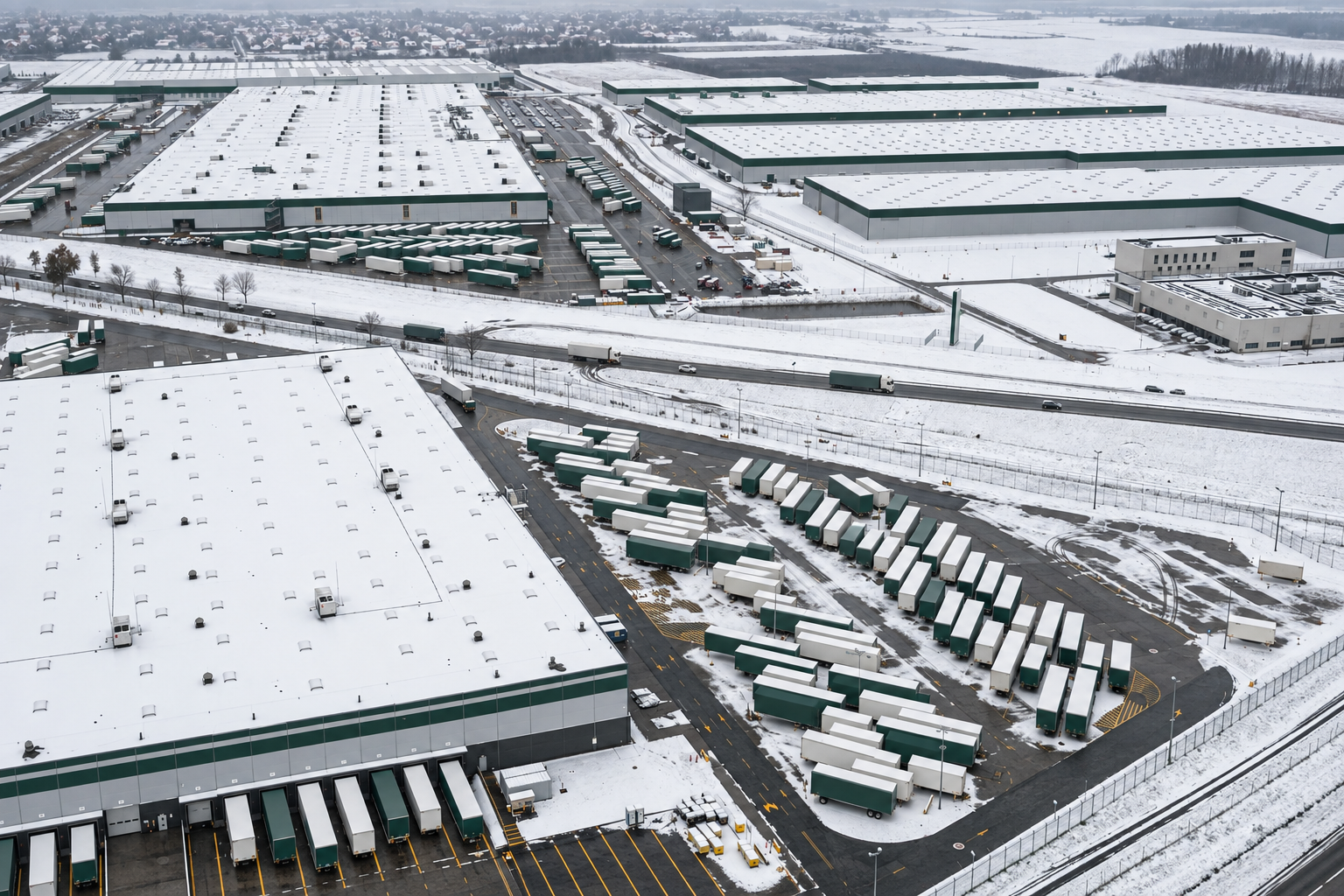
Mark Mann: Welcome back to The Wow Factor. I’m your host, Dr. Mark Mann. For this episode of The Wow Factor, we focus on the Ohio Valley. The Northern Kentucky and Cincinnati area is one of the most critical freight nodes in North America, anchored by the Cincinnati/Northern Kentucky Airport, which happens to be the sixth-largest cargo airport on the continent. It’s crazy. So, if you want to see the future of global commerce, you don’t look at the East or West Coast, you look at the flight path of CVG. Between the $1.5 billion Amazon Air Hub and DHL’s massive expansions in the area, Northern Kentucky has become the literal super hub of the Western Hemisphere. But with all that air power comes a massive ground-side challenge. Where do you put the trailers and containers and freight when the docks are full?
Today’s guest answers that question for his customers every day. He leads operations in a market that’s home, like I said, to the DHL Global Superhub and Amazon’s primary US Air Hub. With industrial vacancy rates in the region remaining pretty lean, about 5.5% as of Q1 of 2026, his team provides the essential elasticity for a market that has to reach 65% of the US population within a single day’s drive. Joining me to talk about the ground game in the Tri-State is Kelly McCane, the general manager at FITS Trailer Rentals in Walton, Kentucky and Cincinnati and Columbus, Ohio. Kelly, welcome to the show.
Kelly McCane: Dr. Mark Mann, thanks for having me. Time spent with you is always time well spent. You forgot to include also home to Dr. Mark Mann at one time.
Mark Mann: Oh, yes. Yeah, I’m originally a Cincinnati— and so, absolutely. So Kelly, we’re going to dive into the market dynamics, but first I want to start with you. You’re leading the charge in Walton, right around the center of the I-75/I-71 logistics spine. How did your career path first lead you into the world of warehouses and yards and high-velocity logistics in Northern Kentucky?
[02:21] From a Poker Game to Logistics Leader
Kelly McCane: Funny enough, it was a poker game. Back during the poker boom, 20 years ago, almost exactly 20 years ago, my buddies and I used to play poker. My best friend’s dad came over, started playing with us. One day we’re playing poker and he says, “You looking for a job?” And he said, “Come up and interview with me.” And the next thing I knew, I was at a relocation company that I was at for about 18 and a half years.
It all just snowballed from there. Problem-solving, communicating, both right up my alley. That’s what supply chain and logistics is all about, and I just fit it like a glove, and I’ve been in it ever since. I love it. I love solving problems. I love helping people. I love when people are in their worst moments at work, you know, what can you do to help them? That’s what I do, and that’s where we step in here at FITS. It’s just always been a great fit, and I love what I do.
[03:16] What a Normal Week Looks Like (10 trailers/day)
Mark Mann: That is an extraordinary how story. I love it. So with 11,000 cargo landings a year happening at that airport just up the road from you, what does a normal week look like for the FITS team when global shipments start hitting the pavement?
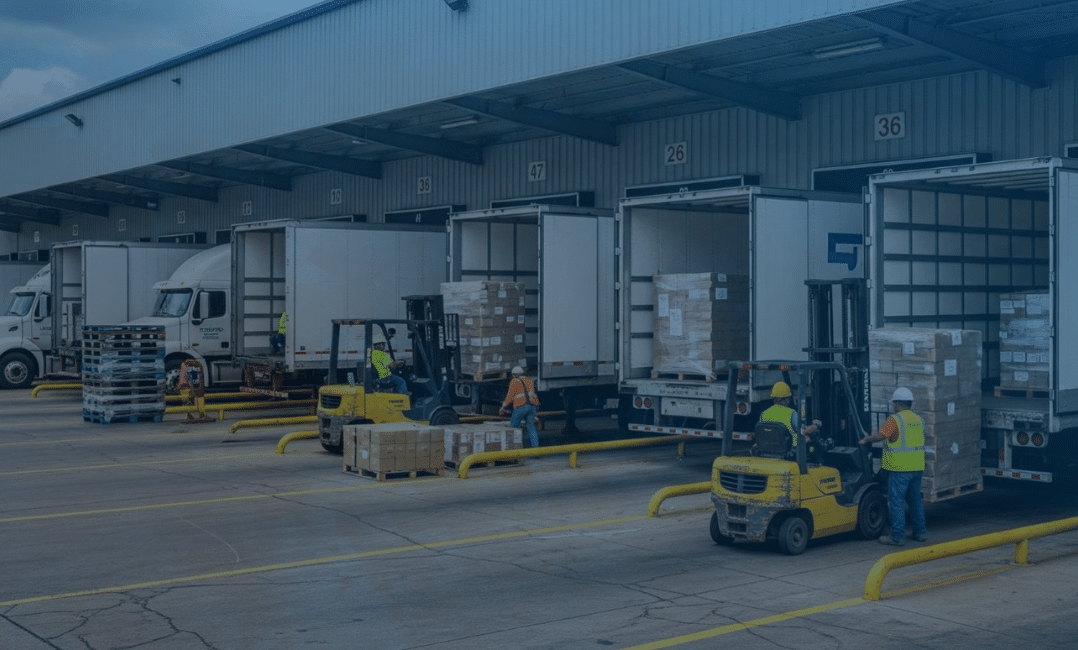
Kelly McCane: It’s busy. We have a lot of churn here in Walton and Columbus both. Just the 71-75 corridor, and then of course you have 70 bisecting right through Columbus. We are super busy at the Walton operation and the Columbus operation. Typically 10 trailers on/off rent a day. So, we’re picking up or bringing back 10 trailers a day as we’re flexing with our customer storage capacity. About two— or just about 210 a month. 21 working days, so that’s about 10 a day.
We probably field just as many, if not a little bit more, on the service call side. We have a large fleet out there in play, and forklift operators, yard drivers, they don’t always take the best care of everything. And not, you know, that they’re doing it maliciously, but, you know, accidents or things do happen. If a forklift does go through the side of the wall, if a driver doesn’t close the door and chain it up and backs into the building and the door goes off the hinges, we’ll have a mobile unit out there within 24 hours typically for most normal repairs. And if it’s a major repair, we’ll normally have a driver out there also within 24 hours to get that trailer picked up, brought back here to our site so that we can make the proper repairs, get it right back over to you so that it’s right back in service and you’re not skipping a beat.
Mark Mann: That’s great for our listeners to understand, because you guys have a shop, but you also have these mobile mechanics to go out as well.
Kelly McCane: Yeah, and it’s a great, large network that we have of that, too. So, typically I tell everybody, if you let us know by noon, we’re probably going to have most normal repairs done that day. If you let us know in the afternoon, we’re going to try to get to it that day, but we’re going to have it done by noon the next day in most situations.
Mark Mann: You know, we’ve spoken to some of your colleagues in Phoenix or in Burlington, North Carolina, and those markets are fairly tight, right? Phoenix is Phoenix, or maybe Phoenix is Phoenix and a little bit of Tucson. Your territory, we’re talking from Columbus to Walton, all the way down Northern Kentucky, and then all the way east as far as Parkersburg, West Virginia. Is that right?
Kelly McCane: Correct. And we actually go as far south as the Tennessee border, to Williamsburg, Kentucky, which is right on the border right before you hit Tennessee. Our triangle’s very large. We pretty much service all of Southwest Ohio, all the way over to the western part of West Virginia, and then, like I said, all the way down to Tennessee. Large area of responsibility. It’s a lot of work, a lot of problem-solving, but our team just absolutely handles it and crushes it every day and gets our customers taken care of.
[06:21] The 3 Biggest Warehouse Space Headaches
Mark Mann: So, for those of you who are listening in that area, Kelly’s your guy.
Kelly McCane: Yeah.
Mark Mann: Right?
Kelly McCane: Yeah.
Mark Mann: So, as I mentioned in my opening, Cincinnati industrial vacancy rates have kind of dropped to like 5.5% in the first quarter of this year, but we know the airport submarket is even tighter. When you talk to operations managers in Boone County or Kenton County today, what would you say are the three biggest space headaches they’re bringing to you again and again?
Kelly McCane: I would say the three biggest, you know, and it just happens to be three, that I talk to people about all the time, is the where, the when, and the how long. You know, where are you going to have the room when you already have every spot with my storage trailers already, plus your space available inside the warehouse? When you’ve already got that completely filled up, where are you going to put everything? Luckily for us, we offer on-site storage. So, if you do load a trailer at your facility, and you run out of space on the inside and space to store our trailer on your lot, we can always bring it back here for you and store it as well, too, and take care of the transportation to bring it back out when you’re ready for it.
The second part is when. When is such a funny question, because we all know how the supply chain works, and you might think that you’re getting 40 containers on Friday, and you plan this out a week ahead of time. And we all know how the system works, and, you know, freight brokers, they get it to you when they can. That might show up on Tuesday or Wednesday. You might not have room for it yet on Tuesday or Wednesday. So, what happens? People call us quickly and ask us to get over there with some trailers so that they can get containers, rail containers, sea containers, both unloaded, so they’re not having to pay detention or demurrage fees. We get that a lot.
And then the last thing I always ask people is how long. You know, how long are you going to have this at your facility? Is it raw goods? Is it something that’s going to go to the production line to be used right away? Is it going to be sitting there for 5 or 6 months if it’s something for retailers? Make sure that you know how long you’re going to have that. Do you have the space to be able to store it for that long? And if you don’t, it’s what we’re here for. Give us a call. We’ll get that trailer over to you within 24 hours typically, and we’ll have an option for you so that you’re not paying expensive demurrage or detention fees.
Mark Mann: That’s great. And it’s always that extra service to be able to store it on your lot, too. You know, it really frees up their yards for sure.
Kelly McCane: Yeah, 100%. And as I like to tell people, you know, there’s no problem you’re going to bring to us that we’re not going to be able to help you solve. You know, even if we’re not the ones that are going to be able to solve it for you, chances are we know the people that can. So, it’s nice to be able to kind of walk that person off the ledge sometimes when they call you, and make what might be their worst moment— and to be that helping and guiding hand, like, we do this all day every day. This is what we’re going to do to help you out. If you got any questions along the way, just let me know.
[09:36] 20 to 95 Trailers in 7 Days: A Just-In-Time Crisis
Mark Mann: Well, with that in mind, tell me about a recent week in the Cincinnati or Columbus markets that really shows what happens to a yard when that just-in-time model hits a just-out-of-space reality.
Kelly McCane: Good question, because we just had a, you know, “oh no” moment from a customer. And Mark, I think you know from what we do, we normally don’t hear from customers until that uh-oh moment has hit, right? We actually had a now customer of ours reach out to us a couple weeks in advance telling us that they needed an option for some additional storage. We worked on the plan, got everything ready to go, let them know how many trailers we think they would need, where we could store them at, what the pricing would be. You know, we got everything finished.
Just got to the part where they were going to start receiving in 152 rail containers here in the Erlanger area. We reached out to the customer, I drove over. “Oh, we’re not sure. We think we’re just going to try to store everything here on site.” Well, they got throughout the first 20 trailers and said, “Uh-oh, there’s not enough room. We need 100 trailers and we need them now.” And it was quite the adventure. They reached out, luckily, at a time where we did have some availability with some drivers. We did have to bring in an extra driver, but we were able to get them almost 95 trailers within 7 days.
Constant, just rotating, dropping off our trailers, cross-docking from the rail container onto our trailer, us taking the trailer back here to our storage lot, and we just kept going around and around in a circle with about 90 trailers for 7 days. So, really, they called the day of. We got over there and there were 30 rail containers sitting outside. We drove over there and couldn’t believe what it looked like. Yeah, so it was just in time. Just in time.
Mark Mann: That’s fantastic. So, you have your own drivers. Do you also have drivers who are vendors that help out as well?
Kelly McCane: Absolutely. We get large orders here in the area. When our customers call in, they say, “I need 30 trailers.” When do you need them by? Can you take them over the course of a week? If so, we’ll deliver with our three drivers. If you need 30 trailers right now, yeah, we have to bring in some additional help to get those delivered.
[12:08] When Mobile Storage Becomes a Long-Term Strategy
Mark Mann: Yeah, so let’s drill down on that, when you mentioned earlier those uh-oh moments, because you’re right, a lot of companies, or a lot of leaders, still see storage trailers as that temporary hair-on-fire fix, right? So, tell me about a Northern Kentucky customer where that thinking flipped and they started to treat mobile storage as really a core long-term part of their strategy for managing the freight flow, rather than just uh-oh.
Kelly McCane: Sure. Yeah, I love the people that just don’t use them for uh-oh, but the great thing about uh-oh customers, too, is sometimes during that short time they see the value in the long term and what it can really do to help their operation. The example I think of is a customer of ours here. They’re in the packaging, food packaging industry. They have three sites here in Northern Kentucky: one in Erlanger, one in Florence, and one here in Walton. So, they have the manufacturing facility, they have the storage facility, and then they have the distribution center where they run the food containers out of. Between those three warehouses, you know, sorry, those three sites, though, obviously there’s a lot of back and forth of the product.
So, what they’ve realized is that when they get the production done— 75 can be very busy during the day. So, what they’ve learned is it’s actually better and quicker for them, and more efficient, to drive those trailers to the warehouse at night. So, what they do is, during the production during the day, they load up the trailers. They then sit there until about 9:00 at night, until traffic dies down. They then have their drivers take everything from the first facility to the second facility, where it stores all the trailers. They store some things inside the warehouse, but they just have too much. They have about 70 to 80 trailers on rent at all times, and they’re utilizing all 70 to 80 of those trailers at all times.
They’ll park some of the trailers outside at the warehouse, and then when the distribution center’s ready for them, same thing will happen again. They’ll wait until about 9:00 at night. They’ll have their drivers start moving on the third shift over to the distribution center, where their companies will come in and do the pickups to take it to the different food distributors in the area.
[14:20] Saving a Customer From a 50,000 sq ft Lease
Mark Mann: Excellent. So, walk me through a time when you had a local company there that was ready to sign another big, expensive, shiny warehouse lease in Hebron or Erlanger. They’re going up everywhere. And you helped them realize they could achieve the same result with mobile storage instead.
Kelly McCane: Sure. We worked with a large thrift provider here in the area. Obviously, we have a large need for people that need to buy, but we don’t have enough donations to always fulfill that need. They bring in product from Delaware and from Chicago, from another one of their partner agencies. They send, you know, the clothing or the material goods that they need to sell to thrift stores from these areas. And here in the Lexington, Kentucky market, they were looking at purchasing a rather large warehousing facility. When I asked them why, you know, and what was going on with the storage trailers— is it just not meeting their needs anymore, or they’re just afraid to try something new, or continue to keep trying something new, or they just don’t know, with the warehouse model? And they said, “Nah, it’s just—” you know, they kind of saw all storage trailers as a short-term fix.
And I said, “Well, let me ask you this,” because what we were doing for them is we were taking the storage trailers down to their cross dock. We were bringing the trailers back here to store for them. And then we were taking everything back to the dock for them to cross dock onto their trucks to deliver to their local stores. So, we got to talking, and I said, “Why don’t you just have us take the trailers directly to the store for you? Why are you, you know, making your process harder and longer when we’re going to do the same thing we are? Let us take the truck directly to the store for you. When you’re ready for it to be picked up, we’ll go pick it up and bring it back here until you’re ready to cross dock with materials coming in again from Delaware and Chicago.”
They said, “Well, by golly, why didn’t we think of that? And we don’t need this warehouse space anymore.” So, not only were we able to help them, you know, shore up their process, we saved them from getting a 50,000-square-foot warehouse that they would have been locked into for 5 years.
Mark Mann: So, I hear that we’re getting ready to see a brand new, big north-south bridge crossing that beautiful Ohio River in Cincinnati. The Brent Spence Bridge has been a staple forever, and being a former Cincinnatian myself, I can tell you that in that market, a single bridge closure or a hub delay, a 75-71 backup like you talked about earlier, it can back up the whole region. Tell me about a Tri-State crisis call, maybe a supplier that suddenly found themselves with zero room for inbound inventory.
[17:06] The Christmas Fire Marshal Crisis
Kelly McCane: Again, this happened the week of Christmas. One of our partners called us on Friday morning at 11:00 a.m. saying that they needed 30 storage trailers immediately. Now, keep in mind this partner is about 2 hours away from us. They needed 30 trailers and they needed them by the end of the day Saturday. That’s a tall order, especially when you’re 2 hours away. We have our three drivers here, but obviously we were going to need some help. We almost got there. We got 27 of the 30 delivered by about 9:00 p.m. the following day, on Saturday. Only issue we had, one of our vendors did have some truck issues, so we were short three trailers, but we got those delivered first thing Monday morning.
But again, they called, a bit of a crisis, a bit of a panic, I’m sure. Stop me if you’ve heard this one before, but the fire marshal showed up and said, “You got to get this place cleaned up, and you’ve got 7 days to do it.” The funny thing about that story, Mark, is that they had always used one or two storage trailers, you know, intermittently with us. They weren’t a huge customer. But they got those 30 storage trailers and they saw the efficiencies immediately over the weekend with the weekend crew, that when their boss walked back in on Monday morning and saw just the giant steps that had been taken over the weekend with just 30 trailers, he called me immediately and ordered 30 more. And so we were getting 30 more back up there right behind it, for them to clean up and for them to make sure that they were ready to go for when the fire marshal came back on that following Friday, and that they were back up and ready to go and could keep business moving.
Mark Mann: So it’s easy to see, you know, how things changed logistically for that customer. But what about their blood pressure? How did it change the way that they operate in terms of stress in that first 48 hours, or that Monday morning when all the FITS trailers arrived?
Kelly McCane: I’ll tell you the first thing he said to me. He goes, “Mark, this is already increased our uptime.” That’s a phrase you’re going to hear all the time in supply chain. Everybody wants to make sure that their uptime is always high, you know? Downtime is very bad. Uptime is very good. Their uptime increased over that weekend. Their productivity was up already. And that was with them also trying to get things cleaned up, per se. So, he called me immediately and said, “Uptime is already up. Need more trailers. Let’s go.”
Mark Mann: That’s great. And so, what separates, then, the companies that recover and grow from the ones that stay stuck in that cycle of fighting the dock month after month, or fighting, like you said, the fire marshal?
[19:53] What Separates Companies That Grow
Kelly McCane: To be honest with you, Mark, it’s people that are willing to take a chance, you know? I’ve been in this 20 years, you know? A lot of the warehousemen that I talk to, or, you know, site warehouse supervisors, I hear the same thing all the time: “Well, this is the way we do it. This is the way we’ve always done things.” What’s the difference between somebody that’s utilizing, you know, over 2,000 trailers in our market than the ones that are using zero? Just to be frank, it’s wanting to take a chance on something different. You know, what’s the old saying? If it’s not broke, smash it.
You know, there’s different ways of doing things, Mark, and this is one that obviously, you know, has some proof here in our market, with, again, well over 2,000 trailers on rent, you know, in our little triangle that we talked about before. It’s being willing to take a chance and being able to see that you can do things differently, and that it is going to give you results that you probably never thought of. It’s going to give you efficiencies gained that you never thought of. You’re going to look at that P&L and you’re going to say, “Oh, wow. I’m taking this into— I can get my next raise.” That is just something that I tell people all the time. Don’t be afraid to think differently or try something new.
Mark Mann: Yeah, you know, we hear a lot about thinking outside the box, and people just forget that they can throw the box away and create a whole new box— a warehouse, if you will, right? On wheels.
Kelly McCane: 100%.
[21:22] Keeping Warehouse Teams Safe in Peak Season
Mark Mann: Let’s talk about the people on the ground. I’m sure there are warehouse managers or logistics supervisors that you’ve built really good relationships with in your time there at FITS. Think about your favorite warehouse customer. How does having our trailers on site quietly make that person’s day safer and more efficient when the heat or the holiday rush is on?
Kelly McCane: Well, for a question like that, especially during peak season, you know, for our retailers, let’s call it what it is. It can be 75 degrees one day here in December and the next day it’s freezing rain and ice. We had a customer of ours, a peak-season retailer. They always used to put about 10 to 15 of the ground containers on rent from us, you know, October, end of October, through mid-January. And they would use ground containers. Well, we just had a horrific winter, a lot of freezing rain, and they were going back and forth about 100, 150 feet, depending on where the container was, back and forth from the store out to the ground container, dollying everything back in for supplies, with the extra supplies that they had to meet peak season.
Well, turns out they’d had three people fall in one shift that they had to send home, going back and forth in the freezing rain. And Mark, you’ve experienced it before. I mean, it’s a glaze of ice and you have no footing, and you’re on the ground, and the next thing you know, you’re hurt. They lost three people in one day to this. So, they had called and reached out and said, “Hey, we still need the solution, but we need a better one, because we don’t know what the weather’s going to bring and we can’t be losing people. We want to be safe. Do you have another option?” I said, “Absolutely, we have trailers.”
So, what we ended up doing with them is we took 15 of our storage trailers out to their site, two at a time. They had two doors in the back. When they received in their additional inventory, as soon as they pulled out, we pulled the storage trailer in. They loaded it up. We parked it in the same spots that we put the containers in. They would call us when they were ready to bring that next trailer back in. We would take the empty out and bring it back with us. We’d put the one with the loaded product in, and they didn’t have to worry about going outside back and forth and having people get hurt.
Mark Mann: Yeah, it’s a great solution. Yeah, I was telling somebody recently, we had the Kentucky Derby here a few weeks ago in Louisville, and it was actually 10 degrees colder on Derby Day than it was on Christmas Day. The weather in the Ohio Valley, as you said, is absolutely nuts.
Kelly McCane: Wait 5 minutes, we’ll get you something you’ll like. That’s what we tell everybody around here.
[24:08] The Whiteboard Math: $160K/Year in Demurrage
Mark Mann: That’s right. You mentioned the P&L earlier. Let’s talk a little bit about the whiteboard math. Tell me about a Cincinnati customer, or a Northern Kentucky or even a Columbus customer, who saw a clear financial win on demurrage, as you mentioned, or overtime costs because they switched to mobile storage models.
Kelly McCane: Sure. We work with a company who, they’re a 3PL company, and they provide the transportation from the port here in Cincinnati up to the manufacturer’s facility about an hour and a half away. They are electric batteries. So, the electric batteries come in here to the port. They bring over that container. The container arrives, and they have to hold the product here at their warehouse, which is a very small facility, probably less than 5,000 feet. They hold the product, though, here for the customer, and that stays primarily, though, on that container until they are ready for it. Because, again, they’re just limited on, you know, as a 3PL, where they come in at the port, where their local site is there. It’s a very small facility. It stays on the container.
So, they’re paying demurrage costs, which, of course, they’re charging back to their customer. And they were able to go back to their customer and say, “Hey, you know, you’re paying $40,000 in the first quarter of this year in demurrage charges for these batteries that you need. We have a solution that we think we can help you out with.” It’s a simple cross-dock. They had about three or four doors over there, so it was no problem for them to be able to do any type of cross-docking. It’s just they were limited on the space inside.
But what they started doing is they would pick up the containers from the port, they’d bring them up right there to the warehouse, they would cross-dock them from the container onto our trailer. And then when the customer was ready for it, they would take it up to them and deliver it, and we would just do the process over and over and over again with them, until— actually, they have about six trailers on rent from us right now. So, they’re still a customer, they’re still saving their customer money, and able to provide them a value, when they were spending $40,000 in the first quarter of a— a year ago, when I first met them. $160,000 a year they’re spending in demurrage costs.
Mark Mann: Man, and just by one solution, right? One phone call, you’re saving that kind of money.
Kelly McCane: What you’re paying in a day for a trailer— I’m sorry, what you’re paying in a day for demurrage, you can pay for a whole month for a trailer.
Mark Mann: Yeah, and it’s not only demurrage. The warehouse lease rates have gone crazy. So, if a supply chain VP asked you to compare a Northern Kentucky warehouse lease, which is probably around $6 to $8 a square foot, to a mobile storage plan, how would you walk them through those hidden savings?
Kelly McCane: I don’t try to get long and messy with it. It’s simple. It’s about a dollar a square foot, to be completely honest with you. I shoot it to them straight. You know, you know you’re paying six to eight here in our market. You know that you’re signing that three to five year term with them. When you’re done with my trailer, you just tell me and I’ll come and pick it up for you. We are going to bend and flex as your business bends and flexes. We’re going to charge you cheaper on the square foot, and we’re not going to lock you into a long-term deal where you are out there just absolutely hustling, begging, pleading, trying to get more business so that you can pay for the square footage that you really only need for a six-month or a nine-month or a 12-month project. What do you do the next two years? For the next four years, if you’re in a five-year term lease?
I tell everybody all the time, the math is super simple. And I tell everybody, too, you know, depending on how much you trust your forklift drivers, don’t forget you get 26 skids in your trailer. If you’re good at double stacking and you trust that guy doing the work, you can get 52. So really, you can use all that space. It’s just not front to back, it’s up to down, too. Utilize that entire space.
[28:07] Kelly’s Cincinnati Playbook
Mark Mann: Absolutely. So I want to give our listeners a Kelly’s Cincinnati playbook version here. If a warehouse manager is out of space and out of budget today, what’s the first step you’d tell them to take before they even picked up the phone to call FITS?
Kelly McCane: Know your inventory. You’re going to have dead stock. If you have your dead stock, return it, liquidate it, discount it, do whatever you can to gain some of that space back that you’re so desperate for. The second part is your overstock. Buy to your needs. You know, when you know that you’ve got overstock, it’s stuff that’s going to move, but right now you’re overstocked. Again, you have winter coats and it’s the middle of July right now, you know? Buy to your needs. Get in what you need during that time, and you don’t have to overstock. Last but not least, any damaged product that you do have, liquidate it, or get a dumpster out there and just pitch it, you know? It’s a real quick way to just know what you actually have: your A, your B, your C. What’s my A’s and my B’s? What’s moving fastest? What’s C and dead, not moving at all? And what can I get into a storage trailer so I can keep the A and the B churning at all times?
[29:24] The Most Unusual Use Cases (Caskets & Theater Sets)
Mark Mann: Absolutely. So I know a lot of your customers are retail or industrial suppliers, but as you know, these 450-square-foot boxes can be used for almost anything. What is the most unusual use case for our trailers in your market?
Kelly McCane: Great question. We work with a large theater production company. We have a large theater production company here in the Cincinnati area. We store their sets for them. That’s probably number two. Number one, by far: caskets. We have a casket manufacturer, and we store caskets on our trailers. So the winner, first place, caskets, for sure.
Mark Mann: You know, I talked to Thomas Clark, friend of the show, one of your colleagues out there in Las Vegas, and he said he opened a trailer one time and it was full of mannequins. He said he opened it up and there was a bunch of people staring back at him. But they were mannequins, so.
Kelly McCane: Thomas and his reaction to that is as Thomas would be.
Mark Mann: Now, I’ve heard stories from your colleagues who have told me that they’ve saved customers millions of dollars a year by offering just a couple hundred dry vans for storage instead of, you know, those customers leasing warehouse space. What’s the best problem-solving or cost-saving story from your market?
Kelly McCane: I would have to say it’s one of our partners. They’re not here actually physically in Cincinnati. They’re kind of on the outskirts, and they are completely landlocked, in that they’re right on the river. This city is kind of built around them. So, once they got to a point where their production site ran out of room to grow, because there were houses and businesses everywhere, their next option was about a 30-minute drive away, to the next large city, to be able to get any type of warehouse relief.
What they decided to do was, instead of making a 30-minute trip back and forth in transporting things from the manufacturing site to the storage facility, that they were going to rent— they have on rent with us at any time, I’d say, 60 to 80 storage trailers. And what they do is, as the product comes in, they offload the product off of whoever’s bringing it into the facility. We have two drivers that actually work there on site Monday through Friday, and one of them is there on Saturday and Sunday. They both work 6 days a week. This facility is open at all times, and, you know, because of the need of having to have trailers constantly, we have two drivers that are there on site at all times.
So, when the product comes in, we drop off an empty to them. They load the raw product, raw materials, back onto our trailer. We then take that just literally down the street a couple blocks into a storage yard that they built down there. And when they’re ready for that product to come back, they just text— call our drivers, say, “I need trailer 1-2-3-4-5, bring it up,” and they bring it up, and they drop it off into the dock. They offload, and away they go with, you know, manufacturing their product again.
Mark Mann: You know, I love not only the concept of full service— you got drivers there, you know, 7 days a week— but the fact that it’s almost like they work for them. They just send them a text, and they have just a relationship where they just do whatever they need. It’s awesome.
Kelly McCane: Yeah, it’s really a great partner, too. I mean, just absolutely the people that you want to be partners with, and they take care of our drivers, who are, you know, an hour and a half away from our facility. They treat them just like their own, too. So, you know, when there’s birthday parties, when there’s Christmas parties, they invite our guys in to come in, you know, participate and celebrate with them, because they’re a part of their team. And that’s really how we feel, as though we are, you know, we’re not a customer and a vendor. We’re your partner. And to be treated as such is really— it’s just great to see. It’s a great relationship we have with them.
[33:34] The Signature Round
Mark Mann: I love that word, partner. All right, so it’s time to get personal. We call this the signature round, and we’re going to start with you. Not the title, we’re starting with you. So, you talked about, you know, kind of winning this job in a poker match, right? So, what was the moment, though, when you thought, “Yeah, this is my world. This is my job. Warehouses, yards, Northern Kentucky hustle. This is me”?
Kelly McCane: Several years, I would say probably five or six, into my career at my former job. Our president of our company— you know, we’re a large company, about 300 people in just my office building alone, plus drivers and laborers out on the street working at all times. So, probably another, you know, 300 to 400 people. So, you know, 700 people. And he brings me in his office one day, the president of our company, and says, “You’re a connector.” And I thought to myself, “A connector?” He goes, “You know someone everywhere that can help us at any time. You really are a problem solver, a master communicator, and you can connect people.” That’s when it really hit for me, when he, you know, kind of told me that and gave me a pat on the back, that yeah, I can do this. I can be successful with this for a long time.
I love the challenges it brings. I’m the oldest of four. My mom and dad worked third shift, so, you know, I was in charge of the time. So being able to problem solve when Mom and Dad aren’t able to answer the phone was something I started doing at a pretty young age, taking care of my brothers and sisters. And it’s just translated into my work life, where we’re problem solvers. And, you know, when one’s pulling the other one’s hair, and you got to tell everybody to calm down, same thing happens here. Fire marshal just showed up. “I got a week to clean this place up. What am I going to do?” Take a deep breath. You’ve done the right thing. You’ve called us. We’re going to take care of you. Being able to help people walk off that ledge is just a great opportunity, you know, to show people that you’re here for them, you know? I love it.
Mark Mann: And that vision is evident in the fact that you don’t call them customers, you call them partners.
Kelly McCane: No, partners. One’s really the key.
Mark Mann: Yeah. So, when you get home and shut it down for the night, what pulls you away from this world of freight and space? What do you do to reset so that you can show up 100% for your team the next week? Do you have hobbies?
Kelly McCane: Hobbies, yeah. I have five kids. I’m a professional Uber driver that doesn’t get paid after work. Most nights my wife and I are home probably around between 10:00 and 11:00 sometime. Number three just got her license the other day, though, so that’s been nice. So, running kids around, being at their sporting events, their after-school extracurriculars, my wife and I spend a lot of time doing that. I still play church league softball on Monday nights. I love that. Of course, I tell you all the time, trivia on Tuesday nights. You got to be at trivia. It’s great to do when the kids don’t have games or practices and we can make it over there. I volunteer a lot at my church. I help to run our festival in the summer, and then I also help with our fish fry that leads up to Easter. And then we spend a lot of time in Florida. We try to get down to Florida a couple times a year, even if it’s just for a long weekend. We like to go down to Florida, sit on the beach and relax and enjoy some warm weather, especially when it’s cold up here.
Mark Mann: That’s great. So, I want you to think about the best boss or mentor you ever had. What’s the one thing they said to you that you now find yourself repeating to the next generation there in your office, in your shop?
Kelly McCane: Well, there’s two things I tell everybody. And the first, you know, I learned from my mom, and that was the good Lord never gives you more than what you can handle. We’ll get through this. We’re going to help you through it. When we have a large amount of returns here and the lot looks full, we’re going to get through it. We’re going to get those trailers through the shop. We’re going to get them repaired. We’re going to find somebody else that needs them right away. Don’t worry, guys. This lot’s not going to look like this very long.
The second best piece of advice I’ve ever been given was from my former boss at my former job, where he told me that if you want to be a leader, people have to want to follow you. I can’t think of anything more true than that I’ve ever been taught at work. You got to treat people the way they want to be treated. I know it sounds simple and quirky, but it’s the golden rule. If you treat people the way they want to be treated, they’re going to help you out with just about anything and anything that you can throw at them. They’re going to want to work hard, just not for you, for the brand, you know, because us as the GMs, we are the representative of the brand here in our local markets. If we treat people the way that they expect to be treated, and we show that they’re valued and they’re heard and they’re understood, they’re going to lay it all on the line for us.
We don’t have a very large crew here in Walton. We do a lot of work, but it’s because of the dedication and what these people put into their job to take care of our customers and our partners on a daily basis. Again, that 30-trailer order I was telling you about on Friday morning that needed to be finished by Saturday— we actually had a driver on vacation that week. I reached out to him and asked him to come in Friday. He delivered two trailers Friday afternoon. And then Saturday, which was, you know, supposed to be the tail end of his vacation, he came in and delivered three trailers two hours away. And he came in and did that for us. That’s a level of dedication that you don’t hear about a lot anymore, you know? And if you’re treating your people right, they’re going to treat you right.
Mark Mann: Absolutely true. Kelly, this has been just an exciting and enlightening tour of the greater Cincinnati and Columbus markets. But before we sign off, I know we have a lot of listeners in this area because, number one, it’s my hometown. Number two, you have a pretty big market there. So, what is one myth about storage trailers or mobile solutions in the Cincinnati market that you hope we can retire after this episode?
[39:46] Retiring the Biggest Storage Trailer Myth
Kelly McCane: Well, you’re listening to the podcast, or you’re watching a quick access on LinkedIn. So, the number one thing I hear when I go out to networking events is, “I’ve never heard of this before.” Now you’ve heard of it. Now be brave. Now reach out. Now be willing to take that next step and actually have a conversation. Have me walk your lot with you. Let’s talk and see if it is something that’s going to improve your process, that’s going to help that P&L. Again, if it’s not broke, smash it. Don’t be afraid to step out there for a second and give me a quick call. Chances are we can help. And if we can’t, I’ll tell you that we can’t, you know? But if we can, let’s talk and let’s have a conversation and let’s get you in a better situation.
Mark Mann: So, for anyone listening who’s feeling the squeeze in the Northern Kentucky, Cincinnati, or Columbus areas, what’s the one thing they should do this week?
Kelly McCane: Again, take a chance. If it’s not broke, smash it. One of my favorite lines that I love to tell everybody is, the definition of insanity is to do the same thing over and over and over again and expect a different result. If you are in that supply chain stronghold and you don’t know how to get out of it, again, we’re going to be able to help. We’re going to be able to provide relief. We’re going to be able to help back you off of that ledge. We’re going to improve the morale of your staff, of your team. They’re not going to be working overtime or staying late as much. We’re going to definitely help with morale and make things in your processes go so much smoother. And again, it’s just picking up that phone, or sending me a LinkedIn message or a text, and reaching out and letting us know that, “Hey, I’m at least interested.” And we’ll tell you if we can help.
Mark Mann: And folks, you can also reach Kelly not only on LinkedIn, but www.warehouseonwheels.com. Look for FITS Trailer Rentals. Kelly McCane, general manager of FITS, thanks for showing us the Wow Factor in the Tri-State.
Kelly McCane: Dr. Mann, thanks for having us and letting us shine a light here on what we do and how we do it. We appreciate the time, sir.
Mark Mann: Absolutely. That’s it for this week, folks. I’m Dr. Mark Mann, and we’ll see you on the next episode of The Wow Factor.