Angelo Cruz on Warehouse Overflow and Flexible Storage in Colorado
In this episode, host Mark Mann sits down with Angelo Cruz, General Manager of Colorado Trailer Rentals, Warehouse on Wheels’ brand in Denver and Colorado Springs, to talk about the Denver trailer market, customers outgrowing their space, yard flow and inventory timing gaps, and month-to-month storage trailers as an alternative to a long-term warehouse lease. Angelo describes a customer that consolidated two distribution centers into one and now runs 110 trailers on site, a university interiors project that went from one trailer a day to 15, and a haunted house operator’s COVID-era drive-in horror movie, set up with a wall of three stacked 40-foot containers.
Key Takeaways
- A customer consolidating into Colorado Springs now runs 110 trailers on site. Angelo says the problems customers bring him most are outgrowing their space faster than expected, insufficient yard flow, and timing gaps with inventory. One customer closed its Denver distribution center, leaving a single center in the Springs with twice as much product running through it. It has just hit 110 trailers on site, adding or subtracting trailers as needed, and WOW can also bring trailers back to its own yard for storage.
- Customers ready to sign a lease got the same capacity from trailers. Angelo has seen customers ready to sign a long-term lease realize, once the numbers were broken down, that trailers on their existing site gave them the same capacity for a fraction of the cost. They aren’t locked into any multi-year commitment: they add or subtract square footage on a month-to-month time frame, with no contract. Asked how he’d walk a supply chain VP through the comparison, he says equipment can be added in days, and customers only pay for what they use, without paying for empty space during slow periods.
- A university interiors project grew from one trailer a day to 15. A commercial interior design company working on a project for a local university underestimated how much product it would have. It first asked for a trailer a day, which became two a day for about a week and a half. It now has 15 trailers, and WOW is taking them to its storage yard to keep them out of the way until the project is ready next May. Angelo says the companies that thrive plan ahead and treat trailers as part of their long-term flexibility.
- Cross-loading imported containers into trailers cut a customer’s detention fees. A Colorado company that designs home theaters imports most of its products from China, so everything arrives in shipping containers on chassis. When more product came in than it anticipated, WOW supplied trailers, the customer cross-loaded the containers into them, and the trailers were stored on its yard or WOW’s. By Angelo’s account, that saved it a couple thousand dollars a month in detention fees alone.
- Walk the yard and find the dead space before calling. Angelo’s first step for a warehouse manager who is out of space and out of budget is to walk the yard or warehouse and identify dead space, because most operations have more useful space than they’re using. That shows whether there’s a real need, and how many trailers it takes. His advice is to start looking before you’re completely out of space, find the bottlenecks, and build flexibility in, whether by reorganizing space or bringing in more trailers. “The earlier you act, the more options you have.”
Episode Chapters
Click any timestamp to jump to that section on YouTube.
- 00:00 — Welcome to the Mile High City
- 02:28 — Stumbling Into Trailers
- 05:04 — Space Headaches and 110 Trailers
- 08:08 — Leases, Surges and 15 Trailers
- 11:12 — Docks, Detention and the Whiteboard Math
- 14:51 — A Rocky Mountain Playbook and Unusual Uses
- 19:14 — Signature Round
- 22:23 — Retiring the Short-Term Myth
Transcript
[00:00] Welcome to the Mile High City
Mark Mann: Welcome back to The Wow Factor. I’m your host, Dr. Mark Mann. This episode of The Wow Factor takes us to the Mile High City. Denver is currently navigating a complex industrial landscape where vacancy rates have climbed to a decade high of roughly 9 to 10% as of early 2026, even as speculative construction starts have kind of fallen to a decade low. This market is no longer just a mountain playground. It’s a high-velocity transit hub for the entire Rocky Mountain region. We’ve seen massive shifts lately, from a surge in development to a current period of supply churn that’s making the industrial market more selective and more strategic than ever before.
Today’s guest leads a market that serves as the central logistics spine for the Intermountain West. With major developments like the DIA Aurora Corridor and the massive expansion of the Food Bank of the Rockies, his team provides the critical flexibility required for a market shifting from rapid oversupply to methodical digestion. Joining me to talk about finding space at 5,280 feet is Angelo Cruz, the general manager of Colorado Trailer Rentals in Denver and Colorado Springs. Angelo, welcome to the show.
Angelo Cruz: Thanks, Mark. I’m happy to be here on The Wow Factor.
Mark Mann: All right. So, Angelo, we’re going to dive into the market dynamics, but first, let’s start with you, and I’d be remiss if I didn’t ask a Star Wars question. So, here we go, okay? My daughter is 20 years old and has never seen a single Star Wars movie. And yes, I feel like a complete failure as a parent, but if I were to introduce her to them now, do I start with the original trilogy first and bounce back to the prequels, or do I start with the prequels and watch them through in order?
Angelo Cruz: Oh, that is a tough question. I would say start with them in the original order that they were released, just because that’s the way I watched them and that’s the way I love them. And the original trilogy, to me, will always be my favorite.
Mark Mann: Absolutely. Good answer. All right.
[02:28] Stumbling Into Trailers
Mark Mann: Well, I know you’re a huge Star Wars fan, but how did you first find your way into this world of warehouses and yards and trailers?
Angelo Cruz: Well, Mark, so I didn’t actually find my way into the world of trailers and containers. I actually stumbled onto it. I was going to school. It was the summer break of 2024, and a family friend of ours who actually owned what was Mobile Storage Containers at the time, they had a driver who was in an ATV accident and he broke his leg. So, he wasn’t able to perform his duties, and they needed someone to fill in who was familiar with working with trailers, and I had moved some trailers and stuff when I worked for a concrete company the year before. So, I decided, what the heck? It’s summer break. Let’s give it a shot.
And so, when I started the job, it really played into my passion for solving problems, and at that time I was actually going to school to be an engineer. So, every time that I backed up the trailer, I took it as a challenge to find the right angles, to see where I needed to be, to anticipate it. And when we got into dropping containers, it was a little different. You don’t just back it in and pull out. Sometimes you got to turn the truck left or right, and depending on how you pull that truck out, it swings that trailer, and that trailer moves the trajectory of where that container is going to drop. And so, I love the challenge of that every day. No day was ever the same. And so, fortunately, I never went back to school, never finished my degree, but 22 years later and three different owners, I am now the GM at the Colorado branch.
Mark Mann: Excellent story. I love it. So, you manage both Denver and Colorado Springs markets. So, between the DIA Aurora corridor and the Air Force and Space Force hubs down south, what does a normal week look like for you and your team?
Angelo Cruz: So, a normal week, I would say every day kind of changes. I mean, I could start off the day checking equipment in the Denver yard and then coordinate equipment in the Springs with Jalil. But I would say every day is kind of a mix of operations, sales, and problem-solving. But I do get to travel the great state of Colorado and see its beauty. So, every day I love it.
[05:04] Space Headaches and 110 Trailers
Mark Mann: All right. So, Denver, as I mentioned in the intro, is seeing vacancy rates climb toward 10%. Yet we know that finding functional space, especially in the tight small bay segment, is still incredibly difficult. When you look at the Denver and Colorado Springs markets today, what would you say are the three biggest space headaches your customers are bringing to you again and again?
Angelo Cruz: I would say probably the biggest ones would be outgrowing the space faster than they expected, and then insufficient yard flow, and then I’d say number three would be just timing gaps with inventory.
Mark Mann: So, tell me about a recent week where you saw a Colorado company, maybe in the distribution or retail sector, kind of hit a wall because their production outpaced their warehouse floor space.
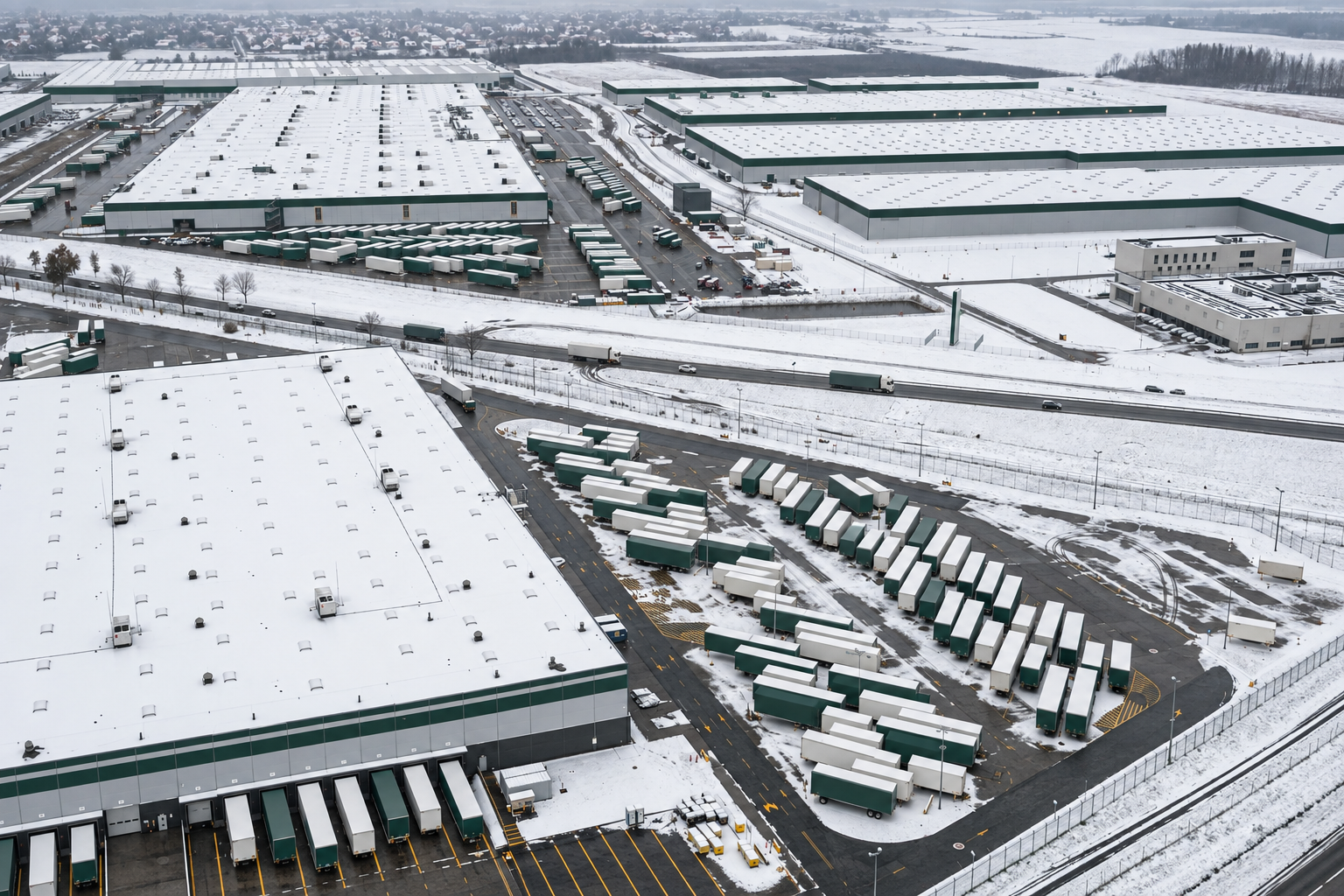
Angelo Cruz: Yeah, so recently we’re working with a customer who had closed down a distribution center down in— or I guess up here in Denver. And that just left him with the one distribution center down in the Springs. So now they have twice as much product running through one location. And right now they are incorporating our storage trailers on their site to help alleviate some of that overflow. Right now they’ve just hit 110 trailers on site, and we’re just helping them cycle through that product, keeping it organized, and they’re able to add or subtract trailers as needed.
Mark Mann: Wow, so 110 trailers. Now, do you have storage on your sites as well?
Angelo Cruz: Yes, we do. We do offer on-site storage for us or for them. So we do have that flexibility to take it to them and bring it right back to us for storage.
Mark Mann: That’s great. So if they need the extra room, you’ve got it. That’s a great free service. Good. So a lot of leaders are still seeing storage trailers as that short-term band-aid rather than really focusing on a strategic solution for an overflow crisis. Tell me about a customer where that thinking changed, where they realized that 53-foot trailers are actually a strategic advantage for their long-term supply chain plans.
Angelo Cruz: Okay. Yeah, so we’ve actually been working with a company that started off as a small shop doing consignments. And now they’ve grown into booking larger venues and booking fairgrounds, where they do these huge consignment sales of gently used items for kids, like toys and clothes. And then, rather than accumulating these goods and storing in a warehouse, they’ve selected to use our trailers, which allows them to have the ability to add or subtract storage as needed. And this model fits perfect for them, since they’re constantly adding and subtracting inventory for their consignment sales. We’re now working with three different locations, and they’ve all opted for this model, and it’s now just part of their company motto to incorporate trailers.
Mark Mann: Fantastic.
[08:08] Leases, Surges and 15 Trailers
Mark Mann: You know, things are getting so expensive, especially recently with tariffs and all of that stuff. And industrial rents in Denver are still averaging around $9 to $11. Walk me through a time when a customer was ready to sign an expensive warehouse lease and you helped them realize, “Wait a minute. We can flex your existing site by using Drive Alliance mobile storage instead.”
Angelo Cruz: Yeah, so we did. We’ve come across this quite a few times. We’ve had customers that are ready to sign a long-term lease, and with today’s rates, it’s pretty expensive. And so, when we break it down, they realize that they can get the same capacity using trailers with their existing site for a fraction of the cost. And they’re not locked into any multi-year commitment. They have the ability to add or subtract square footage, and then it’s a month-to-month time frame. There’s no contract, and it’s a no-brainer, just having the route of trailers on your site versus locking into a warehouse.
Mark Mann: That month-to-month thing is so important because, you know, you go to a warehouse and sometimes it’s a three, five-year contract, right?
Angelo Cruz: Yeah. Yeah, yeah, I mean, and then you can’t downsize when you want to.
Mark Mann: So, in a high-altitude market, the weather, the terrain for sure can create sudden high-stakes logistics crises. Tell me about a time a customer called you in one of those real panics, like, we’re out of space. Like maybe a company that suddenly found themselves with a surge of inventory or something that just couldn’t fit in their yard.
Angelo Cruz: So, this just actually happened a couple weeks ago. We do work with a company that does commercial interior design, and they’re working on a project for one of the local universities. And they underestimated the amount of product that they were going to have for this job that they were working. And so they called in, and initially they asked for just like a trailer a day until they could figure it out. Well, it turned into two trailers a day, and this went on for about a week and a half, and now they have 15 trailers, and we’re actually moving these trailers to our storage yard just to get them out of the way and out of sight until the project is actually ready to go next May.
Mark Mann: Yeah, so when you get a call like that, what separates the companies that recover and grow from the ones that kind of stay stuck in that cycle of, oh my gosh, my hair’s on fire again, you know, we’ve got yard congestion again, month after month?
Angelo Cruz: So, I would say the companies that thrive are proactive. They don’t just see the trailers as a tool. They plan ahead. They build flexibility, and they don’t wait until the crisis is there. They find solutions ahead of time. They treat trailers as part of their long-term flexibility, not just an emergency fix. They plan ahead. They adapt, and they avoid waiting for that crisis.
[11:12] Docks, Detention and the Whiteboard Math
Mark Mann: Yeah, so I’m sure that there are warehouse managers or supervisors there that you have built really good relationships with. Think of that person in the Colorado market. How does having our trailers on site quietly make that person’s day easier when the docks are full, or maybe even when the snow is flying?
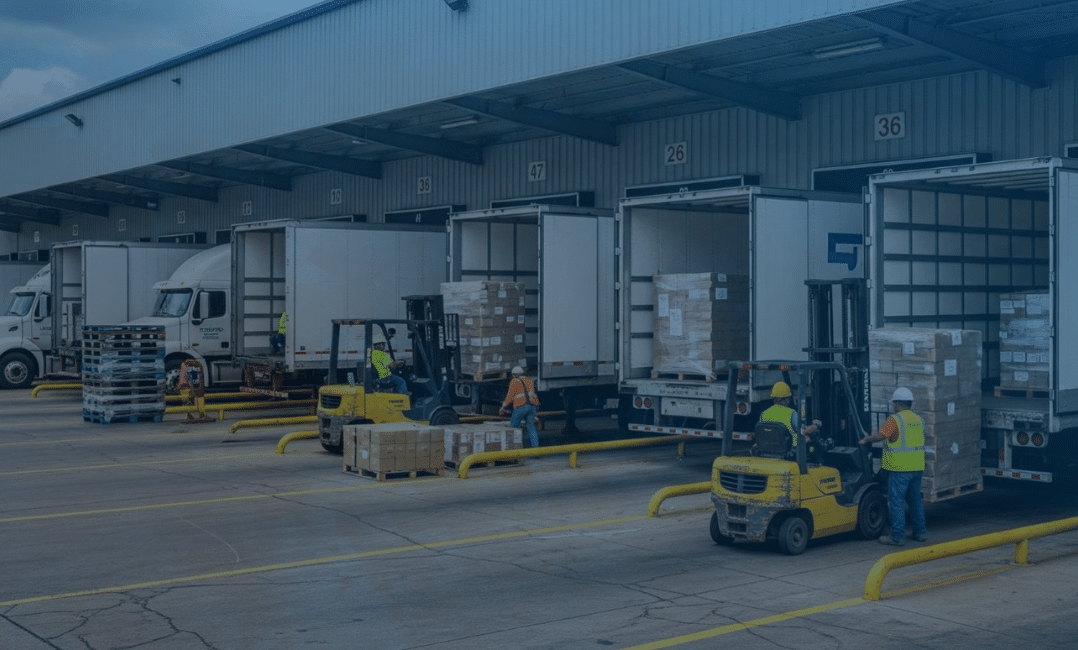
Angelo Cruz: So, it gives them some breathing room. Yeah, when the docks are full, the yard is tight, having trailers staged properly keeps things moving, and it allows them to continue with business, not to worry about bottlenecks, and just move on to the next either obstacle or task that they have.
Mark Mann: Yeah, so you’re out there with customers, I’m sure, all the time. Could you share a moment when maybe you talked to a forklift driver or a yard supervisor who said, “Man, Angelo, having these trailers, they’ve completely changed how I manage my inbound flow”?
Angelo Cruz: Yeah, so, Mark, this just actually happened the other day. I was out visiting some customers, just checking in, trying to see how things are going, see if needs change, or if there was anything I could do. And I was on the dock waiting for my contact to come out, and one of the forklift drivers came by, and he’s like, “Hey, is there something I can help you with?” And I said, “Yeah, I’m waiting for so-and-so. I’m with Colorado Trailer Rentals.” And he goes, “Oh, is that one of your trailers that’s out front?” And I was like, “Yeah, that’s it.” So, he leans into me and he’s like, “Hey, if you can, talk him into getting a second trailer.” I said, “That really helps out. It helps keep things from getting congested in here, allows the aisles to be free, it gives us some room to move around.” I said, “Absolutely, I’ll see if there’s any way I can get them to get you a second trailer.”
Mark Mann: That’s a great story. I love it. So, I want you to take off your GM Mandalorian helmet and put on your CFO helmet for a second. Let’s talk about the whiteboard math of it all. Tell me about a Colorado customer who saw a clear financial win on demurrage or detention fees because they switched to a mobile drop trailer model.
Angelo Cruz: Yeah, so we work with a company that designs home theaters, and most of their products are imported from China. So, all of their stuff comes in on shipping containers, which then are put on chassis, and then they get taken over to the location to be unloaded and stored in the warehouse. Well, it came down to where they were having a lot more product coming in than they were actually anticipating. And so, they came to us, and we offered up a solution where we’d give them some trailers, and they utilized those trailers, were able to cross-load the stuff out of the containers and chassis, put them into our equipment, and we decided to either store them on their yard or our yard. But it ended up saving them a couple thousand dollars a month just in detention fees on that equipment.
Mark Mann: Wow, great story. So, if a supply chain VP asked you to compare a warehouse lease at today’s Mile High rates to a mobile storage plan, how would you walk them through those numbers, those hidden savings?
Angelo Cruz: Yeah. Well, first of all, I would let them know that there’s a lot of flexibility. There’s no long-term lease. You’re able to subtract or add equipment as needed. And then there’s the speed of the service. You’re able to add equipment in days, not months. And you only pay for what you use. Unlike a warehouse lease, they’re not locked into paying for empty space during slow periods. And we’re always just a phone call away to add or subtract.
Mark Mann: Awesome.
[14:51] A Rocky Mountain Playbook and Unusual Uses
Mark Mann: All right, let’s step back and give our listeners kind of a Rocky Mountain playbook. If a warehouse manager is out of space and out of budget today, what’s the first step you would tell them to take before they even call you there at Colorado Trailer Rentals?
Angelo Cruz: Yeah, so the first thing I would say is they actually need to walk their yard or their warehouse and just look and try to identify dead space. Most operations have more useful space than they’re actually using. And identifying that will at least help them know where to start, and to see if there’s truly a need, and then from there we can decide what does that need take? Does it— one trailer, two trailers, so on and so forth.
Mark Mann: Yeah, so don’t wait till the fire marshal’s there and they’re calling you, right?
Angelo Cruz: Exactly.
Mark Mann: Has that happened?
Angelo Cruz: It hasn’t happened to me, but one of the other GMs I know says he’s got a pretty good relationship with the fire marshal. So, and I could understand why.
Mark Mann: All right, so a lot of your customers are industrial suppliers, but as you know, those 450-square-foot boxes can be used for almost anything. What is the most unusual use case for our trailers in your market?
Angelo Cruz: So I got a couple different things. You know, we do trailers and containers, but for trailers, this is Colorado. We are mile high, and so every once in a while we get some customers that like to pack these trailers up with TH— or not THC, with hemp, which has no THC. But it still has that odor, and when we get these trailers back, it takes weeks to deodorize them, and that smell you can just never get away.
But the other thing that I’m really proud of has to do with containers. There’s a customer that we work with that does Halloween haunted houses, and they do all kinds of stuff like that. Well, it was during the time of COVID, and for COVID they couldn’t perform their regular haunted house and the regular things that they would normally do during that time. So it was during this time that we actually brainstormed and tried to come up with an idea that was going to be safe for the distance, safe for the COVID restrictions. And so what we ended up doing is we took three 40-foot containers, stacked them on top of each other, and created this wall. He then was able to get a big white screen, and he turned his parking lot into a drive-in movie theater, where he allowed customers to come in, stay in their vehicles, watch a horror movie, and then he would have cast members dressed up in Halloween costumes out there, and they would try to scare or interact with the people while they were in their cars. But this allowed him to still operate during the Halloween time with those COVID restrictions, and so that year wasn’t a total loss.
Mark Mann: That is fantastic. You know, you talk about hemp, or the THC, the marijuana industry out there in Colorado. Almost all of the GMs I talked to have said that the trailers are used for some sort of a vice. So it’s tobacco down in the Carolinas. It’s bourbon here in Louisville and down in Atlanta. It’s condoms in Montgomery, Alabama. I mean, you know, they’re using it for the strangest things. So I love to always ask that question.
Angelo Cruz: Yeah.
Mark Mann: I’ve heard stories from your colleagues who have told me that they have saved customers millions of dollars a year by offering a couple hundred dry vans instead of the customer signing with a big shiny warehouse. What’s the best problem-solving or cost-saving story from your market?
Angelo Cruz: Well, I don’t exactly track dollars, but I’ve had customers avoid costly warehouse expansions entirely by using trailers. They gain that flexibility and avoid the long-term commitments. But as far as that, I don’t track it, but I know we’ve probably saved some customers hundreds of thousands just on rental leases.
[19:14] Signature Round
Mark Mann: Excellent. All right, so it’s time for the signature round. I’m going to play Dan Patrick here for a second. Going to get a little personal. Want to start with you. What is the moment that you thought, yeah, this is my world? Warehouses, trailers, the Denver hustle.
Angelo Cruz: So, that’s a tough question to answer. I don’t know if there is a defining moment that I can think of where I would say that this is my world. But I think every time that I helped a customer solve the real operational problem, seeing that has had impact over me all of these years, and now I know that this is what I was meant to do. I love it. I come to work every day, and every day is a challenge, and I love the challenge.
Mark Mann: Excellent. So, when you leave the yard in the evening, leave the shop, leave the office, and you head home, what pulls you away from space and freight and all of that so that you can show up 100% for your team the next week?
Angelo Cruz: Well, the one thing that helps me disconnect from my work, every day without fail, it is coming home to my family. And we are Disney adults. Me and my wife are Disney adults. My kids are in training to be Disney adults. So, we come home, and a lot of the things we do is, during dinner time, we do Disney trivia amongst each other. And it’s not just regular Disney trivia. It’s Disney trivia along the parks, about like, where’s the closest bathroom to this yard? You want a churro and you’re standing at this spot, where are you going to go? And so, playing these games with my family, it just helps me to disconnect and helps me to decompress, reset, and get ready for a day.
Mark Mann: Excellent. So, think about the— now, we’re going to do this question twice, because I’m going to go ahead and ask it and we’ll get a serious answer, and then Doug can come in and I’m going to ask it again. And while you’re starting to answer it, he can pop up. All right? So, think about the best boss or mentor you’ve ever had. What is one thing they said that you now find yourself repeating to your team?
Angelo Cruz: So, the one thing that I always try to relate to my team is that I treat everyone like family. When it comes to either the customers, the vendors, the employees, I try to maintain like a family relationship. Like I said, I’ve been through the business and it’s changed hands a couple different times, and most of those times it was through family-run businesses. And so, I want everyone here to know that we’re here to help each other. We’re here to connect. We’re here to talk. We’re here to problem-solve. And the best way to do those things is when you’re in a family dynamic.
Mark Mann: Yeah, and helping the customer, right? I mean, I know for me, it’s, you know, anytime I have a customer that says, “Man, you really lowered my blood pressure today,” that, you know, that’s very meaningful.
[22:23] Retiring the Short-Term Myth
Mark Mann: Angelo, it’s been a pleasure. Now, what is one myth about storage trailers in the Colorado market that you hope we can retire after this episode?
Angelo Cruz: Yeah, the one myth that I think that’s in the Colorado market, and probably everywhere, is that trailers are a short-term fix. In reality, I think they can be strategic. I think they can be a long-term asset, and they also add some flexibility to your supply chain.
Mark Mann: Yeah, so for anyone listening, I’m sure we got a lot of folks out there in the Denver market listening, and in the Colorado Springs area. If you’ve got some folks listening today who are feeling the squeeze in Colorado, what’s the one thing they should do this week?
Angelo Cruz: I would say the biggest thing they need to do is, I would tell them, not to wait till you’re completely out of space. Start looking now for a solution. Take a walk through your yard, through your warehouse. Identify where your bottlenecks are, and start thinking about how you are going to build flexibility into your operation, whether that’s reorganizing space or bringing additional trailers. The earlier you act, the more options you have.
Mark Mann: Absolutely. Awesome. And they can also reach you at www.warehouseonwheels.com, right? Just look up Colorado Trailer Rentals and they can reach right out to you. Is that true?
Angelo Cruz: That’s correct.
Mark Mann: All right, Angelo Cruz, general manager at Colorado Trailer Rentals, thank you for showing us the Wow Factor in Colorado.
Angelo Cruz: Thanks, Mark. Appreciate it.
Mark Mann: I’m Dr. Mark Mann, and we’ll see you on the next episode of The Wow Factor.