
Dan Leslie on Scaling Mobile Storage in Canada
as contingency stock through snowstorms and border delays. Dan puts WOW’s full-service offering at around $13 a square foot against high teens to $20 for a comparable warehouse lease, describes an auto parts customer that calls for reserve parts when the borders back up, and sets his team’s challenge for 2026: customer first, then operational excellence.
Key Takeaways
1. Scaling a founder-built business starts with keeping what made it work. Dan acquired Triton Assets in 2021 after the founder had built a 12-year track record in the Greater Toronto Area on white glove, fully customized service. His job was to keep the best parts of that reputation while adding the structure to grow in a much more scalable fashion. Along the way he learned to jackknife a 53-foot trailer into a tight slot.
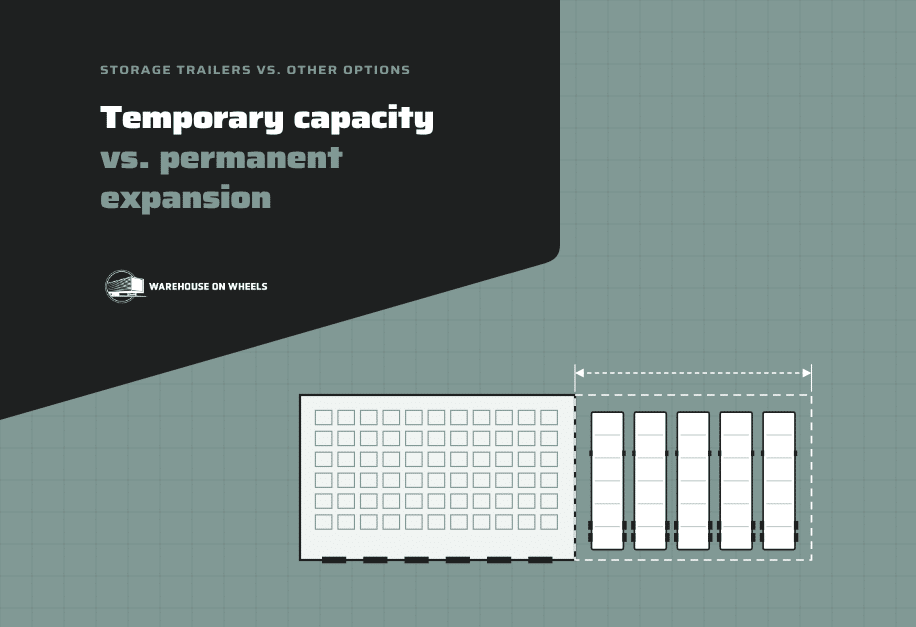
2. Toronto warehouse space costs far more than a trailer on the lot. Dan puts WOW’s top-end, full-service offering at around $13 a square foot, against high teens to $20 a square foot for comparable bricks and mortar, which also means committing to a long-term lease and a minimum amount of space. A 53-foot dry van gives a customer 450 square feet at a time. In the 2000s a triple net lease in the GTA could be found for $3 a foot; at the COVID peak it reached $25 to $30 a foot.
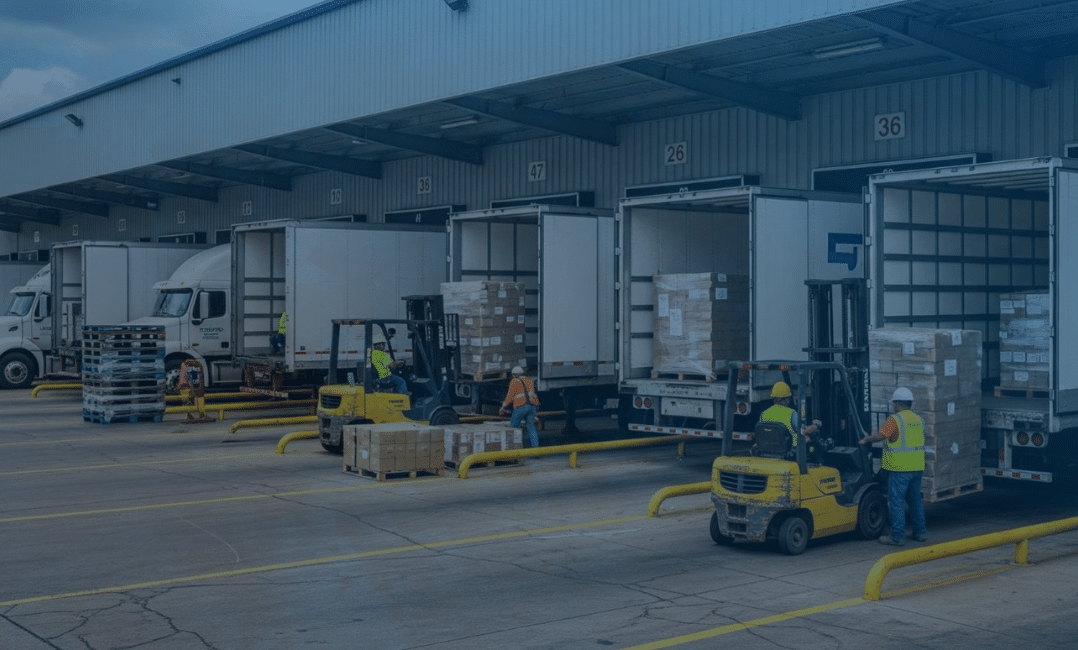
3. Delivery in hours is what turns a skeptic into a champion. A skeptical manufacturer usually has a warehouse or shipping manager who already understands trailer storage, and that person becomes the champion. WOW loads the goods, stores the trailers securely in its own yards, and returns them with a day or two’s notice, or within an hour or two for customers running just in time. Dan says the proof is in the service first and the economics second.
4. Contingency stock in trailers keeps Canadian production lines running. An auto parts manufacturer bringing goods from Mexico keeps trailers of reserve parts and empty dunnage bins with WOW offsite. The call usually comes after a snowstorm, heading into a long weekend with the borders a mess, and WOW delivers within a matter of hours so the plant does not send the shift home. OEMs now ask suppliers to hold three or four days of inventory where two used to do, and Dan’s team phones customers ahead of storms and holidays to ask whether they need to be ready.
5. Flexibility wins in Canada, and it should shape any US company’s entry plan. Asked what wins up north, Dan names flexibility, a cost-effective alternative to warehousing, and customer experience, and says the arguments are very similar on both sides of the border. His advice to a US company expanding into Canada is to keep its optionality: get to know the market and scale with services like WOW’s before leasing a building and putting a logo on top. His 2026 challenge to the team is customer first, then operational excellence.
Episode Chapters
Click any timestamp to jump to that section on YouTube.
— Introducing Dan Leslie
— Presence In Canada
— Biggest Space Headaches
— Expensive Real Estate
— Providing Solutions to Challenges
— Renting Trailers vs. Warehouses
— Being There For Customers
— Extreme Weather Challenges
— Cross Border Issues
— Contingency Planning and Inventory Management
— The Best Mechanics In The World
— Executive-Level Work
— The Best Drivers In The Business
— Flexibility
— Expanding Into Canadian Markets
— Getting Personal
— Dan’s Reset Button
— Mentor Advice
— Myths About Working In Canada
— The Challenge To The Team
Transcript
00:00 Introducing Dan Leslie
Mark Mann: Welcome back to The Wow Factor. I’m your host, Dr. Mark Mann, and we are continuing our tour of the industry leaders who keep the North American supply chain moving. On today’s episode, we continue to draw the map of this company. We’re actually heading north today, crossing the 49th parallel into the critical Canadian market. My guest today isn’t just a corporate executive. He is a builder. In 2021, he purchased an organization called Triton Assets and spent three years growing that company in the fiercely competitive Toronto market. He knows what it’s like to own the fleet, dispatch the trucks, and even answer the phones at midnight. He is the President of Canadian Operations for Warehouse on Wheels. Dan Leslie, welcome to the show.
Dan Leslie: Thanks, Mark. Really excited to be here.
Mark Mann: Excellent. So Dan, you’ve had a unique experience in your career. You acquired a founder-built business and spent a number of years building upon what was really a 12-year track record in the Greater Toronto Area. That’s a big deal. So tell us a little bit about what it’s like to transition from a largely owner-operated business to one that can be scaled.
Dan Leslie: Yeah, it was an amazing experience. It’s one thing, and you touched on it, and I think the heart of that is I took over from a founder, and a founder who put, I put my blood, sweat, and tears in it. I mean, he did that 15X. And the pride that he and his family had in the business and the legacy that he left, very much a hands-on, high level of customer experience. Everything could be customized, and when I took that over it was a daunting challenge because the business had a reputation for delivering really white glove service, and at the heart of my background that is certainly something I was familiar with and really important to me.
But it was one where you really had to think about how do you continue this legacy, and continue to build on this legacy in a way that it’s scalable, and that we could continue to maintain what was the best parts of that business and then add to it to be able to grow the business in a way that was a much more scalable fashion than it was previously. But yeah, very exciting. I learned how to jackknife a 53-foot trailer into a pretty tight slot. So, it was awesome.
02:39 Presence In Canada
Mark Mann: That’s great. So, very hands-on. Now, you oversee the entire Canadian footprint, from the fleet up in Montreal to the Toronto operations, which is Smartway, all around the Toronto area. What does a normal, I guess “normal” in quotes, week look like for you? Are you battling traffic on the 401? Are you focused on strategy? What’s it look like?
Dan Leslie: I would say truthfully a little bit of both. Definitely battling the traffic on the 401 and through the GTA as I head off to our various locations. We’ve got a great presence in Oakville and Burlington, and then in the Brantford area, Paris, Ontario, to serve our southwestern Ontario clients. Bradford to the north, and then Cobourg to the east and Port Perry. So we are everywhere but where I sort of start my day.
But I think a big part of the week is spending time with customers, spending time with their employees, and understanding what their challenges are on both sides. And listening to our customers to see, really importantly to me, where’s the market headed? What are their needs? What are they thinking about? What are they thinking about like a month from now, two months from now?
And then really a fun part of the job, and a really important part of the job in my mandate, is the strategic piece about thinking about not just the day-to-day, but thinking about where do we want to be six months from now, where do we want to be 12 months and beyond, and where are the opportunities to grow and expand the business. Because we’ve got an amazingly unique opportunity, and I think a space within our market, offering the Warehouse on Wheels brand under Smartway and Loue-Van here in Canada. Having that mobile storage, flexible storage, flexible warehousing opportunity, no one else does it like we do, and with such a focus around excellence in that space.
04:37 Biggest Space Headaches
Mark Mann: Yeah. So, speaking of trying to figure out what your customers are thinking about, I’ve often heard storage is storage, right? Somebody will say, well, storage is storage. But Canada has unique challenges. So, when you look at the Toronto or Montreal markets right now, what are the three biggest space headaches your customers are facing there?
Dan Leslie: You know, I think there’s some broad themes. It’s tough to pin it down, because based on the industry I think there’s a lot of commonality, but there’s multiple different industries we’re serving. So one, we have to understand those industries and how to service those industries, which I could list a whole raft of them now, and we’ve become experts in servicing those industries and understand the underlying challenges.
But I think from our perspective, it’s access to real estate, not just from a cost but availability, and that has changed in the last year or so. There’s definitely more options in terms of traditional bricks and mortar. However, that comes with a cost, and usually the cost is significantly higher than the offering of our services. So, not to throw out too many numbers, but for example, at the top end of our service, which is like full white glove, full service, it might be 13 bucks a square foot, compared to going into a similar situation where you’re going to be high teens, $20 a square foot, and you’re going to have to go in and commit to a long-term lease and a minimum amount of space. Where our solution and offering is you’re really getting 450 square feet at a time, leveraging the storage and mobile warehousing with a 53-foot dry van trailer.
So I think there’s that piece of, look, I need space, I just don’t know how much. And I think currently in the Canadian economic environment in general, people want as much flexibility as possible. And that’s a great business strategy from a risk management perspective, but also just managing your day-to-day is having that piece where, look, I don’t want to commit to a long-term lease because I don’t know how long I need it, or I’m downsizing from a bigger building that I no longer need. I need somewhere economically to warehouse these goods that I don’t necessarily need on a frequent weekly, monthly, yearly basis. We do offer same day service on some things, but I think that would be not the norm. I think it’s people looking to store warranty parts or tooling that is not going to be used for a long period of time. So I think that would be some of the challenge there, just needing flexibility, whether you’re growing or you’re declining in size, at an economical rate.
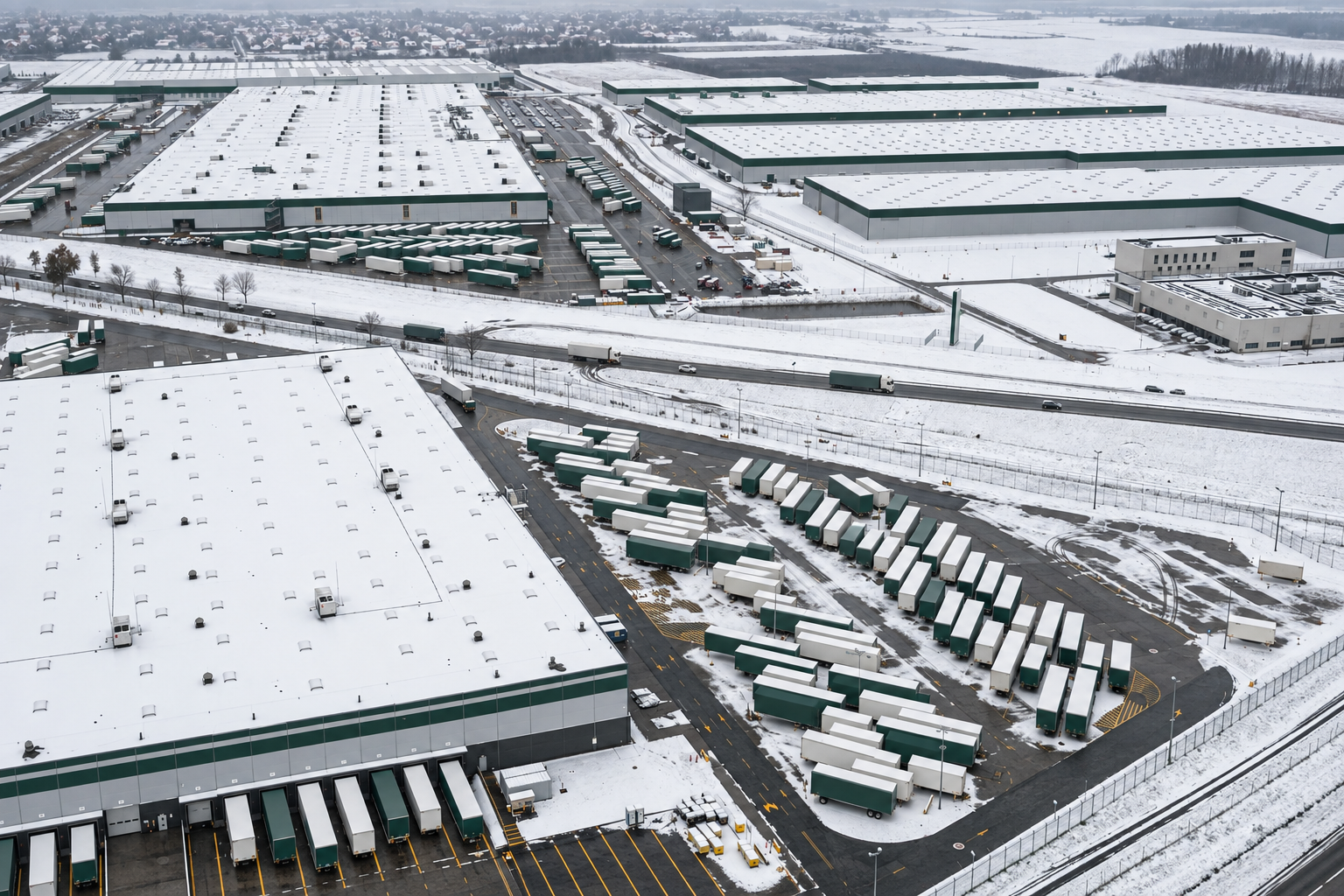
And then I think the other piece, if we look at the Canadian market, is just the fact that we get weather. So you can’t always store things outside where you may in the southern US markets. There’s also just building codes as well to prevent against that. But then there’s also the fact that we get a lot of snow, so people’s yards shrink, their warehousing capacity starts to shrink, and they need somewhere to put those trailers that they might have on site, or the goods they’re storing on site, somewhere else. And that’s where we can step in and provide a really great solution.
08:08 Expensive Real Estate
Mark Mann: That’s great. So I’ve heard rumors that the real estate market in the Greater Toronto Area is some of the most expensive in the world. I hadn’t done my research. I didn’t know whether to believe that or not. You’re confirming that it really is pretty expensive there.
Dan Leslie: Yeah, I think certainly in the industrial space it is. If we look at history, I think probably it was at a low point relative to global benchmarks 15, 20 years ago, before the great financial crisis. And I think from an industrial space perspective, just land constraints, population growth, competition for other land uses, whether it’s residential or other commercial uses, yeah, it certainly has resulted in increasing warehouse costs from a per square foot rental perspective. Dramatically. In the 2000s, you might have been able to find a triple net lease for three bucks a foot. And at the peak of it, during the COVID years and the supply chain disruptions, you could be $25, $30 a foot.
09:24 Providing Solutions to Challenges
Mark Mann: Wow. So you’ve lived this transition from local owner to national strategy, and a lot of companies in Canada, from what I understand, operate with a scarcity mindset. They’re holding on to trailers forever because they’re just afraid they won’t get them back if they let them go. How do you help them move to an elastic model where they trust us to supply the gear when they need it?
Dan Leslie: I think at the heart of it, it’s just building a really good relationship with our customers and building that level of trust. I mean, there’s economic ways to do that and guarantee, like get creative in terms of providing standby trailers for a small fee, to have that availability for when you need it, and when you’re not using them then you return them to us and you’ve got the guaranteed availability.
But on a very basic relationship level, it’s getting deeper into the discussions we’re having with our customers and understanding their patterns, whether seasonal, whether or not there’s special projects coming down the pipe, so that we can work with them. A great example is one of our customers that we’ve been dealing with for an extremely long time. They have a special project coming up. There’s a warehouse move and they’re going to need a considerable number of trailers in a short period of time. They let us know in October, because we’re having regular discussions with them, to be able to say, “Look, I need some more capacity.” And we start planning for that. And we really have the ability, the way we look at it and map out the world of what we’re doing in a week or a month or six months with our customers, to say, “Look, we want to make sure that we’ve got this capacity for you when you need it.”
Because at the end of the day, this can be a very commoditized business if you don’t lead with customer service and getting really deeper into that delivery mindset, which is really something important to us. I mean, in our tagline, and this is one of the great things when I joined the team, Ritz-Carlton service at Hampton Inn prices. And I think for that it’s that anticipation, which is in the golden rule of Ritz-Carlton, of anticipating your guests’ or your customers’ needs.
11:41 Renting Trailers vs. Warehouses
Mark Mann: Yeah. And so just driving, being in Canada myself and driving from Toronto north to Bradford, there are so many warehouses, blocks and blocks of buildings. Walk me through a conversation with a Canadian manufacturer, a customer who was skeptical about renting trailers versus, I’m just going to go rent this warehouse space, it’s there. How did you convince them that the trailer on the lot was the smartest strategic plan?
Dan Leslie: Well, you’re right. As you’ve made that drive, what happens is you can see these large blocks of warehouses, but what often happens is that then landlocks the neighboring building, and that’s where our conversation steps in. So particularly where someone is space constrained and they need more space because they’ve got overrun inventory, whatever it is, big and bulky, they need to free up shop floor space, not just for safety, but they need it for production and they need it for their most valuable processes.
So the conversation really goes like this. Sometimes there’ll be a warehouse manager or a shipping manager who will be familiar with using trailers for storage and understand the concept, and we immediately have a champion there, and someone who understands that they can trust us to deliver. But what we’ll do is we’ll say to them, look, whatever the goods are, we can load them up in our trailers, we can provide the service to deliver those trailers and store them securely in one of our yards, and when they require those goods back, we deliver them back with a day or two’s notice. And if we have to, we’ll often introduce them to other customers who have used our service to say, look, these guys deliver. But the proof is often, they say the proof is in the pudding. So it’s starting small and working that relationship up to show that you’re going to deliver when you say you’re going to deliver. Not just within 12 hours’ notice, but within an hour or two, which is quite important for a lot of our customers, because it is just in time and they are looking for these things to be returned when they want to use them, and they’re planning around that.
So I think for us it’s delivery. The proof is really in the service. And then the economics. So both speak. The economics of it, and showing them that this is such a cheaper option than what they’re doing using traditional warehousing. And then the flip side is the fact that we just step up and we do what we say we’re going to do from a service perspective.
14:33 Being There For Customers
Mark Mann: Yeah. It’s critically important that the customers understand that. I love the phrase just in time, right? That we’re there when they need us.
Dan Leslie: And when they don’t, we’re still there.
Mark Mann: Yeah.
Dan Leslie: Just to build on that, and it’s probably an area you might want to touch on later, but I’ll tackle it now because I think it builds nicely in this. I can think of one customer, and I won’t use names, but they’re an auto parts manufacturer. They’re bringing goods from Mexico to their production in Canada. And we store trailers full of goods offsite, whether it’s empty dunnage bins, whether it’s reserve parts, contingency parts for their production. When they call us, and we don’t necessarily know when they will call us, we’ve gotten to know them really well, so actually we can guess when they’re going to call us. It’s typically there’s been a snowstorm, it’s heading into a long weekend, and the borders are a mess. It’s Friday night, which always makes it, everybody’s getting ready to go away, and it’s like, we need something delivered. But obviously it’s at a time where it’s pretty precarious for them, because their delivery hasn’t arrived and they need the goods in these trailers to make sure that production continues for their plant and that they don’t have to send the shift home.
So for us, it’s important when we get the call from them that we know it’s going to be important and we know that we need to deliver. And typically we’re able to do that within a matter of hours, to deliver the parts they need to keep their production going and see the shift through until that next shipment, their planned shipment, finally arrives.
16:29 Extreme Weather Challenges
Mark Mann: It’s a true partnership. You talked about the cold. So let’s talk about the Canadian winter. It’s not just cold. It stops supply chains in some cases. Tell me about a time, maybe during a bad February freeze, when a customer called you in a panic because their just in time inventory was frozen somewhere and they needed storage right now.
Dan Leslie: Yeah. I mean, the example I just gave you was a great one, like that did happen in January ’22. We had, I’m going to misquote the amount of snow, but it was more snow than I had ever seen in a matter of hours. Like we’re talking feet, tens of centimeters, in a very quick time, and it basically completely shuttered operations for many, and it was days of digging out from the storm. So we had multiple situations with our customers where that was exactly what was happening, where they needed goods, they had reserve contingency parts with us, and they needed those inventories, or those parts, so that they could keep their production flowing.
So it’s just being ready for that, and that’s one of the things we look at in terms of our operations, just like everybody else’s logistics. You’re watching the weather, you’re thinking what that’s going to mean to your operations, and you’re getting ahead of it with the basic starting position of we’re not going to shut down unless it’s a catastrophic situation. Which I wouldn’t necessarily say was catastrophic in January ’22, but it was definitely, when you’re showing up, and I’m 6’4″ and the snow’s at your knees, it’s going to be a long day.
18:18 Cross Border Issues
Mark Mann: Yeah. So you’re dealing with weather delays, but you also mentioned handling cross border issues as well. What separates the customers who stay calm from the ones who crumble under the pressure of dealing with those things?
Dan Leslie: I think it’s the customers that have a plan B. And the plan B is holding reserve stock, or it’s having a backup. So it’s thinking beyond just the borders of what their bricks and mortar warehouse can manage, but then it’s taking that and saying, okay, I need this stuff. I don’t necessarily have the space, but I need to build an inventory bank if I do have production delays. And if I don’t have the space in my traditional warehouse, where can I keep it? Can I keep it in a storage trailer on the premises somewhere and we can manage that? Which is really the simplest and the least expensive option. Or do I go more to, as I said earlier, the white glove solution, where you’re having Smartway deliver your trailer full of goods back to our yard, hold it in our yard, and then bring it back when you need it.
But I think it’s having that contingency planning and having that safety stock. That is the easiest, if you are dealing with border delays. And I think we’ve seen that in a number of industries, where over the past number of years, I mean since I’ve been involved in this business onward, there’s always been some sort of supply chain disruption, whether major or minor. And companies, and their customers, their ultimate end user, the OEM of these goods, they’re looking at this and saying, “Look, we want you to hold three days’ worth of inventory now, or we want you to hold four days’ worth of inventory, because we recognize that it’s not a perfect just in time world where we could hold two days of inventory.” So you can imagine that. A lot of plants are built with, you’re going to produce more and you’re going to hold one or two days’ worth of inventory. Well, all of a sudden, you’re holding double that amount. What are you going to do with it?
So that’s where we end up with really great conversations with our customers about how we can provide solutions to help them manage that on an economical basis. And then from there, we take it a step further to help them with their contingency planning and try and start predicting when. It’s not a perfect science, but when they’re going to need it. Making sure that, literally, I will call the warehouse manager, the production manager of some of our customers, or my team members will call them, and say, “Look, we’re getting a lot of snow. We know you’ve had situations where you’ve had border delays. It’s Friday before the holidays, or it’s a time when there may be less capacity. Do we need to be ready for something?”
21:26 Contingency Planning and Inventory Management
Dan Leslie: And sometimes it’s like, thanks for the call, and we’re good. But then it could also be, thanks for the call, we were just about to email you with a request. So it’s just another example of the way we sort of look at things a little bit differently, beyond just renting trailers. We’re actually providing a really value added service.
Mark Mann: Yeah, I remember a railroad strike a year or so ago. I don’t know how long that lasted, but I know that it messed up the supply chain up there for several weeks.
Dan Leslie: From a container perspective, we’ve seen people ordering more and more ahead of different tariff deadlines. And also heading into just seasonal factors, where they don’t even have control of the supply chain at their end, where some US suppliers just dumped inventory on them ahead of schedule. So you just never know what you’re going to be faced with. So I think for that, it’s like having us close at hand and having an ongoing discussion with us, it helps alleviate that stress. And for us it’s the ability that someone calls us. We just had a call this morning from someone who is in a supply chain disruption. We’ve never dealt with them before. They’ve dealt with someone else we deal with very frequently, and they said, “We heard you guys know what you’re doing, and I need 25 trailers. Can I get it tomorrow? Ideally, we’d like to get some this afternoon.” So we’re already in the process of getting those goods to the customer.
22:53 The Best Mechanics In The World
Mark Mann: Yeah. So, it’s not only the snow and ice, but to combat all that snow and ice, you guys use a lot of salt up there, and that can wreak havoc on tires and brakes and crossmembers. But you have some of the best mechanics in the world up there. I mean, they are keeping these dry vans in tiptop shape, clean, dark, and dry. And I’ve personally heard a lot of great things about your team up there at Smartway and Loue-Van. Tell us a little bit about your team up there in Toronto and Montreal.
Dan Leslie: Yeah. You asked me earlier what was one of the best things about transitioning into this business, and I think the next best thing was when I joined the Smartway, Loue-Van, Warehouse on Wheels team. I am so grateful to have an amazing team of mechanics and operations managers that keep us rolling and keep trailers available to our customers and keep our trailers on rent to our customers. And they’re out there in all of the weather. I’m going to use a bit of Celsius, but if it’s 35 Celsius and humid, so pushing 100 Fahrenheit, they’re out there in the summer, and in the winter they’re out there when it’s minus 20 in the middle of a snowstorm.
So I’m really fortunate, and we’ve got two great general managers that lead the team. We’ve got Jerry Laval, who leads our Ontario Smartway team, and Martin McFadden, who leads our Loue-Van team based in Laval. And every time I go in there I’m just amazed at each one of our shops, how engaged people are, how much they care about not only our business and our customers but the equipment, and doing the right thing to make sure that we’re delivering, we’re focusing on providing safe, clean, dark, and dry trailers 365 days a year.
24:56 Executive-Level Work
Mark Mann: Yeah. I think about those guys in the yard, in the shop, busting ice off the landing gear in January, right? How does the work that you guys do at the executive level actually make their job safer or easier on those brutal days?
Dan Leslie: Well, I would love to say that we have a huge influence on that. I think we’re really lucky that we’ve got a team that is naturally engaged that way. I mean, the principles of our business, it starts with safety first, safety always, and that is before we even rent one trailer. So that’s really important to us, to make sure that we’re doing everything we can in a safe fashion and that our teams are really living that on a daily basis.
And then from there I think it’s making sure that we’re providing them with ongoing educational opportunities to enhance their skills or refresh their skills. And it’s also having some really good discussions and supporting them, walking the shop floor and having discussions, asking them about a repair. I’m just naturally curious about a lot of these things, and finding out a better way to do something and a better way we can tackle it so we can actually turn something around for our customers faster, and in a way that might be easier for them to work with.
So for us, from a leadership perspective, it’s really staying close to our team, understanding what their challenges are, and if there’s ways that we can improve our processes to make things easier for them to turn trailers around. But it’s giving them all of the support and tools that they need to get the job done. And really it starts with listening to them, because we’re not dealing with this stuff every day, and they’re absolute masters in what they do.
26:56 The Best Drivers In The Business
Mark Mann: Yeah. You know, some of our locations hire vendors to pull our trailers, drivers. You guys actually have your own drivers. You have several drivers up there that shuttle things around. And I know that the communication between your shops and dispatch and the drivers is pretty flawless. Anytime I’ve talked to those guys, the drivers are really on it. They know exactly what they’re doing, where they’re going, back and forth several times a day. Right.
Dan Leslie: Yeah. Our drivers are best in class. I don’t like actually talking about it publicly, because they’re so amazing I want to keep it a secret. But our drivers are the secret sauce. Truly, because in most cases our drivers can be, many times, one of the only real faces that our customers will see, definitely consistently and constantly. They’ll hear from me, they’ll see me, they’ll see Jerry, they’ll see Martin, they’ll see some of our account managers like John Morell and Matthew Healey out in the field, knocking on doors and talking to our clients on a fairly regular basis.
But when all the chips are down and you really need something delivered, or you really need the delivery of a new rental trailer, it’s our drivers that are providing that. They’re dealing with the customer, and they do it in such a professional manner, and take a lot of accountability and responsibility to make sure of our customers’ experience on delivery or pickup. I’ve seen them solving problems. I’ve seen them helping other drivers from other companies dig out of the snow. We keep talking about snow, but I guess, as we’re doing this, it is December. Or whatever the problem is. So they’re amazing ambassadors for our business.
29:00 Flexibility
Mark Mann: Yeah. And you know, as the President of Canadian Operations, you really have your finger on the pulse of the numbers. If I’m a general manager in the US trying to understand the Canadian customer and what’s important, and the economic arguments that win up north, what is it? Is it saving capital? Is it flexibility? What is it?
Dan Leslie: I think it’s flexibility. I think there’s more similarities than there are differences. So I think the things that win in the US and the things that win in Canada are very similar, but I think it’s going to be flexibility. It’s going to be a really cost-effective solution and alternative to warehousing, and it’s going to be absolutely customer experience.
Mark Mann: Yeah.
Dan Leslie: Those are the things that we win on every day.
29:52 Expanding Into Canadian Markets
Mark Mann: Yeah. Let’s switch gears and talk a little bit about the playbook, the Northern playbook. Give listeners an idea of what that looks like. There are companies every year that cross the border. They move from the US to Canada, and vice versa in some cases. If you were advising a US company that was looking to expand into Canadian markets next year, what’s the first step you would tell them to take regarding their storage strategies?
Dan Leslie: I think the first step is, and this is key, I mean, I’m a big, in one way or the other for many years I’ve been either directly involved in running a business, owning a business, or leading a business. And I think with that, the thing I’ve learned is you always want to give yourself the most optionality and most flexibility. So I think as you’re moving into a new market and you’re unsure of what you may need, it’s really easy to go into a market and say, “Look, we’re going to lease a new building. We’re going to put our logo on top and it’s going to be the Taj Mahal and it’s going to be a great facility.” My advice is get to know the market, and maybe start with using services such as ours to help you scale and build, and then when you get to a size that makes sense, enter. Because it allows you to change your business and course correct as you need to, by looking at flexible arrangements such as warehousing via trailers.
31:32 Getting Personal
Mark Mann: All right. So before we wrap up here, Dan, I need to get personal. We’ll call this the signature round. You went from being the owner, the guy who makes all the decisions, to a president in a larger family. What’s the moment you realized, yeah, this is the right move, I’m glad I have this team behind me now?
Dan Leslie: I first met our CEO, John Brooks. We had a really quick chat and I was really impressed with that conversation. And then I ended up having dinner with Brent in Paris, Ontario, shortly thereafter. And at this point you’re in sort of assessing mode, very much just like everybody you meet. And it was great, because Brent and I literally, I think we spent dinner talking about the business. We were talking about my business and the way he saw the Smartway business and the Loue-Van business in Canada and Warehouse on Wheels. And we started debating what is the best sort of approach to tire repair, doors, which were all really trailer nerd things, but also thinking about bigger picture strategic things that were really exciting to me.
And then that was followed up by some meetings with the entire leadership team. And I looked at that and I said, look, everybody had a great skill set to bring to the table. I had spent many years in corporate environments and worked amongst some fantastic leadership teams and amongst some great talent. And I looked at this team and I was like, “This is literally one of the best teams I’ve ever met.” And I was excited to think about the next step of my journey, of moving Triton into the family with Warehouse on Wheels and working together with a really common mission to get to where we wanted to be in terms of the Warehouse on Wheels vision and mission.
Mark Mann: You know, it’s funny, as I talk to folks, they say the same thing, right? I met the team and they were fantastic and I just had to be there, right? I felt the same way.
33:47 Dan’s Reset Button
Mark Mann: So, running operations across the country is heavy. You’ve got a big job there. When you shut it down for the night, if you do, what pulls you away from the business? What is your reset button?
Dan Leslie: I think my wife would suggest I haven’t found a reset button. But I think for me, at the heart of it, it’s coming home and spending time with my wife, and when our daughters are around, they’re older and at university, so when they’re around, it’s spending time with family. I really enjoy taking my dog for a walk at night and just decompressing and just listening to the sounds and getting outside. And I try to maintain a fairly active lifestyle outside of working, whether it’s doing things like playing squash, or golf in the summer. So I try to find some balance.
Mark Mann: What about pickleball? You have pickleball up there?
Dan Leslie: We do. I’ve only played once, and given my squash background, I was actually, I’m going to say my wife’s going to watch this and laugh, but I was pretty darn good. But there is pickleball emerging with quite a pace here in Canada.
35:06 Mentor Advice
Mark Mann: Yeah, it’s taken over down here as well. So what’s the one piece of advice that you got from a mentor back in the beginning that really kept you going throughout your career when things got tough?
Dan Leslie: Yeah, I’ve been very fortunate to have had a number of mentors throughout my career. And I think at the heart of it, there’s not probably one piece of advice. I think there’s lots of clichés out there that a lot of people have quoted. But I think at the heart of it, it’s staying focused on your customer, staying focused on your team. And I think as well, when you’re faced with adversity, the saying is really, how do you eat an elephant? You break it down in bite-sized chunks. So I think it’s coming to the challenge and looking at the strategic imperative, seeing how it lines up, and manage what you can manage and push through, but don’t lose sight of those north stars of your team and your customer.
Mark Mann: Very good. Great advice. I’m hoping that this podcast goes viral all throughout Canada. So what is one myth about doing business in Canada that you hope listeners will stop believing after today?
36:26 Myths About Working In Canada
Dan Leslie: I think there’s probably, if you’re coming from outside Canada, coming to do business here, I think there’s probably just the fear of the unknown. It’s a different country. There might be different rules. Our country is largely, the majority of the population sits along the US border. So, as I said earlier, there’s a lot more similarities than there are differences between the populations of both of our countries. And I think that you would find that coming to Canada, it is very similar. You do have, in different parts of the country, particularly in the province of Quebec, obviously from a French language perspective that might be a little bit different, but I think people are very open to doing business, and it’s a very business-friendly environment. And I think that you would find that it’s, not to be afraid of the border, and you’ll find doing business here is very similar to what you might find in a lot of states in the US.
37:49 The Challenge To The Team
Mark Mann: Awesome. Dan, this has been an excellent conversation. I do have one final question for your team members listening in Toronto and Montreal, Laval, and beyond. What is your challenge to them for 2026?
Dan Leslie: I think for us, we are in an amazing position to deliver and exceed our customers’ expectations. And so for us it’s, let’s put our customer first, and let’s make sure that we understand their challenges, and let’s work together as a team to make sure we deliver what they need and work together with them for a solution. But I think at the end of the day it’s customer first, and then operational excellence.
Mark Mann: Yep. Perfect challenge. Dan Leslie, President of Canadian Operations for Warehouse on Wheels. Thank you for joining The Wow Factor today.
Dan Leslie: Thanks, Mark. A lot of fun.
Mark Mann: